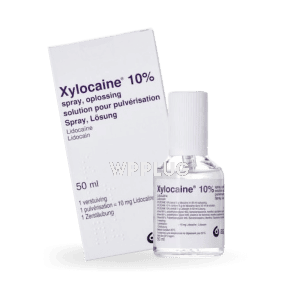
| Product dosage: 50 gm | |||
|---|---|---|---|
| Package (num) | Per tube | Price | Buy |
| 8 | $6.27
Best per tube | $72.28 $50.20 (31%) | 🛒 Add to cart |
| 10 | $9.04 | $90.36 $90.36 (0%) | 🛒 Add to cart |
Synonyms | |||
Xylocaine: Rapid and Reliable Local Anesthesia for Medical Procedures
Xylocaine (lidocaine hydrochloride) is a premier amide-type local anesthetic agent, representing a cornerstone in both superficial and regional anesthesia protocols across numerous medical and dental specialties. Its well-established pharmacokinetic profile, characterized by a rapid onset of action and a favorable duration of effect, makes it an indispensable tool for clinicians. This product card provides a comprehensive, expert-level overview of its specifications, clinical applications, and essential safety information to guide appropriate therapeutic use.
Features
- Active Ingredient: Lidocaine Hydrochloride
- Pharmacologic Class: Amide Local Anesthetic
- Available Formulations: Injectable solutions (multiple concentrations: 0.5%, 1%, 1.5%, 2%, 4%, 5%), Jelly (2%), Ointment (5%), Topical Solution (4%), Aerosol Spray (10%)
- Onset of Action: Rapid (within 2-5 minutes for infiltration anesthesia)
- Duration of Action: Intermediate (approximately 30-90 minutes for infiltration, varies with concentration, dose, and vascularity of site)
- Mechanism of Action: Blocks sodium ion channels required for the initiation and conduction of neuronal impulses, producing a reversible loss of sensation.
Benefits
- Rapid Onset for Procedural Efficiency: Achieves effective anesthesia quickly, minimizing patient wait time and streamlining clinical workflow.
- Predictable and Reliable Anesthesia: Offers a consistent and dependable depth and duration of sensory block, allowing for precise procedural planning.
- Versatile Application Modalities: Available in multiple concentrations and formulations (injectable, topical) to suit a wide array of medical, surgical, and dental indications.
- Established Safety Profile: With decades of clinical use, its pharmacokinetics and adverse effect management are well-understood by healthcare professionals.
- Effective for Arrhythmia Management: The intravenous formulation (Xylocaine HCl Injection) is indicated for the acute management of life-threatening ventricular arrhythmias.
Common use
Xylocaine is indicated for the production of local anesthesia by infiltration injection, nerve block, and topical application. Its uses are extensive and include:
- Infiltration Anesthesia: For minor surgical procedures, suturing of lacerations, and dental procedures.
- Peripheral Nerve Blocks: Such as brachial plexus, intercostal, and digital blocks.
- Central Neuraxial Blocks: Including epidural and spinal anesthesia (using specific, preservative-free formulations).
- Topical Anesthesia: For mucous membranes of the mouth, pharynx, larynx, and urethra prior to endoscopic examinations or instrumentation; for superficial skin procedures.
- Cardiac Use: Intravenous administration for the acute suppression of ventricular tachyarrhythmias.
- Dental Procedures: As a primary local anesthetic for restorative work, extractions, and periodontal surgery.
Dosage and direction
Dosage varies significantly based on the procedure, tissue vascularity, area to be anesthetized, depth of anesthesia required, and individual patient tolerance. The smallest dose and lowest concentration that achieves the desired effect should always be used.
- For Infiltration and Nerve Block: Maximum recommended dose for a healthy adult is 4.5 mg/kg not to exceed 300 mg. For example, using a 1% solution (10 mg/mL), this equates to a maximum volume of 30 mL. Doses must be reduced for debilitated, elderly, or acutely ill patients.
- For Epidural Anesthesia: Typical doses range from 50 mg to 300 mg (e.g., 5-30 mL of a 1% solution), administered incrementally.
- For Topical Use (Mucous Membranes): Apply the smallest amount needed. For 2% jelly, a single dose of up to 30 mL (600 mg) has been used for urethral instillation. For 4% solution, a maximum of 5 mL (200 mg) can be applied to the oropharyngeal area.
- Direction: Aspirate before injection to avoid intravascular administration. Inject slowly. Always use sterile technique.
Precautions
- Use with extreme caution in patients with known drug sensitivities, severe shock, or heart block.
- Administer with caution and at reduced doses in patients with hepatic impairment, as lidocaine is metabolized by the liver.
- Use cautiously in patients with hypotension, hypovolemia, or severe congestive heart failure.
- Injections into inflamed or infected tissue are not recommended, as this may alter the pH of the tissue and reduce efficacy, and may also lead to increased systemic absorption.
- The safety of amide local anesthetics in early pregnancy has not been established; weigh potential benefits against potential risks.
Contraindications
- Hypersensitivity to lidocaine hydrochloride or any other amide-type local anesthetic, or to any other component of the formulation.
- The presence of sepsis or severe infection at the proposed injection site (for neuraxial blocks).
- Severe hemorrhage, severe hypotension or shock, and septicemia (for epidural and spinal blocks).
- Adams-Stokes syndrome or severe degrees of sinoatrial, atrioventricular, or intraventricular block (for antiarrhythmic use, unless a pacemaker is in place).
Possible side effect
Adverse reactions are generally dose-related and result from high plasma levels. Systemic reactions may involve the Central Nervous System (CNS) and the cardiovascular system.
- CNS Effects: Lightheadedness, dizziness, drowsiness, tinnitus, blurred or double vision, nausea, tremors, twitching, convulsions, unconsciousness, respiratory depression and arrest.
- Cardiovascular Effects: Hypotension, bradycardia, arrhythmias, and cardiovascular collapse, which can lead to cardiac arrest.
- Allergic Reactions: Although rare (more common with ester-type anesthetics), urticaria, angioedema, bronchospasm, or anaphylaxis can occur.
- Local Reactions: Pain at the injection site, persistent sensory or motor deficits (e.g., neuritis, paralysis) are rare.
Drug interaction
- Beta-blockers (e.g., propranolol): May reduce hepatic blood flow, decreasing lidocaine metabolism and increasing the risk of toxicity.
- Cimetidine: Can inhibit lidocaine metabolism, leading to increased plasma concentrations.
- Other Local Anesthetics: Concomitant use may have additive toxic effects.
- Antiarrhythmic Drugs (e.g., mexiletine, tocainide): Additive or synergistic toxic effects may occur.
- CYP3A4 Inhibitors (e.g., ketoconazole, itraconazole, erythromycin): May increase lidocaine plasma levels.
- CYP1A2 Inhibitors (e.g., fluvoxamine): May increase lidocaine plasma levels.
Missed dose
This is not applicable, as Xylocaine is administered as a single procedure-based dose and is not used on a scheduled, chronic dosing regimen.
Overdose
Overdose is a medical emergency primarily manifesting as toxic plasma concentrations affecting the CNS and cardiovascular system.
- Symptoms: Initially CNS excitation (nervousness, dizziness, blurred vision, tremors, convulsions) followed by CNS depression (drowsiness, unconsciousness, respiratory arrest). Cardiovascular effects include hypotension, bradycardia, arrhythmias, and cardiac arrest.
- Management: Management is supportive. Ensure a patent airway and administer oxygen. Assist ventilation as needed. Control convulsions with a benzodiazepine (e.g., diazepam) or a short-acting barbiturate. Manage hypotension and bradycardia with IV fluids and vasopressors (e.g., ephedrine). Cardiac arrest requires standard advanced cardiac life support (ACLS) protocols. Hemodialysis is not effective for removing lidocaine.
Storage
- Store at controlled room temperature, 20°C to 25°C (68°F to 77°F).
- Protect from light.
- Do not freeze.
- Keep all formulations out of reach of children.
- Single-dose vials and ampules are for single use only; discard any unused portion.
Disclaimer
This information is intended for healthcare professionals only. It is a summary of key product characteristics and does not replace the full Prescribing Information. The practitioner must rely on their own professional clinical judgment, knowledge of the patient, and a comprehensive understanding of the official product monograph when making diagnosis and treatment decisions. The ultimate responsibility for patient care lies with the healthcare professional.
Reviews
- “Xylocaine remains the gold standard against which other local anesthetics are measured. Its rapid onset and reliable block are essential for my daily practice in outpatient surgery.” – General Surgeon, 15 years experience.
- “The availability of different concentrations allows for precise tailoring of the anesthetic plan, whether for a simple digital block or a more complex field block. A versatile and dependable agent.” – Emergency Medicine Physician.
- “In cardiology, IV Xylocaine is a critical drug in our arsenal for managing acute ventricular arrhythmias. Its predictable effect is vital in a high-stakes environment.” – Cardiologist.
- “The topical jelly formulation is exceptionally effective for urethral anesthesia prior to catheterization or cystoscopy, greatly improving patient comfort.” – Urology Nurse Practitioner.