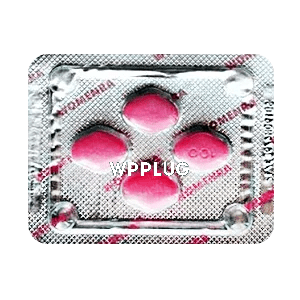
| Product dosage: 100mg | |||
|---|---|---|---|
| Package (num) | Per pill | Price | Buy |
| 10 | $5.04 | $50.40 $50.40 (0%) | 🛒 Add to cart |
| 20 | $3.02 | $100.80 $60.48 (40%) | 🛒 Add to cart |
| 30 | $2.35 | $151.19 $70.56 (53%) | 🛒 Add to cart |
| 60 | $1.51 | $302.39 $90.72 (70%) | 🛒 Add to cart |
| 90 | $1.23 | $453.58 $110.88 (76%) | 🛒 Add to cart |
| 120 | $1.18 | $604.78 $141.11 (77%) | 🛒 Add to cart |
| 180 | $1.01 | $907.16 $181.43 (80%) | 🛒 Add to cart |
| 270 | $0.90 | $1360.74 $241.91 (82%) | 🛒 Add to cart |
| 360 | $0.84
Best per pill | $1814.33 $302.39 (83%) | 🛒 Add to cart |
Womenra: Restore Female Sexual Desire with Flibanserin
Womenra is a prescription medication specifically developed to address the complex challenge of acquired, generalized hypoactive sexual desire disorder (HSDD) in premenopausal women. It contains flibanserin, a multifunctional serotonin agonist and antagonist that works centrally to rebalance neurotransmitters associated with sexual interest. Unlike situational or relationship-related decreases in libido, HSDD is characterized by a persistent lack of sexual fantasies and desire that causes marked distress or interpersonal difficulty. This non-hormonal, daily oral treatment represents a clinically validated approach to restoring satisfying sexual activity and reducing associated distress by targeting the neurobiological pathways involved in sexual motivation. It is intended for use as part of a comprehensive treatment plan under medical supervision.
Features
- Active ingredient: Flibanserin 100 mg
- Pharmacological class: Multifunctional serotonin receptor agonist and antagonist
- Form: Oral tablet
- Administration: Once daily at bedtime
- Prescription status: Rx-only medication
- Non-hormonal mechanism of action
- FDA-approved for premenopausal women with HSDD
- Requires certification through the REMS program
Benefits
- Increases the number of satisfying sexual events (SSEs) per month
- Reduces distress associated with low sexual desire
- Restores natural sexual motivation without hormonal influence
- Improves overall sexual satisfaction and intimacy
- Provides a targeted neurobiological approach to female sexual dysfunction
- Supports emotional well-being and relationship quality
Common use
Womenra is indicated for the treatment of premenopausal women with acquired, generalized hypoactive sexual desire disorder (HSDD). HSDD is characterized by a persistent or recurrent deficiency or absence of sexual fantasies and desire for sexual activity that causes clinically significant distress in the individual. The condition must be acquired (developing in a patient who previously had no problems with sexual desire) and generalized (not situational or partner-specific). It is not intended for use in postmenopausal women or men, nor for the treatment of sexual dysfunction due to coexisting medical or psychiatric conditions, relationship problems, or medication side effects.
Dosage and direction
The recommended dosage is one 100 mg tablet taken orally once daily at bedtime. Administration at bedtime is recommended to minimize the risk of hypotension, syncope, and central nervous system depression. Womenra should be taken consistently rather than on an as-needed basis, as its therapeutic effect develops over time with regular use. Treatment should be continued for at least 8 weeks to assess initial efficacy. The medication may be taken with or without food, but patients should avoid alcohol consumption due to the risk of severe hypotension and syncope. Dosage adjustment is not recommended for patients with mild hepatic impairment, but Womenra is contraindicated in patients with moderate or severe hepatic impairment.
Precautions
Patients should be advised of the risk of hypotension and syncope, particularly within the first few weeks of treatment and following dosage increases. Blood pressure should be monitored in patients taking concomitant medications known to lower blood pressure. Womenra causes central nervous system depression and may impair mental and/or physical abilities required for potentially hazardous tasks. Patients should exercise caution when driving, operating machinery, or engaging in activities requiring full alertness until they know how the medication affects them. The medication should not be used during pregnancy unless clearly needed, and breastfeeding is not recommended during treatment. Regular assessment of treatment efficacy and side effects is recommended throughout therapy.
Contraindications
Womenra is contraindicated in patients with known hypersensitivity to flibanserin or any component of the formulation. It must not be used in patients with moderate or severe hepatic impairment. Concomitant use with strong or moderate CYP3A4 inhibitors is contraindicated due to significantly increased flibanserin exposure. The medication is contraindicated in patients taking CYP2C9 inhibitors, as these may also increase flibanserin concentrations. Womenra should not be used in postmenopausal women or men, as safety and efficacy have not been established in these populations. Concomitant alcohol use is absolutely contraindicated due to the risk of severe hypotension and syncope.
Possible side effects
The most common adverse reactions (≥2% incidence and greater than placebo) include:
- Dizziness (11.4%)
- Somnolence (11.2%)
- Nausea (8.3%)
- Fatigue (7.5%)
- Insomnia (4.9%)
- Dry mouth (3.5%)
Serious side effects may include:
- Hypotension (2.4%)
- Syncope (0.4%)
- Central nervous system depression
- Accidental injury (2.6%)
Most adverse reactions are mild to moderate in severity and often diminish with continued treatment. Patients should report any persistent or severe side effects to their healthcare provider.
Drug interaction
Womenra has significant interaction potential due to its metabolism primarily by CYP3A4 and CYP2C9. Concomitant use with strong CYP3A4 inhibitors (e.g., ketoconazole, itraconazole, ritonavir) is contraindicated. Moderate CYP3A4 inhibitors (e.g., fluconazole, verapamil, diltiazem) should be avoided. Concomitant use with CYP2C9 inhibitors may increase flibanserin exposure. Womenra may potentiate the effects of CNS depressants, including alcohol, benzodiazepines, opioids, and other sedating medications. Concomitant use with medications that lower blood pressure may increase the risk of hypotension and syncope. Healthcare providers should review all medications, including over-the-counter products and herbal supplements, before initiating treatment.
Missed dose
If a dose is missed at bedtime, the patient should skip the missed dose and take the next dose at the regular time the following bedtime. Patients should not take two doses at the same time to make up for a missed dose, as this may increase the risk of adverse effects. If vomiting occurs shortly after taking Womenra, the dose should not be repeated that day. Patients should maintain regular dosing schedules and contact their healthcare provider if they have questions about missed doses.
Overdose
In case of suspected overdose, symptomatic and supportive treatment should be initiated immediately. There is no specific antidote for flibanserin overdose. Management should focus on maintaining adequate ventilation and cardiovascular support. Symptoms of overdose may include severe hypotension, syncope, and profound CNS depression. Activated charcoal may be considered if administered shortly after ingestion. Patients should be monitored for at least 24 hours due to the drug’s half-life of approximately 11 hours. Hemodialysis is unlikely to be effective due to flibanserin’s high protein binding and extensive tissue distribution.
Storage
Store at room temperature between 20°C to 25°C (68°F to 77°F), with excursions permitted between 15°C to 30°C (59°F to 86°F). Keep in the original container with the lid tightly closed to protect from moisture and light. Keep out of reach of children and pets. Do not use beyond the expiration date printed on the packaging. Properly dispose of any unused or expired medication through take-back programs or according to FDA-recommended disposal methods.
Disclaimer
This information is provided for educational purposes only and does not constitute medical advice. Womenra is available by prescription only and should be used under the supervision of a qualified healthcare provider. Individual results may vary. Patients should discuss their medical history, current medications, and treatment goals with their healthcare provider before starting Womenra. The medication is part of the FDA’s Risk Evaluation and Mitigation Strategy (REMS) program, and prescribers and pharmacies must be certified through the program. This information is not exhaustive; please refer to the full prescribing information for complete details.
Reviews
Clinical trials demonstrated that Womenra-treated patients experienced approximately one additional satisfying sexual event per month compared to placebo after 24 weeks of treatment. Patients also reported significantly reduced distress scores related to sexual desire. Many women describe gradual improvement in sexual motivation and decreased anxiety about sexual performance over 2-3 months of consistent use. Some patients report the bedtime dosing schedule helps manage initial side effects while maintaining therapeutic benefits. Healthcare providers note the importance of patient selection and comprehensive evaluation before prescribing, emphasizing that Womenra is most effective for appropriate candidates with true HSDD rather than situational libido changes.