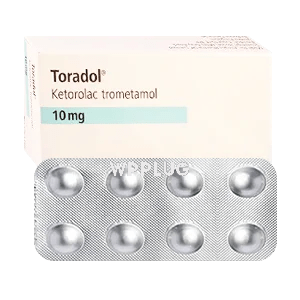
Toradol: Potent Non-Opioid Pain Relief for Acute Conditions
Toradol (ketorolac tromethamine) is a nonsteroidal anti-inflammatory drug (NSAID) indicated for the short-term management of moderately severe acute pain that requires analgesia at the opioid level. As a potent analgesic with anti-inflammatory and antipyretic properties, it offers a critical therapeutic option in clinical settings where minimizing opioid exposure is a priority. Its efficacy profile makes it a cornerstone in post-operative and acute musculoskeletal pain management protocols, providing significant relief without the risks of respiratory depression or addiction associated with narcotic analgesics.
Features
- Active Ingredient: Ketorolac tromethamine
- Pharmacologic Class: Nonsteroidal anti-inflammatory drug (NSAID)
- Available Formulations: Oral tablets, intramuscular (IM) injection, intravenous (IV) injection
- Onset of Action: Analgesic effect begins within 30 minutes for injectable forms; peak effect at 2–3 hours
- Duration of Action: Up to 6 hours for single-dose administration
- Dosing Flexibility: Available in 10 mg oral tablets and injectable solutions (15 mg/mL, 30 mg/mL)
- Prescription Status: Rx-only, not available over-the-counter
Benefits
- Delivers potent analgesia comparable to certain opioids for moderate to severe acute pain.
- Provides anti-inflammatory action, addressing the underlying cause of pain in many inflammatory conditions.
- Lacks the potential for addiction, dependence, or respiratory depression associated with opioid analgesics.
- Suitable for use in a hospital setting for post-operative pain, facilitating earlier mobilization.
- Can be administered via multiple routes (oral, IM, IV) allowing for flexible treatment sequencing.
- Effective in reducing opioid consumption as part of a multimodal analgesia strategy.
Common use
Toradol is primarily utilized for the short-term management of acute pain requiring analgesia at the opioid level. Its most frequent applications include post-operative pain following surgical procedures such as orthopedic surgeries, abdominal surgeries, and dental extractions. It is also employed for acute musculoskeletal pain, including flares of conditions like bursitis or tendonitis, and for pain associated with renal colic (kidney stones). Its use is generally restricted to a maximum of 5 days due to the increased risk of serious adverse events with prolonged administration.
Dosage and direction
Dosing is highly dependent on the patient’s age, renal function, route of administration, and clinical context. For adults under 65 years with normal renal function, the typical IM/IV initial dose is 30 mg or 60 mg, followed by 15 mg or 30 mg every 6 hours, not to exceed 60 mg per day. The oral regimen following parenteral therapy is 20 mg as a first dose, then 10 mg every 4 to 6 hours; the maximum daily oral dose is 40 mg. For patients over 65 years, those with renal impairment, or those weighing less than 50 kg (110 lbs), doses must be reduced. The total duration of therapy (combined parenteral and oral) must not exceed 5 days. It is critical to use the lowest effective dose for the shortest duration possible.
Precautions
Toradol carries a significant risk of serious gastrointestinal (GI) adverse events, including bleeding, ulceration, and perforation, which can be fatal. These events can occur at any time during use and without warning symptoms. There is also an increased risk of serious cardiovascular thrombotic events, including myocardial infarction and stroke. Renal toxicity, including acute renal failure, can occur, especially in patients with pre-existing renal impairment, volume depletion, or heart failure. Use with extreme caution in patients with a history of ulcer disease or GI bleeding, cardiovascular disease, or hypertension. It may cause serious skin reactions and anaphylactoid reactions. Avoid use in patients with advanced renal disease or those at risk for renal failure.
Contraindications
Toradol is contraindicated in patients with known hypersensitivity to ketorolac, aspirin, or other NSAIDs (manifested by asthma, urticaria, or other allergic-type reactions). It is contraindicated as prophylactic analgesia before any major surgery and in the setting of coronary artery bypass graft (CABG) surgery. It must not be used in patients with active peptic ulcer disease, recent gastrointestinal bleeding or perforation, or a history of these conditions. It is contraindicated in patients with advanced renal impairment or in patients at risk for renal failure due to volume depletion. Concomitant use with aspirin or other NSAIDs, probenecid, or pentoxifylline is also contraindicated.
Possible side effect
Common side effects (≥2%) include gastrointestinal events such as nausea, dyspepsia, gastrointestinal pain, and diarrhea. Other frequently reported effects are headache, dizziness, drowsiness, and injection site pain. Serious side effects require immediate medical attention and include gastrointestinal bleeding or perforation, hepatotoxicity (elevated liver enzymes, jaundice), acute renal failure, hypertension, heart failure, edema, anaphylactoid reactions, and exfoliative dermatitis. Less common but serious effects include asthma exacerbation in aspirin-sensitive asthmatics and aseptic meningitis.
Drug interaction
Toradol has numerous significant drug interactions. Concurrent use with other NSAIDs or salicylates (e.g., aspirin) increases the risk of GI toxicity. It can reduce the antihypertensive effect of ACE inhibitors, angiotensin II receptor blockers (ARBs), and beta-blockers. It may diminish the natriuretic effect of furosemide and thiazides. Concomitant use with anticoagulants like warfarin, antiplatelet agents, or selective serotonin reuptake inhibitors (SSRIs) increases the risk of bleeding. It can increase plasma lithium levels and the risk of lithium toxicity. Concomitant administration with methotrexate may enhance its toxicity. Use with pentoxifylline can increase the risk of bleeding. Probeneci d may decrease the clearance of ketorolac, increasing its plasma levels.
Missed dose
As Toradol is prescribed for acute pain on a scheduled basis for a very short duration (≤5 days), the concept of a “missed dose” is less applicable than with chronic medications. If a dose is missed and it is almost time for the next scheduled dose, the missed dose should be skipped. The patient should not double the next dose to “catch up.” The regular dosing schedule should be resumed. Given the drug’s potent nature and side effect profile, patients should be instructed to strictly adhere to the prescribed dosing interval and not to self-adjust the regimen.
Overdose
Symptoms of overdose are typically extensions of the drug’s pharmacological effects and adverse reactions. These may include drowsiness, nausea, vomiting, epigastric pain, gastrointestinal bleeding, hypertension, acute renal failure, and respiratory depression. There is no specific antidote for ketorolac overdose. Management is supportive and symptomatic. In cases of recent ingestion, gastric lavage or activated charcoal may be considered. Forced diuresis, alkalization of the urine, hemodialysis, or hemoperfusion are unlikely to be beneficial due to ketorolac’s high protein binding and extensive metabolism. Supportive care for complications such as GI bleeding, hypertension, or renal failure is essential.
Storage
Store Toradol tablets and injection vials/ampules at controlled room temperature, 20°C to 25°C (68°F to 77°F), with excursions permitted between 15°C and 30°C (59°F and 86°F). Protect from light. Keep the medication in its original container, tightly closed, and out of reach of children and pets. Do not use if the solution is discolored or contains particulate matter. Do not freeze. Properly discard any unused portion of the injectable solution after use, as it contains no preservative.
Disclaimer
This information is for educational and informational purposes only and does not constitute medical advice. It is not a substitute for professional medical advice, diagnosis, or treatment. Always seek the advice of your physician or other qualified health provider with any questions you may have regarding a medical condition or before starting any new treatment. Never disregard professional medical advice or delay in seeking it because of something you have read here. The use of Toradol must be supervised by a qualified healthcare professional who can assess the risks and benefits for an individual patient.
Reviews
“Toradol has been an invaluable tool in our post-operative orthopedic pain protocol. Its efficacy in reducing opioid requirements in the first 24-48 hours is remarkable, directly impacting patient satisfaction and early mobilization rates. However, its use demands rigorous patient selection and monitoring for renal function and GI symptoms.” – Orthopedic Surgeon
“In the ER, we frequently use IV Toradol for acute renal colic and musculoskeletal injuries. The speed of onset and potency are excellent. The strict 5-day limit and contraindications mean we have to be very diligent in our patient history and discharge instructions to prevent misuse.” – Emergency Medicine Physician
“While effective, the side effect profile is significant. I reserve it for patients with no GI or renal risk factors who need powerful, short-term, non-opioid pain control. It fills a specific and important niche in our analgesic arsenal.” – Pain Management Specialist