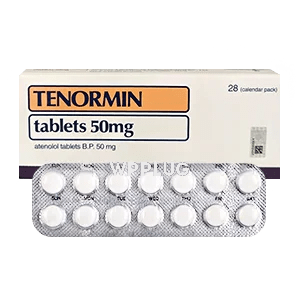
| Product dosage: 100mg | |||
|---|---|---|---|
| Package (num) | Per pill | Price | Buy |
| 10 | $4.53 | $45.26 (0%) | 🛒 Add to cart |
| 20 | $2.51 | $90.52 $50.29 (44%) | 🛒 Add to cart |
| 30 | $2.18 | $135.78 $65.38 (52%) | 🛒 Add to cart |
| 60 | $1.01 | $271.56 $60.35 (78%) | 🛒 Add to cart |
| 90 | $0.84 | $407.34 $75.43 (81%) | 🛒 Add to cart |
| 120 | $0.75 | $543.13 $90.52 (83%) | 🛒 Add to cart |
| 180 | $0.67 | $814.69 $120.69 (85%) | 🛒 Add to cart |
| 270 | $0.60 | $1222.03 $160.93 (87%) | 🛒 Add to cart |
| 360 | $0.54
Best per pill | $1629.38 $196.13 (88%) | 🛒 Add to cart |
Tenormin: Effective Blood Pressure and Angina Management
Tenormin (atenolol) is a cardioselective beta-blocker medication prescribed for the management of hypertension (high blood pressure) and angina pectoris (chest pain). It functions by blocking the action of certain natural chemicals in the body, such as epinephrine, on the heart and blood vessels. This action results in a slower heart rate, reduced blood pressure, and decreased strain on the heart, making it a cornerstone therapy in cardiovascular medicine. Its well-established efficacy and safety profile have made it a first-line treatment option for millions of patients worldwide under proper medical supervision.
Features
- Active Pharmaceutical Ingredient: Atenolol
- Pharmacological Class: Cardioselective Beta-1 Adrenergic Blocker
- Standard Tablet Strengths: 25 mg, 50 mg, 100 mg
- Administration Route: Oral
- Typical Dosing Frequency: Once daily
- Bioavailability: Approximately 50%
- Protein Binding: Less than 5%
- Half-life: 6-7 hours
- Primary Excretion Route: Renal
Benefits
- Provides consistent 24-hour blood pressure control with once-daily dosing, supporting treatment adherence.
- Reduces the frequency and severity of angina attacks, improving exercise tolerance and quality of life.
- Lowers the heart’s oxygen demand, protecting it during periods of stress or physical exertion.
- Demonstrates a cardioselective action at therapeutic doses, primarily affecting the heart with less impact on respiratory function compared to non-selective beta-blockers.
- Offers a well-documented and predictable safety profile based on decades of clinical use and research.
Common use
Tenormin is primarily indicated for the management of essential hypertension, either as monotherapy or in combination with other antihypertensive agents such as diuretics. It is also approved for the long-term management of chronic stable angina pectoris. In some clinical contexts, it may be used as part of a management strategy following a myocardial infarction (heart attack) to improve survival and prevent future cardiac events. Its use is always predicated on a comprehensive cardiovascular assessment by a qualified healthcare professional.
Dosage and direction
Dosage is highly individualized based on the patient’s condition, renal function, and treatment response. The typical initial dose for hypertension or angina is 50 mg administered orally once daily. This dosage may be increased to 100 mg once daily after one to two weeks if an adequate therapeutic response is not achieved. For patients with impaired renal function, dosage adjustments are necessary; a reduced dose of 25 mg daily or 50 mg every other day may be prescribed. The tablet should be swallowed whole with a glass of water, with or without food, though consistency in administration relative to meals is advised. It is critical that patients do not abruptly discontinue Tenormin, as this can precipitate rebound hypertension or angina; dosage must be tapered gradually under medical guidance.
Precautions
Patients should inform their physician of any history of asthma, chronic obstructive pulmonary disease (COPD), diabetes, hypoglycemia, thyroid disorders, or liver/kidney disease. Tenormin can mask the signs of hypoglycemia (e.g., tachycardia) and may potentiate insulin-induced hypoglycemia. It can also mask clinical signs of hyperthyroidism, such as tachycardia. Caution is advised in patients with peripheral vascular disease (e.g., Raynaud’s syndrome) as beta-blockers can exacerbate symptoms. Patients should be monitored for signs of worsening heart failure. Use in pregnant women should only be considered if the potential benefit justifies the potential risk to the fetus, as beta-blockers may cause fetal harm. Atenolol is excreted in human milk; therefore, a decision should be made whether to discontinue nursing or discontinue the drug.
Contraindications
Tenormin is contraindicated in patients with known hypersensitivity to atenolol or any component of the formulation. Its use is also contraindicated in patients with sinus bradycardia, second- or third-degree heart block (without a permanent pacemaker), cardiogenic shock, overt cardiac failure, and sick sinus syndrome.
Possible side effect
Like all medications, Tenormin can cause side effects, although not everybody gets them. Common side effects include cold extremities, fatigue, dizziness, and bradycardia (slow heart rate). Less frequently, patients may experience depression, shortness of breath, gastrointestinal disturbances (nausea, diarrhea), and sleep disturbances. Rare but serious side effects require immediate medical attention and include signs of worsening heart failure (e.g., shortness of breath, swelling ankles/feet, unusual tiredness), very slow heart rate, mental/mood changes, and signs of liver problems (dark urine, persistent nausea/vomiting, yellowing eyes/skin).
Drug interaction
Concurrent use of Tenormin with other drugs that slow the heart rate (e.g., digoxin, diltiazem, verapamil) can lead to additive effects and potentially dangerous bradycardia. It can potentiate the hypotensive effects of other antihypertensive agents and alcohol. Concomitant use with insulin or oral hypoglycemic agents may mask hypoglycemic symptoms. Nonsteroidal anti-inflammatory drugs (NSAIDs) may reduce the antihypertensive effect of atenolol. Caution is advised with concomitant use of catecholamine-depleting drugs (e.g., reserpine) due to additive effects. Patients must provide their doctor with a complete list of all prescription, non-prescription, and herbal products they are taking.
Missed dose
If a dose is missed, it should be taken as soon as remembered on the same day. If it is nearly time for the next scheduled dose, the missed dose should be skipped, and the regular dosing schedule resumed. Patients should never take a double dose to make up for a forgotten one, as this increases the risk of side effects.
Overdose
Overdose with Tenormin is a medical emergency characterized by severe bradycardia, hypotension, heart failure, bronchospasm, and hypoglycemia. Signs may also include confusion, cyanosis, and coma. In case of suspected overdose, emergency medical services must be contacted immediately. Treatment is primarily supportive and symptomatic, focusing on maintaining cardiovascular and respiratory function. Specific interventions may include atropine for bradycardia, a beta-agonist (e.g., isoprenaline) for bronchospasm, and glucagon or glucose for hypoglycemia.
Storage
Tenormin tablets should be stored at room temperature (15-30°C or 59-86°F) in their original container, protected from light, moisture, and excessive heat. The medication must be kept out of sight and reach of children and pets. Unused or expired medication should be disposed of properly via a take-back program or according to FDA guidelines, and should not be flushed down the toilet or poured into a drain.
Disclaimer
This information is for educational purposes only and is not a substitute for professional medical advice, diagnosis, or treatment. Always seek the advice of your physician or other qualified health provider with any questions you may have regarding a medical condition or before starting or stopping any treatment. Never disregard professional medical advice or delay in seeking it because of something you have read here.
Reviews
“Tenormin has been a fundamental part of my hypertension management protocol for over a decade. Its once-daily dosing and predictable pharmacokinetics make it a reliable choice for long-term control in appropriate patients.” – Dr. Eleanor Vance, Cardiologist.
“As a clinician, I value the extensive evidence base supporting atenolol. Its cardioselectivity at standard doses offers a favorable benefit-risk ratio for many patients with hypertension and stable angina, though individual patient assessment remains paramount.” – Clinical Pharmacologist Review.
“Patient adherence is significantly higher with Tenormin’s 24-hour coverage. The side effect profile is generally well-tolerated, with most common effects like cold hands diminishing over time or being manageable.” – Internal Medicine Practice Journal.