| Product dosage: 100mcg | |||
|---|---|---|---|
| Package (num) | Per pill | Price | Buy |
| 100 | $0.43 | $43.14 (0%) | 🛒 Add to cart |
| 200 | $0.35 | $86.28 $70.23 (19%) | 🛒 Add to cart |
| 300 | $0.33
Best per pill | $129.43 $98.32 (24%) | 🛒 Add to cart |
| Product dosage: 125mcg | |||
|---|---|---|---|
| Package (num) | Per pill | Price | Buy |
| 120 | $0.41 | $49.16 (0%) | 🛒 Add to cart |
| 240 | $0.33 | $98.32 $80.26 (18%) | 🛒 Add to cart |
| 360 | $0.31
Best per pill | $147.49 $110.36 (25%) | 🛒 Add to cart |
| Product dosage: 150mcg | |||
|---|---|---|---|
| Package (num) | Per pill | Price | Buy |
| 100 | $0.55 | $55.18 $55.18 (0%) | 🛒 Add to cart |
| 200 | $0.44 | $110.36 $88.29 (20%) | 🛒 Add to cart |
| 300 | $0.40
Best per pill | $165.55 $121.40 (27%) | 🛒 Add to cart |
| Product dosage: 200mcg | |||
|---|---|---|---|
| Package (num) | Per pill | Price | Buy |
| 100 | $0.68 | $68.23 (0%) | 🛒 Add to cart |
| 200 | $0.60 | $136.45 $120.40 (12%) | 🛒 Add to cart |
| 300 | $0.57
Best per pill | $204.68 $170.56 (17%) | 🛒 Add to cart |
| Product dosage: 25mcg | |||
|---|---|---|---|
| Package (num) | Per pill | Price | Buy |
| 240 | $0.21 | $51.17 (0%) | 🛒 Add to cart |
| 360 | $0.16
Best per pill | $76.75 $58.19 (24%) | 🛒 Add to cart |
| Product dosage: 50mcg | |||
|---|---|---|---|
| Package (num) | Per pill | Price | Buy |
| 240 | $0.24 | $58.19 (0%) | 🛒 Add to cart |
| 360 | $0.18
Best per pill | $87.29 $65.22 (25%) | 🛒 Add to cart |
| Product dosage: 75mcg | |||
|---|---|---|---|
| Package (num) | Per pill | Price | Buy |
| 240 | $0.25 | $59.20 (0%) | 🛒 Add to cart |
| 360 | $0.23
Best per pill | $88.79 $82.27 (7%) | 🛒 Add to cart |
Synonyms | |||
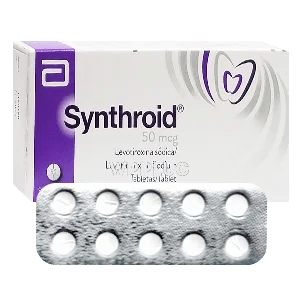
Synthroid: Precision Thyroid Hormone Replacement Therapy
Synthroid (levothyroxine sodium) is the most prescribed synthetic thyroid hormone replacement medication in the United States, trusted by endocrinologists for decades. It is bioequivalent to the endogenous hormone thyroxine (T4) produced by the thyroid gland, providing a consistent and reliable exogenous source for patients with hypothyroidism. This pharmaceutical-grade compound is engineered for precise dosing, predictable pharmacokinetics, and excellent stability, making it the cornerstone of managing thyroid hormone deficiency. Proper administration restores euthyroidism, normalizing metabolic function and alleviating the debilitating symptoms associated with an underactive thyroid.
Features
- Contains the active pharmaceutical ingredient levothyroxine sodium, a synthetic form of the T4 hormone.
- Available in 13 precise dosage strengths, ranging from 25 mcg to 300 mcg tablets, allowing for individualized titration.
- Manufactured with a strict consistency of ±5% potency to ensure dose-to-dose reliability.
- Formulated with color-coded tablets for easy strength identification and to minimize dosing errors.
- Features a unique dissolution profile designed for consistent absorption in the gastrointestinal tract.
Benefits
- Effectively restores normal metabolic rate, alleviating symptoms like fatigue, weight gain, and cold intolerance.
- Promotes normalization of vital signs, including heart rate and body temperature.
- Supports improved cognitive function, mood stability, and overall energy levels.
- Helps prevent long-term complications of untreated hypothyroidism, such as hyperlipidemia, cardiovascular disease, and myxedema coma.
- Provides a predictable and stable hormonal baseline, allowing for straightforward monitoring via serum TSH levels.
- Offers a standardized, consistent formulation that is not subject to the natural variations of animal-derived thyroid products.
Common use
Synthroid is indicated as hormone replacement therapy for the treatment of primary, secondary, and tertiary hypothyroidism. It is also used as a suppressive therapy in the management of euthyroid goiters, including those associated with Hashimoto’s thyroiditis, and as an adjunct to surgery and radioiodine therapy in the management of thyrotropin-dependent well-differentiated thyroid cancer. Its primary role is to supplement or replace endogenous thyroid hormone production to achieve a euthyroid state.
Dosage and direction
The dosage of Synthroid is highly individualized based on the patient’s age, body weight, cardiovascular status, and the severity and duration of hypothyroidism. Therapy must always be initiated at the full replacement dose in young, healthy patients but started at a lower dose (e.g., 25-50 mcg daily) in elderly patients or those with underlying cardiovascular disease, with gradual titration. The goal of therapy is to normalize the serum Thyroid-Stimulating Hormone (TSH) level.
Administration:
- Must be taken orally as a single daily dose, on an empty stomach, at least 30-60 minutes before breakfast.
- Tablets should be taken with a full glass of water to aid swallowing and ensure passage to the stomach.
- Consistency in timing is critical for maintaining stable serum levels.
- Do not crush or chew the tablet.
Dosage adjustments should not be made more frequently than at 4-6 week intervals, as this period is required for the TSH level to stabilize after a dosage change. Regular monitoring of TSH levels is essential for long-term management.
Precautions
Patients should be informed that thyroid hormone replacement is typically a lifelong therapy. Underlying endocrine disorders, particularly adrenal insufficiency (Addison’s disease) or pituitary insufficiency, must be corrected prior to initiating levothyroxine therapy to avoid precipitating an acute adrenal crisis. Special caution is required in patients with cardiovascular diseases (e.g., coronary artery disease, arrhythmias, hypertension), as rapid increases in hormone levels can exacerbate angina or precipitate arrhythmias. Bone mineral density should be monitored in postmenopausal women on long-term suppressive therapy, as excessive doses can contribute to osteoporosis. Diabetic patients may require adjustments in their antidiabetic regimens as thyroid hormone potency can affect glucose control.
Contraindications
Synthroid is contraindicated in patients with uncorrected adrenal insufficiency, untreated thyrotoxicosis, and acute myocardial infarction. It is also contraindicated in individuals with a known hypersensitivity to any of the components of the formulation. Levothyroxine therapy is not indicated for the treatment of obesity or for weight loss, as euthyroid patients will not experience weight loss and doses beyond the euthyroid state may cause serious, life-threatening toxicity.
Possible side effect
Side effects are generally dose-related and are manifestations of hyperthyroidism due to overdosage. They include:
- Cardiovascular: Tachycardia, palpitations, arrhythmias (e.g., atrial fibrillation), angina pectoris, hypertension, heart failure.
- Central Nervous System: Headache, insomnia, nervousness, anxiety, irritability, tremors.
- Gastrointestinal: Increased appetite, diarrhea, abdominal cramps, weight loss.
- Other: Heat intolerance, fever, excessive sweating, menstrual irregularities, muscle weakness, temporary hair loss (especially during the initial months of therapy). A return of hypothyroid symptoms indicates underdosage.
Drug interaction
Numerous drugs can alter the absorption or metabolism of levothyroxine, necessitating dosage adjustments and careful monitoring.
- Absorption Inhibitors: Calcium carbonate, iron salts, aluminum hydroxide (antacids), sucralfate, cholestyramine, colestipol, and proton pump inhibitors can significantly impair absorption. Dosing should be separated by at least 4 hours.
- Metabolism Inducers: Drugs such as phenytoin, carbamazepine, rifampin, and sertraline can increase the hepatic metabolism of levothyroxine, potentially increasing dosage requirements.
- Serum Protein Binding: Estrogen-containing oral contraceptives and hormone replacement therapy can increase thyroxine-binding globulin (TBG) levels, which may necessitate a dosage increase.
- Anticoagulants: Levothyroxine can potentiate the effects of warfarin, increasing the risk of bleeding. Prothrombin time (INR) should be closely monitored.
Missed dose
If a dose is missed, it should be taken as soon as possible on the same day. If it is not remembered until the next day, the patient should skip the missed dose and take only the next scheduled dose. Do not double the dose to make up for a missed one, as this increases the risk of toxicity and side effects. Maintaining the regular schedule is more important than catching up on a single missed dose.
Overdose
An overdose of Synthroid presents as a thyrotoxic crisis or “thyroid storm.” Signs and symptoms include fever, tachycardia, arrhythmias, hypertension, heart failure, agitation, delirium, psychosis, stupor, coma, nausea, vomiting, and severe weight loss. Treatment is supportive and symptomatic. Beta-adrenergic blocking agents (e.g., propranolol) may be used to control severe cardiovascular and neurologic manifestations. Management may also include antipyretics, glucocorticoids, and measures to treat dehydration. There is no specific antidote for levothyroxine overdose.
Storage
Synthroid tablets should be stored at controlled room temperature, 20°-25°C (68°-77°F), in their original blister packaging or bottle to protect them from light and moisture. The medication must be kept out of reach of children and pets. Do not store in bathrooms or other areas prone to dampness and temperature fluctuations. Do not use tablets that are discolored or show signs of deterioration.
Disclaimer
This information is for educational purposes only and is not a substitute for professional medical advice, diagnosis, or treatment. Always seek the advice of your physician or other qualified health provider with any questions you may have regarding a medical condition or before starting any new treatment. Never disregard professional medical advice or delay in seeking it because of something you have read here. The content has been compiled from various resources but may not be exhaustive or reflect the most recent medical literature.
Reviews
- “As an endocrinologist with over 20 years of practice, I rely on Synthroid for its consistency and predictable response. The wide range of available strengths allows for fine-tuned titration, which is critical for optimal patient outcomes.” – Dr. E. Lawson, MD, Endocrinology
- “After struggling with compounded formulations that yielded inconsistent lab results, switching my patients to Synthroid provided the stability we needed. The TSH levels are far easier to manage, and patient symptom relief is more reliable.” – Dr. A. Chen, DO, Internal Medicine
- “The standardized manufacturing process is a significant advantage. I can be confident that the 88 mcg tablet I prescribe today will have the same potency as the one I prescribed six months ago, which is not always the case with other thyroid products.” – Dr. R. Miller, PharmD, Clinical Pharmacist
- “Managing my hypothyroidism has been a journey. Since being stabilized on Synthroid, my energy levels have returned to normal, the brain fog has lifted, and my TSH has remained in the ideal range for years. It’s a crucial part of my daily routine.” – Patient, 10+ years on therapy