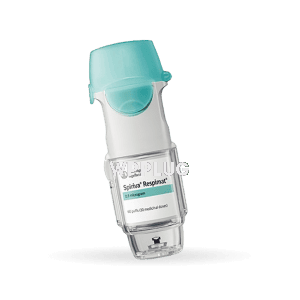
| Product dosage: 18 mcg | |||
|---|---|---|---|
| Package (num) | Per cap | Price | Buy |
| 30 | $3.01 | $90.20 (0%) | 🛒 Add to cart |
| 60 | $2.41 | $180.40 $144.32 (20%) | 🛒 Add to cart |
| 120 | $2.18 | $360.80 $261.58 (27%) | 🛒 Add to cart |
| 180 | $2.12 | $541.20 $381.85 (29%) | 🛒 Add to cart |
| 270 | $1.74
Best per cap | $811.80 $471.04 (42%) | 🛒 Add to cart |
Synonyms | |||
Spiriva: Long-Term COPD Control with Tiotropium Bromide
Spiriva (tiotropium bromide) is a long-acting muscarinic antagonist (LAMA) inhaler indicated for the long-term, once-daily maintenance treatment of bronchospasm associated with chronic obstructive pulmonary disease (COPD), including chronic bronchitis and emphysema. It is a cornerstone of management for patients requiring ongoing control of airflow obstruction. By targeting specific receptors in the airways, it provides sustained bronchodilation and reduction of exacerbations, forming a critical component of modern GOLD strategy-guided therapy. Its efficacy in improving lung function, exercise tolerance, and quality of life is well-established in clinical practice.
Features
- Active ingredient: Tiotropium bromide monohydrate
- Delivery system: Spiriva HandiHaler (dry powder inhaler) or Spiriva Respimat (soft mist inhaler)
- Mechanism of action: Long-acting muscarinic antagonist (LAMA)
- Dosage form: Capsules for inhalation (HandiHaler) or Cartridge with solution (Respimat)
- Standard dosage: 18 mcg (HandiHaler) or 5 mcg (2 puffs, Respimat) once daily
- Onset of action: Significant bronchodilation within 30 minutes
- Duration of action: Sustained for more than 24 hours
Benefits
- Provides 24-hour bronchodilation with a single daily dose, ensuring consistent airway patency and simplifying adherence.
- Significantly improves lung function (FEV1) from the first dose, with effects sustained long-term.
- Reduces the frequency and severity of COPD exacerbations, a key goal in disease management.
- Decreases hyperinflation (air trapping), leading to improved exercise capacity and reduced dyspnea.
- Enhances overall health-related quality of life scores for patients.
- Serves as a foundational maintenance therapy within national and international (GOLD) treatment guidelines.
Common use
Spiriva is primarily prescribed for the maintenance treatment of airflow obstruction in patients with chronic obstructive pulmonary disease (COPD). It is not indicated for the initial relief of acute bronchospasm (i.e., a rescue inhaler). It is routinely used in patients with a confirmed diagnosis of COPD, GOLD Group B-D, who continue to experience symptoms or exacerbations despite short-acting bronchodilator therapy. It is often a first-choice long-acting bronchodilator and can be used concomitantly with inhaled corticosteroids (ICS) and long-acting beta2-agonists (LABAs) for additive bronchodilator and synergistic anti-inflammatory effects in more severe cases.
Dosage and direction
The recommended dosage for Spiriva HandiHaler is the inhalation of the contents of one 18 mcg capsule, once daily, using the HandiHaler device. The recommended dosage for Spiriva Respimat is two puffs (5 mcg total) once daily.
Administration Instructions (HandiHaler):
- Immediately before use, peel back the foil of one blister to expose one capsule. Do not push the capsule through the foil.
- Open the dust cap of the HandiHaler by pulling it upward. Then open the mouthpiece.
- Place the capsule in the center chamber. firmly close the mouthpiece until you hear a click, leaving the dust cap open.
- Hold the HandiHaler device upright and press the piercing button completely in once, and then release. This pierces the capsule.
- Breathe out fully away from the mouthpiece. Do not exhale into the device.
- Raise the HandiHaler to your mouth, close your lips around the mouthpiece, and breathe in slowly and deeply at a rate sufficient to hear the capsule vibrate.
- Hold your breath for 5-10 seconds, or as long as is comfortable. Remove the device from your mouth and exhale slowly.
- Repeat steps 5 and 6 to ensure the full dose is inhaled.
- Open the mouthpiece and discard the used capsule. Close the mouthpiece and dust cap.
The capsule should only be used with the HandiHaler device and must never be swallowed. The prescribed dose is one capsule per day. Do not exceed the prescribed dosage.
Precautions
- Paradoxical Bronchospasm: Can occur with an immediate increase in wheezing and shortness of breath after dosing. If this occurs, treatment should be discontinued immediately and alternative therapy instituted.
- Cardiovascular Effects: Should be used with caution in patients with known cardiac arrhythmias, narrow-angle glaucoma, prostatic hyperplasia, or bladder-neck obstruction due to anticholinergic effects.
- Acute Symptoms: Spiriva is not indicated for the relief of acute bronchospasm. An inhaled, short-acting beta2-agonist should be used for acute relief.
- Ocular Effects: May cause blurred vision and pupil dilation. Patients should be advised to avoid getting the powder or mist into their eyes, as this may cause pain or discomfort, blurred vision, visual halos, or colored images in association with red eyes from conjunctival and corneal congestion (symptoms of narrow-angle glaucoma).
- Renal Impairment: Patients with moderate to severe renal impairment (creatinine clearance ≤50 mL/min) should be monitored closely, as tiotropium is primarily renally excreted.
Contraindications
Spiriva is contraindicated in patients with a history of hypersensitivity to tiotropium bromide, atropine or its derivatives, including ipratropium, or any component of the product formulation. Hypersensitivity reactions, including anaphylaxis, angioedema, rash, and urticaria, have been reported.
Possible side effect
The most common adverse reactions (≥3% incidence and greater than placebo) from clinical trials were:
- Dry mouth
- Upper respiratory tract infection
- Pharyngitis
- Sinusitis
- Non-specific chest pain
- Constipation
- Increased heart rate (tachycardia)
- Urinary retention
- Blurred vision
- Glaucoma (rare)
- Less common but serious side effects can include paradoxical bronchospasm and severe allergic reactions.
Drug interaction
Formal drug interaction studies have not been performed with Spiriva. However, due to its anticholinergic properties, Spiriva should be used with caution when co-administered with other anticholinergic-containing drugs (e.g., ipratropium, aclidinium, glycopyrrolate, atropine) as concomitant use may potentiate adverse effects. No clinically significant interactions have been observed with commonly prescribed COPD medications, including sympathomimetic bronchodilators, methylxanthines, oral or inhaled steroids.
Missed dose
If a dose is missed, it should be taken as soon as remembered on the same day. However, if it is not remembered until the next day, the missed dose should be skipped. The patient should then resume the regular dosing schedule with the next dose. Do not double the next dose to make up for a missed dose.
Overdose
An overdose of tiotropium bromide by inhalation is unlikely due to its topical administration. However, exaggerated anticholinergic effects may occur with overdose. Signs and symptoms may include dry mouth, visual accommodation disturbances, tachycardia, cardiac arrhythmias, and urinary retention. In case of overdose, discontinue the medication and institute appropriate supportive and symptomatic treatment.
Storage
- Store at room temperature between 15°C and 30°C (59°F and 86°F).
- Spiriva HandiHaler: Capsules must be stored in the blister package and only removed immediately before use. They must be protected from moisture and light. Do not store capsules in the HandiHaler device.
- Spiriva Respimat: The cartridge should be stored in the Respimat inhaler. Do not freeze. Discard the cartridge 3 months after insertion into the inhaler or when the dose indicator reads zero, whichever comes first.
- Keep out of reach of children.
Disclaimer
This information is for educational purposes only and is not a substitute for professional medical advice, diagnosis, or treatment. Always seek the advice of your physician or other qualified health provider with any questions you may have regarding a medical condition or before starting any new treatment. Never disregard professional medical advice or delay in seeking it because of something you have read here.
Reviews
Spiriva has been extensively studied in large-scale, randomized, double-blind, placebo-controlled clinical trials (e.g., UPLIFT, POET-COPD trials) involving tens of thousands of patients over 4 years. The collective body of evidence consistently demonstrates its efficacy in significantly improving lung function (pre- and post-bronchodilator FEV1), reducing the rate of COPD exacerbations, and improving health status scores (as measured by the St. George’s Respiratory Questionnaire) compared to placebo. It is endorsed as a first-line maintenance therapy in both national and international (GOLD) treatment guidelines for COPD. Real-world evidence studies further support its effectiveness and safety profile in diverse clinical practice settings.