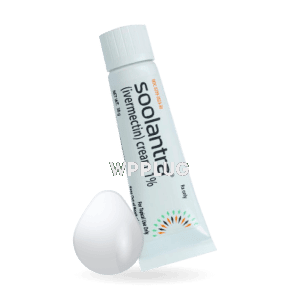
| Product dosage: 30 g | |||
|---|---|---|---|
| Package (num) | Per tube | Price | Buy |
| 8 | $8.50 | $68.03 (0%) | 🛒 Add to cart |
| 10 | $7.20
Best per tube | $85.04 $72.03 (15%) | 🛒 Add to cart |
Synonyms | |||
Soolantra: Targeted Topical Treatment for Inflammatory Lesions of Rosacea
Soolantra (ivermectin) Cream, 1% represents a significant advancement in the dermatological management of papulopustular rosacea. This prescription-only topical formulation is specifically engineered to target the inflammatory component of this chronic cutaneous condition. Its mechanism of action, focusing on both anti-inflammatory and anti-parasitic pathways, offers a novel approach to reducing the characteristic erythema and lesion count associated with the disease. Clinical evidence supports its efficacy and favorable safety profile for long-term maintenance therapy.
Features
- Contains 1% ivermectin as the active pharmaceutical ingredient.
- Formulated in a light, non-comedogenic, oil-in-water emulsion cream base.
- Designed for once-daily topical application to the affected facial areas.
- Presented in a 30-gram or 45-gram pump dispenser for precise dosing and hygiene.
- Prescription-only medication, requiring diagnosis and supervision by a healthcare professional.
Benefits
- Reduces Inflammatory Lesion Count: Clinically proven to significantly decrease the number of papules and pustules associated with rosacea.
- Targets a Proposed Pathophysiological Pathway: Exhibits both anti-inflammatory and anti-parasitic activity, specifically targeting Demodex folliculorum mites, which are implicated in the inflammatory process of rosacea.
- Improves Overall Skin Appearance: Leads to a visible reduction in erythema (redness) and an overall improvement in skin texture and patient-reported quality of life.
- Suitable for Long-Term Use: Demonstrated safety and efficacy in clinical trials for up to 52 weeks of continuous treatment, making it appropriate for chronic disease management.
- Convenient Dosing Regimen: A simple once-daily application supports patient adherence to the treatment protocol.
- Generally Well-Tolerated: The topical formulation minimizes systemic exposure, resulting in a low incidence of systemic adverse events.
Common use
Soolantra is indicated by health authorities for the topical treatment of inflammatory lesions of papulopustular rosacea in adult patients. It is intended for application to the entire face, not solely individual lesions, to treat the affected area and help prevent the formation of new papules and pustules. Its use is predicated on a confirmed diagnosis of rosacea by a dermatologist or qualified healthcare provider.
Dosage and direction
For topical use only. Not for oral, ophthalmic, or intravaginal use.
- Application Frequency: Apply a thin layer of Soolantra Cream to the affected areas of the face once daily.
- Area of Application: Apply to the entire face (forehead, chin, nose, and each cheek). Avoid the eyes, lips, and mucous membranes.
- Amount: Use a pea-sized amount for each area of the face (e.g., forehead, chin, nose, each cheek). Do not exceed the amount necessary to cover the affected area thinly and uniformly.
- Method: Dispense the cream onto fingertips and gently massage it into the skin until it is no longer visible.
- Hands: Wash hands immediately after application.
- Cosmetics: Moisturizers and non-medicated cosmetics may be applied after the cream has dried.
Precautions
- For External Use Only: Soolantra is for use on the skin only. If it comes into contact with the eyes, rinse thoroughly with water.
- Sun Exposure: Rosacea-affected skin is often sun-sensitive. While Soolantra itself is not a photosensitizer, patients should be advised to use protective measures against sunlight, including sunscreen and protective clothing.
- Irritation: If excessive irritation (e.g., severe redness, itching, burning) develops, discontinue use and consult a physician.
- Pre-existing Conditions: Use with caution in patients with known conditions that may compromise the skin barrier, such as severe eczema or other widespread dermatological conditions, as systemic absorption may be increased.
- Pregnancy and Lactation: Although topical application results in minimal systemic absorption, use during pregnancy or while breastfeeding should only be undertaken if the potential benefit justifies the potential risk to the fetus or infant. A healthcare provider must be consulted.
Contraindications
Soolantra is contraindicated in patients with a known hypersensitivity to ivermectin or to any of the excipients in the formulation. A history of allergic reaction to any avermectin-derived medication warrants avoidance of this product.
Possible side effect
The majority of adverse reactions associated with Soolantra are localised, mild to moderate in severity, and often diminish with continued use. In controlled clinical trials, the most common side effects (≥1%) included:
- Skin burning sensation
- Skin irritation
- Pruritus (itching)
- Dry skin Less commonly reported side effects include contact dermatitis, skin pain, and worsening of rosacea. Systemic side effects are rare due to low absorption. Patients should report any persistent or severe local reactions or any signs of an allergic reaction (e.g., rash, hives, swelling) to their healthcare provider.
Drug interaction
Formal drug interaction studies have not been conducted with topical ivermectin due to low systemic plasma concentrations following recommended topical use. The potential for pharmacokinetic interactions with other medications is considered low. However, the concurrent use of other topical dermatological medications (especially those that may be irritating, such as topical retinoids or abrasives) on the same area could potentially lead to cumulative irritant effects. It is advised to consult a physician before using any other topical products on the same treatment area.
Missed dose
If a dose is missed, it should be applied as soon as it is remembered. However, if it is almost time for the next scheduled dose, the missed dose should be skipped, and the regular dosing schedule resumed. Do not apply a double dose to make up for a missed application.
Overdose
Topical overdose of Soolantra is unlikely to lead to life-threatening effects due to limited systemic absorption. However, excessive application could potentially increase the risk of the local adverse reactions described above (e.g., severe skin irritation, burning). In case of accidental ingestion, seek medical attention or contact a Poison Control Center immediately. Ingestion of avermectins can cause neurological side effects such as dizziness, nausea, vomiting, and diarrhea.
Storage
- Store at room temperature between 20°C to 25°C (68°F to 77°F). Excursions are permitted between 15°C and 30°C (59°F and 86°F).
- Keep the tube tightly closed and in its original carton to protect from light.
- Do not freeze.
- Keep out of reach of children and pets.
Disclaimer
This information is intended for educational and informational purposes only and does not constitute medical advice. It is not a substitute for professional medical advice, diagnosis, or treatment. Always seek the advice of your physician or other qualified health provider with any questions you may have regarding a medical condition or medication. Never disregard professional medical advice or delay in seeking it because of something you have read here. The author and publisher are not responsible for any specific health or allergy needs that may require medical supervision and are not liable for any damages or negative consequences from any treatment, action, application, or preparation, to any person reading or following the information in this document.
Reviews
- Clinical Study Data: Two pivotal phase 3, 12-week, double-blind, randomized, vehicle-controlled studies demonstrated that Soolantra was significantly superior to vehicle (placebo cream) in achieving both co-primary endpoints: reduction in inflammatory lesion count and achievement of Investigator’s Global Assessment (IGA) success (score of “clear” or “almost clear”). A 40-week extension study confirmed maintenance of efficacy and long-term safety.
- Dermatologist Endorsement: Soolantra is widely regarded by dermatologists as a first-line, mechanism-based treatment for papulopustular rosacea. Experts cite its dual action, efficacy, and tolerability as key advantages, particularly for long-term disease control.
- Patient-Reported Outcomes: In clinical trials and post-marketing surveys, a significant proportion of patients report high satisfaction with Soolantra, noting visible improvements in skin clarity and redness, as well as the convenience of the once-daily regimen. Many report an improved quality of life and self-image.