
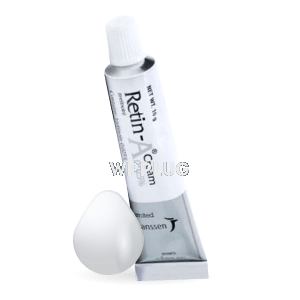
| Product dosage: 20g | |||
|---|---|---|---|
| Package (num) | Per tube | Price | Buy |
| 3 | $16.46 | $49.39 (0%) | 🛒 Add to cart |
| 10 | $12.50 | $164.64 $125.00 (24%) | 🛒 Add to cart |
| 15 | $11.89 | $246.97 $178.42 (28%) | 🛒 Add to cart |
| 20 | $11.59
Best per tube | $329.29 $231.85 (30%) | 🛒 Add to cart |
Synonyms
| |||
Similar products
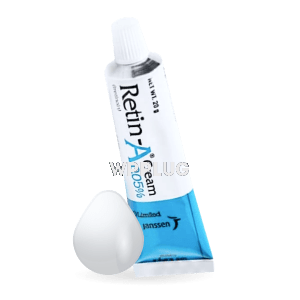
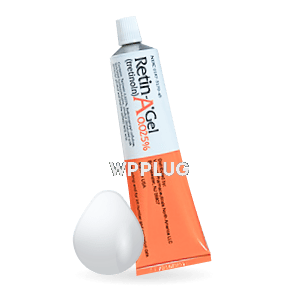
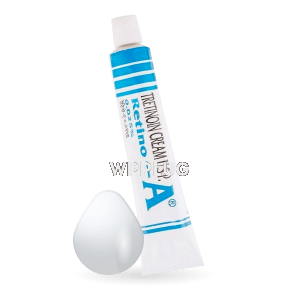
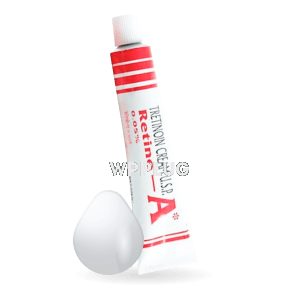
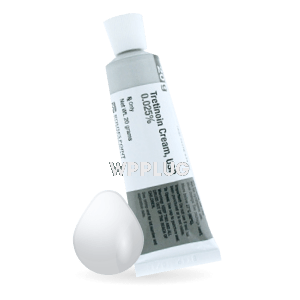
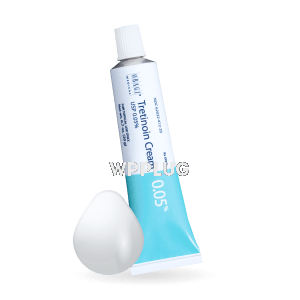
Retin A 0.025: Professional-Grade Acne and Anti-Aging Treatment
Retin A 0.025% cream contains tretinoin, a first-generation retinoid and gold-standard topical agent derived from vitamin A. It is a prescription-strength formulation specifically engineered for individuals requiring a gentle yet effective initiation into retinoid therapy or those with sensitive skin phenotypes. This concentration balances notable clinical efficacy with a favorable tolerability profile, making it a cornerstone in both acne management and cosmetic dermatology for mitigating photoaging. Its mechanism of action involves normalizing keratinization, reducing microcomedone formation, and stimulating collagen synthesis and epidermal remodeling.
Features
- Active Ingredient: Tretinoin 0.025% w/w
- Formulation: Topical cream
- Vehicle: Emollient-based, often including stearic acid, isopropyl myristate, and polyoxyl 40 stearate
- Prescription Status: Rx-only medication
- Standard Tube Sizes: 20g and 45g
- Chemical Class: Retinoid (all-trans retinoic acid)
Benefits
- Effectively treats and prevents the formation of both inflammatory and non-inflammatory acne lesions (comedones, papules, pustules).
- Significantly improves the appearance of fine lines, wrinkles, and coarse wrinkles by promoting dermal collagen production.
- Fades hyperpigmentation, sun spots, and evens out overall skin tone by accelerating the skin’s natural exfoliation process.
- Improves skin texture and reduces roughness, yielding a smoother, more refined complexion.
- Minimizes the appearance of enlarged pores through thorough follicular cleansing and normalization of keratinocyte activity.
- Provides a foundational strength for those new to retinoids, allowing the skin to build tolerance before potentially moving to higher concentrations.
Common use
Retin A 0.025% is primarily prescribed for the topical treatment of acne vulgaris. Its use is indicated for patients presenting with Grade I (comedonal) to Grade II (papulopustular) acne. Dermatologists also frequently prescribe it off-label for the treatment of photodamage, including mitigation of fine wrinkles, mottled hyperpigmentation, and rough skin texture associated with chronic sun exposure. It is considered an appropriate starting point for anti-aging regimens due to its efficacy and relatively lower irritation potential compared to higher concentrations.
Dosage and direction
Apply a pea-sized amount of Retin A 0.025% cream to the entire affected area once daily, in the evening, on clean, thoroughly dry skin. The face should be washed with a gentle cleanser and patted completely dry. Waiting 20-30 minutes after washing before application is recommended to minimize potential irritation. Dispense the pea-sized amount onto a fingertip and dot it onto the forehead, cheeks, nose, and chin, then spread gently into a thin, uniform layer. Avoid the immediate eye area (eyelids), the creases of the nose, and the corners of the mouth. Use exactly as prescribed by your dermatologist; more frequent application or a larger amount will not improve results and will significantly increase the risk of adverse effects.
Precautions
- This medication increases photosensitivity. Daily use of a broad-spectrum sunscreen with an SPF of 30 or higher is mandatory during treatment and for some time after discontinuation.
- Avoid contact with the eyes, mouth, angles of the nose, and mucous membranes.
- Minimize or avoid the use of products that can be drying or irritating, such as astringents, toners, exfoliants (AHAs, BHAs), and abrasive cleansers, especially during the initial weeks of therapy.
- Weather extremes, such as wind and cold, may be poorly tolerated and exacerbate irritation.
- A transient “purge” period of increased acne flaring and peeling is common in the first 2-6 weeks as microcomedones are expelled; this is not a reason to discontinue use unless irritation is severe.
- Do not use on sunburned, windburned, or eczematous skin.
Contraindications
Retin A 0.025% is contraindicated in individuals with a known hypersensitivity to tretinoin or any other component of the vehicle formulation. Its use is also contraindicated during pregnancy, due to the potential risk of fetal harm, and while breastfeeding, as it is unknown if tretinoin is excreted in human milk. It should not be used by patients with a personal history of eczema or cutaneous lupus erythematosus, as it may induce a severe flare.
Possible side effect
The most common side effects are localized to the site of application and are often dose-related. They are typically most pronounced during the first 2-4 weeks of treatment as the skin acclimates (retinization).
- Very Common (>10%): Skin dryness, scaling, flaking, redness (erythema), and a sensation of warmth or stinging immediately after application.
- Common (1-10%): Peeling, itching (pruritus), and skin irritation.
- Uncommon (<1%): Severe erythema, blistering, crusting, and swelling (edema). Hyperpigmentation or hypopigmentation may also occur.
- Rare: Photosensitivity reactions and allergic contact dermatitis.
Drug interaction
Concurrent use of other topical medications with a high irritation potential can result in severe cumulative irritation. Exercise extreme caution when using the following:
- Topical Benzoyl Peroxide: Can oxidize and inactivate tretinoin. If used in a regimen, they are often applied at different times of the day (e.g., benzoyl peroxide in the morning, tretinoin at night).
- Other Topical Retinoids: Concomitant use is not recommended.
- Salicylic Acid, Alpha Hydroxy Acids (Glycolic Acid, Lactic Acid), and Sulfur: These can significantly increase dryness and irritation.
- Topical Antibiotics (e.g., Clindamycin): Often prescribed together with tretinoin without issue, but monitoring for irritation is advised.
- Abrasive Soaps and Cleansers: Can compromise the skin barrier and exacerbate irritation.
Missed dose
If you miss a dose of Retin A 0.025%, apply it as soon as you remember on the same evening. However, if it is already close to the time of your next scheduled application, skip the missed dose entirely and resume your regular dosing schedule the next evening. Do not apply a double dose to compensate for a missed one, as this will lead to severe irritation.
Overdose
Topical overdose manifests as severe skin irritation, including pronounced redness, peeling, stinging, pain, and blistering. There is no systemic toxicity expected from topical overdose due to minimal percutaneous absorption. If a severe cutaneous reaction occurs, discontinue use immediately and contact your healthcare provider. Treatment is supportive and involves soothing the skin with bland emollients and avoiding all actives until the skin barrier recovers.
Storage
Store Retin A 0.025% cream at controlled room temperature, between 20°C to 25°C (68°F to 77°F). Excursions are permitted between 15°C and 30°C (59°F and 86°F). Do not freeze. Keep the tube tightly closed and stored in its original carton to protect from light. Keep this and all medications out of the reach of children and pets.
Disclaimer
This information is for educational purposes only and does not constitute medical advice. It is not a substitute for professional medical advice, diagnosis, or treatment. Always seek the advice of your dermatologist or other qualified health provider with any questions you may have regarding a medical condition or medication. Never disregard professional medical advice or delay in seeking it because of something you have read here. Individual results may vary.
Reviews
- “As a dermatologist, I start almost all my retinoid-naive patients on 0.025%. It provides the perfect balance of efficacy and tolerability. The initial retinization phase is manageable for most, and the long-term results for both acne and photoaging are excellent.” – Dr. E. Reed, MD, Board-Certified Dermatologist
- “I have sensitive, acne-prone skin and was terrified of retinoids. My doctor started me on this low concentration with a ‘slow and low’ approach (applying it every third night). After the initial adjustment period, my skin has never been clearer or smoother. The key is patience and a great moisturizer.” – Sarah T.
- “I’ve been using this for anti-aging for five years. The difference in my skin’s texture and the fading of my sun spots is remarkable. I never felt the need to move to a higher strength because this one works so well without causing redness.” – Michael K.
- “The purge was real for about a month, but my dermatologist warned me it would happen. Sticking with it was the best decision I ever made for my acne. It’s now completely under control.” – Jen L.