| Product dosage: 40mg | |||
|---|---|---|---|
| Package (num) | Per pill | Price | Buy |
| 10 | $4.01 | $40.12 (0%) | 🛒 Add to cart |
| 20 | $2.26 | $80.24 $45.14 (44%) | 🛒 Add to cart |
| 30 | $1.67 | $120.36 $50.15 (58%) | 🛒 Add to cart |
| 60 | $0.92 | $240.72 $55.17 (77%) | 🛒 Add to cart |
| 90 | $0.67 | $361.08 $60.18 (83%) | 🛒 Add to cart |
| 120 | $0.54 | $481.45 $65.20 (86%) | 🛒 Add to cart |
| 180 | $0.45 | $722.17 $80.24 (89%) | 🛒 Add to cart |
| 270 | $0.37 | $1083.25 $100.30 (91%) | 🛒 Add to cart |
| 360 | $0.33
Best per pill | $1444.34 $120.36 (92%) | 🛒 Add to cart |
| Product dosage: 80mg | |||
|---|---|---|---|
| Package (num) | Per pill | Price | Buy |
| 10 | $4.51 | $45.14 (0%) | 🛒 Add to cart |
| 20 | $2.51 | $90.27 $50.15 (44%) | 🛒 Add to cart |
| 30 | $1.84 | $135.41 $55.17 (59%) | 🛒 Add to cart |
| 60 | $1.00 | $270.81 $60.18 (78%) | 🛒 Add to cart |
| 90 | $0.72 | $406.22 $65.20 (84%) | 🛒 Add to cart |
| 120 | $0.67 | $541.63 $80.24 (85%) | 🛒 Add to cart |
| 180 | $0.56 | $812.44 $100.30 (88%) | 🛒 Add to cart |
| 270 | $0.46 | $1218.66 $125.38 (90%) | 🛒 Add to cart |
| 360 | $0.43
Best per pill | $1624.88 $155.47 (90%) | 🛒 Add to cart |
Synonyms
| |||
Similar products
Propranolol: Expert Cardiovascular and Neurological Management
Propranolol is a non-selective beta-adrenergic blocking agent, classified as a first-generation beta-blocker, widely recognized for its potent antagonism of both β₁- and β₂-adrenergic receptors. It is a cornerstone in therapeutic regimens for a variety of cardiovascular, neurological, and endocrine conditions due to its ability to modulate the sympathetic nervous system. Its mechanism of action involves competitive inhibition of catecholamine binding, leading to decreased heart rate, reduced myocardial contractility, and suppression of renin release. This profile provides a comprehensive, evidence-based overview intended for healthcare professionals to support informed clinical decision-making.
Features
- Pharmacological Class: Non-selective beta-adrenergic receptor antagonist (beta-blocker).
- Mechanism of Action: Competitively blocks catecholamine effects at β₁-adrenergic receptors (primarily in the heart) and β₂-adrenergic receptors (primarily in the bronchial and vascular smooth muscles).
- Bioavailability: Approximately 25% due to significant first-pass metabolism in the liver.
- Half-life: Elimination half-life is roughly 3 to 6 hours; the half-life of its active metabolites is longer (5-8 hours).
- Protein Binding: Heavily protein-bound (90-95%).
- Metabolism: Extensively metabolized in the liver by the cytochrome P450 enzyme system (primarily CYP2D6, and to a lesser extent CYP1A2 and CYP2C19), demonstrating significant pharmacokinetic variability.
- Excretion: Primarily renal excretion of metabolites.
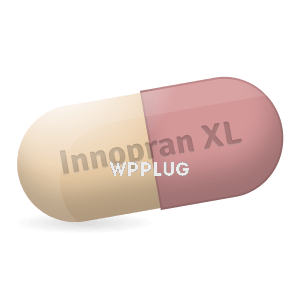
- Formulations: Available in immediate-release (IR) tablets and long-acting sustained-release (SR) capsules.
Benefits
- Effective management of hypertension by reducing cardiac output and peripheral vascular resistance.
- Provides rate control and anti-arrhythmic effects in conditions like atrial fibrillation and tachyarrhythmias.
- Reduces the frequency and severity of angina pectoris attacks by decreasing myocardial oxygen demand.
- Offers significant prophylactic benefit for migraine headache, reducing both frequency and intensity.
- Alleviates the somatic symptoms of performance anxiety and situational anxiety (e.g., stage fright) by blunting the peripheral adrenergic response.
- Improves survival and functional status in post-myocardial infarction patients as part of a secondary prevention strategy.
Common use
Propranolol is indicated for the management of a wide spectrum of conditions. Its primary cardiovascular uses include hypertension, angina pectoris, supraventricular and ventricular tachyarrhythmias, atrial flutter and fibrillation, and secondary prevention after myocardial infarction. In neurology, it is a well-established prophylactic treatment for migraine headaches. It is also used off-label for the somatic symptoms of anxiety (e.g., essential tremor, performance anxiety), symptom control in hyperthyroidism (particularly thyrotoxicosis), and as part of the management protocol for certain types of portal hypertension and pheochromocytoma (always in combination with an alpha-blocker).
Dosage and direction
Dosage is highly individualized based on the indication, patient response, and formulation. Immediate-Release (IR) Tablets: For hypertension, initial doses often start at 40 mg twice daily, which may be increased to 120-240 mg daily in divided doses. For angina, typical doses range from 80-320 mg daily in divided doses. For migraine prophylaxis, common doses are 80-240 mg daily in divided doses. For arrhythmias, doses of 10-30 mg three or four times daily are typical. Sustained-Release (SR) Capsules: These are designed for once-daily dosing, with the total daily dose typically equivalent to the total daily IR dose. Dosing should be initiated at low levels and titrated upward gradually. Administration with food can enhance bioavailability. Abrupt discontinuation must be avoided; the dosage should be tapered gradually over 1-2 weeks to prevent rebound hypertension or angina.
Precautions
Close monitoring is required in patients with a history of compensated heart failure, as beta-blockers can potentially precipitate overt failure. Use with extreme caution in patients with diabetes mellitus, as propranolol can mask important signs of hypoglycemia (e.g., tachycardia) and may potentiate insulin-induced hypoglycemia. It can also mask signs of hyperthyroidism. Caution is advised in patients with hepatic impairment, as metabolism is reduced, necessitating dose adjustments. Patients should be advised that propranolol may cause fatigue, dizziness, or lightheadedness, especially at the initiation of therapy. Ophthalmological monitoring may be considered in patients on chronic therapy, though the risk of ocular side effects is lower than with non-selective beta-blockers.
Contraindications
Propranolol is contraindicated in patients with cardiogenic shock, sinus bradycardia (heart rate < 50 bpm unless in a monitored setting for arrhythmia) and greater than first-degree heart block (e.g., second- or third-degree AV block without a permanent pacemaker), overt cardiac failure (unless the failure is secondary to a tachyarrhythmia treatable with propranolol), and sick sinus syndrome. It is absolutely contraindicated in patients with severe bronchial asthma or a history of bronchospasm, including severe COPD, due to its non-selective blockade of β₂-receptors in the lungs. It is also contraindicated in patients with known hypersensitivity to propranolol or any component of the formulation.
Possible side effect
The majority of adverse effects are dose-dependent and related to its pharmacological beta-blockade.
- Very Common/Common: Bradycardia, cold extremities, fatigue, dizziness, sleep disturbances (insomnia or vivid dreams), nausea, diarrhea or constipation.
- Less Common: Bronchospasm (in susceptible individuals), heart failure exacerbation, hypotension, depression, Raynaud’s phenomenon, impotence or erectile dysfunction.
- Rare: Hallucinations, blood dyscrasias (e.g., thrombocytopenic purpura), alopecia, psoriasiform rashes or exacerbation of psoriasis, and Peyronie’s disease.
Drug interaction
Propranolol has a significant potential for drug-drug interactions due to its metabolism and mechanism.
- Pharmacodynamic Antagonism: Concomitant use with other negative chronotropes/inotropes (e.g., verapamil, diltiazem, digoxin) can lead to severe bradycardia and AV block.
- Hypotension Potentiation: Additive hypotensive effects can occur with other antihypertensives, nitrates, and PDE5 inhibitors (e.g., sildenafil).
- Hypoglycemia: May mask tachycardia from hypoglycemia and potentiate the effects of insulin and oral hypoglycemic agents.
- Enzyme Inhibitors: Drugs that inhibit CYP2D6 (e.g., fluoxetine, paroxetine, quinidine) or CYP1A2 (e.g., fluvoxamine, ciprofloxacin) can significantly increase propranolol plasma levels.
- Enzyme Inducers: Drugs that induce hepatic enzymes (e.g., rifampin, phenobarbital, smoking) can decrease propranolol levels and efficacy.
- Sympathomimetics: Drugs like epinephrine and pseudoephedrine can lead to unopposed alpha-adrenergic activity, causing severe hypertension and bradycardia.
Missed dose
If a dose is missed, it should be taken as soon as it is remembered. However, if it is almost time for the next scheduled dose, the missed dose should be skipped. The patient should never take a double dose to make up for a missed one. Maintaining a consistent dosing schedule is crucial for stable therapeutic effect, particularly for cardiovascular indications.
Overdose
Overdose manifests as an exaggeration of its pharmacological effects. Signs and symptoms include severe bradycardia, hypotension, heart failure, bronchospasm, hypoglycemia, and coma. Cardiogenic shock and cardiac arrest may occur. Treatment is primarily supportive and symptomatic. Key interventions include:
- Atropine: For severe bradycardia.
- Glucagon: A first-line inotropic agent to overcome beta-blockade (5-10 mg IV bolus, followed by infusion).
- Vasopressors: Such as norepinephrine, epinephrine, or dobutamine for hypotension and shock.
- IV Fluids: For volume expansion.
- IV Glucose: For hypoglycemia.
- Bronchodilators: Such as salbutamol for bronchospasm.
- Cardiac Pacing: May be required for refractory bradycardia.
Gastric lavage may be considered if ingestion was very recent. Hemodialysis is not effective due to high protein binding.
Storage
Store at controlled room temperature (20°-25°C or 68°-77°F), in a tight, light-resistant container. Keep out of reach of children and pets. Do not use after the expiration date printed on the bottle. Protect from moisture. Do not remove desiccant canisters from bottles.
Disclaimer
This information is intended for educational and informational purposes only for qualified healthcare professionals. It is not a substitute for professional medical advice, diagnosis, or treatment. Always seek the advice of a physician or other qualified health provider with any questions you may have regarding a medical condition or medication. Never disregard professional medical advice or delay in seeking it because of something you have read here. The author and publisher are not responsible for any errors or omissions or for any outcomes resulting from the use of this information.
Reviews
- “A foundational agent in our cardiology toolkit. Its non-selectivity requires vigilance in patients with reactive airways, but its efficacy in rate control and post-MI care is undeniable.” – Cardiologist, 15 years experience
- “My first-line choice for prophylactic migraine management in patients without contraindications. The sustained-release formulation greatly improves adherence.” – Neurologist, 10 years experience
- “Invaluable for managing the peripheral symptoms of performance anxiety. It allows patients to perform without the debilitating physical manifestations of adrenaline.” – Psychiatrist, 8 years experience
- “Requires careful patient selection and education. The side effect profile, particularly fatigue and bradycardia, can be limiting for some, but for the right patient, it is extremely effective.” – General Practitioner, 20 years experience