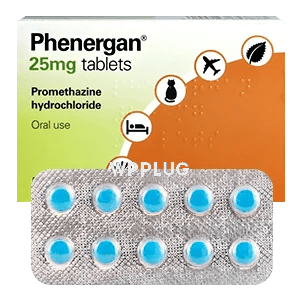
| Product dosage: 25mg | |||
|---|---|---|---|
| Package (num) | Per pill | Price | Buy |
| 90 | $0.47 | $42.12 (0%) | 🛒 Add to cart |
| 120 | $0.44 | $56.16 $53.15 (5%) | 🛒 Add to cart |
| 180 | $0.41 | $84.23 $73.20 (13%) | 🛒 Add to cart |
| 270 | $0.39 | $126.35 $105.29 (17%) | 🛒 Add to cart |
| 360 | $0.38
Best per pill | $168.47 $136.38 (19%) | 🛒 Add to cart |
Synonyms
| |||
Phenergan: Expert Relief for Severe Allergies and Nausea
Phenergan (promethazine hydrochloride) is a prescription phenothiazine-derivative medication with potent antihistaminic, antiemetic, and sedative properties. It is a versatile therapeutic agent indicated for the management of severe allergic reactions, prevention and treatment of nausea and vomiting, as a sedative for procedural anxiety, and as an adjunct to analgesics for postoperative pain. Its efficacy stems from its action as a histamine H1-receptor antagonist and its effects on the central nervous system, including depression of the medullary chemoreceptor trigger zone. This product card provides a comprehensive, expert-level overview of its appropriate clinical use, safety profile, and pharmacological characteristics for healthcare professionals.
Features
- Active Ingredient: Promethazine Hydrochloride.
- Pharmacological Class: Phenothiazine derivative; first-generation antihistamine (H1-receptor antagonist).
- Available Formulations: Oral tablets (12.5 mg, 25 mg, 50 mg), oral syrup, rectal suppositories, and injectable solution for intramuscular or intravenous administration.
- Mechanism of Action: Competitively antagonizes histamine at H1-receptor sites; possesses significant anticholinergic and central nervous system depressant effects.
- Onset of Action: Oral/Rectal: ~20 minutes; Injectable: ~5 minutes.
- Duration of Action: 4 to 6 hours, though sedative effects may persist for up to 12 hours.
- Half-life: Approximately 9-16 hours.
Benefits
- Provides rapid and effective relief from severe allergic symptoms, including urticaria, angioedema, and anaphylactoid reactions as an adjunct to epinephrine.
- Effectively prevents and treats nausea and vomiting associated with anesthesia, surgery, motion sickness, and chemotherapy.
- Offers pronounced sedative effects for pre-operative medication and management of procedural anxiety.
- Serves as an adjunct therapy to potentiate the effects of opioid analgesics, allowing for lower opioid doses in pain management.
- Provides anti-motion sickness properties for patients susceptible to vestibular disturbances.
Common use
Phenergan is indicated for a range of clinical scenarios requiring its specific pharmacological profile. Its primary uses include the management of perennial and seasonal allergic rhinitis, vasomotor rhinitis, and allergic conjunctivitis. It is highly effective for treating allergic reactions to blood or plasma and as adjunctive therapy for anaphylactic reactions. Its potent antiemetic properties make it a cornerstone for preventing and controlling postoperative nausea and vomiting (PONV), as well as nausea associated with motion sickness and radiation therapy. Furthermore, it is utilized for nighttime sedation, preoperative sedative-hypnotic purposes, and as an adjunct to analgesics for controlling postoperative pain.
Dosage and direction
Dosage is highly individualized based on the patient’s condition, age, weight, and clinical response. The following are general guidelines; always follow specific prescribing instructions.
Adults:
- Allergy/Nausea/Sedation: 12.5 mg to 25 mg orally, rectally, or by deep IM injection two to three times daily as needed.
- Motion Sickness: 25 mg orally twice daily (initial dose 30 minutes before travel, repeat 8 to 12 hours later if necessary).
- Postoperative Pain Adjunct: 25 to 50 mg IM/IV as a single dose.
- Postoperative Nausea: 12.5 to 25 mg IM/IV; repeat at 4-hour intervals as needed.
Pediatric Patients (≥2 years): Dosing is based on weight and should be calculated carefully to avoid overdose. Typically, 0.25 to 0.5 mg per pound of body weight (0.5 to 1 mg/kg) orally, rectally, or by IM injection, up to a maximum of 25 mg, administered at 4- to 6-hour intervals as needed.
Administration Notes:
- IV Administration: Must be administered slowly, at a concentration not greater than 25 mg/mL, and at a rate not exceeding 25 mg/minute. IV administration carries a risk of severe chemical irritation and tissue injury (e.g., gangrene) and is reserved for deep sedation or specific surgical settings.
- IM Administration: Administer by deep intramuscular injection.
- Elderly/Debilitated Patients: Use a lower initial dose (e.g., 6.25 to 12.5 mg) due to increased susceptibility to anticholinergic and sedative effects.
Precautions
Phenergan requires careful patient assessment and monitoring due to its significant CNS and anticholinergic effects.
- CNS Depression: Potentiates the effects of other CNS depressants (alcohol, opioids, sedatives). Caution patients against driving or operating hazardous machinery.
- Respiratory Depression: Use with extreme caution in patients with compromised respiratory function (e.g., COPD, sleep apnea) or in conjunction with other respiratory depressants. Contraindicated in children under 2 years due to risk of fatal respiratory depression.
- Anticholinergic Effects: May cause dry mouth, blurred vision, urinary retention, and constipation. Use with caution in patients with narrow-angle glaucoma, prostatic hypertrophy, stenosing peptic ulcer, or pyloroduodenal obstruction.
- Seizure Threshold: May lower the seizure threshold; use with caution in patients with seizure disorders.
- Bone Marrow Suppression: Rare cases of agranulocytosis and leukopenia have been reported; monitor for signs of infection.
- Extrapyramidal Symptoms (EPS): May cause dystonia, akathisia, Parkinsonism, and tardive dyskinesia, especially with high doses or long-term use.
- IV Extravasation: IV administration can cause severe chemical irritation to tissues and lead to gangrene if extravasation occurs. Prefer the deep IM route when possible.
Contraindications
Phenergan is contraindicated in the following situations:
- Known hypersensitivity to promethazine, other phenothiazines, or any component of the formulation.
- Children under 2 years of age due to the potential for fatal respiratory depression.
- Comatose patients or patients with significantly depressed levels of consciousness.
- Use in the treatment of lower respiratory tract symptoms, including asthma.
- Intra-arterial or subcutaneous injection is strictly contraindicated due to the high risk of severe tissue injury.
Possible side effect
Side effects are dose-related and more common with higher doses.
- Common: Marked sedation, drowsiness, dizziness, blurred vision, dry mouth, nausea, vomiting, and disorientation.
- Neurological: Extrapyramidal symptoms (e.g., dystonia, oculogyric crisis), confusion, insomnia, nightmares, and rarely, neuroleptic malignant syndrome (NMS).
- Cardiovascular: Tachycardia, bradycardia, mild hypotension, and faintness. IV administration can cause a transient fall in blood pressure.
- Dermatological: Photosensitivity, rash, urticaria.
- Hematological: Rare agranulocytosis, leukopenia, thrombocytopenia.
- Gastrointestinal: Constipation.
- Other: Jaundice, abnormal involuntary movements (tardive dyskinesia).
Drug interaction
Phenergan has numerous significant drug interactions.
- CNS Depressants (Alcohol, Opioids, Benzodiazepines, General Anesthetics, Sedative-Hypnotics): Concomitant use results in additive CNS depression. Dosage of one or both agents should be reduced.
- Epinephrine: Phenergan may reverse the vasopressor effect of epinephrine; use norepinephrine for vasopressor support if needed.
- Anticholinergics (e.g., Atropine, TCAs): Additive anticholinergic effects (dry mouth, blurred vision, urinary retention).
- Monoamine Oxidase Inhibitors (MAOIs): Concomitant use may potentiate the anticholinergic and extrapyramidal effects of promethazine.
- Lithium: May reduce lithium concentrations; may also increase the risk of extrapyramidal symptoms.
Missed dose
As Phenergan is typically taken on an as-needed (PRN) basis for symptomatic relief, a formal dosing schedule is uncommon. If it is prescribed on a regular schedule and a dose is missed, it should be taken as soon as it is remembered. However, if it is almost time for the next scheduled dose, the missed dose should be skipped. The dose should not be doubled to make up for a missed one.
Overdose
Overdose with Phenergan is primarily an extension of its pharmacological actions and constitutes a medical emergency.
- Symptoms: Profound CNS depression (ranging from drowsiness to coma), hypotension, respiratory depression, hypothermia, hyperreflexia progressing to areflexia, convulsions, cardiorespiratory arrest, and anticholinergic effects (e.g., dry mouth, fixed dilated pupils, flushing, GI hypomotility).
- Treatment: There is no specific antidote. Management is supportive and symptomatic.
- Airway: Secure and maintain a patent airway; assist ventilation if necessary.
- GI Decontamination: Gastric lavage may be considered if presented early. Administer activated charcoal.
- Hypotension: Treat with IV fluids and vasopressors (e.g., norepinephrine, phenylephrine). Avoid epinephrine, as its vasopressor effects may be reversed.
- Convulsions: Control with IV diazepam or lorazepam.
- Extrapyramidal Symptoms: Treat with diphenhydramine or benztropine.
- Monitoring: Continuous monitoring of vital signs, ECG, and neurological status is essential.
Storage
- Store at controlled room temperature, 20°C to 25°C (68°F to 77°F).
- Protect from light.
- Keep the oral syrup tightly closed.
- Keep all medications out of the reach of children and pets.
- Do not use if the solution is discolored or contains particulate matter.
Disclaimer
This information is for educational and professional medical reference purposes only and is not a substitute for the professional judgment of a qualified healthcare provider in diagnosing and treating patients. The content does not cover all possible uses, directions, precautions, interactions, or adverse effects. The author and publisher are not responsible for any errors, omissions, or consequences resulting from the use of this information. The reader is advised to consult the full manufacturer’s prescribing information and other authoritative sources before administering any drug. Dosing and indications may vary based on product formulation and regional licensing.
Reviews
- “An indispensable tool in the anesthesiologist’s kit for managing PONV. Its sedative and antiemetic properties are highly effective, though its side effect profile demands respect and careful patient selection.” – Clinical Anesthesiologist
- “For severe, acute allergic presentations in the ER, IV Phenergan remains a powerful adjunct to epinephrine and steroids. The risk of tissue injury with IV push mandates strict adherence to dilution and administration protocols.” – Emergency Medicine Physician
- “While effective, its use in pediatric populations is fraught with risk. We reserve it for severe cases in children over 2 and dose meticulously by weight, preferring alternative antiemetics and antihistamines when possible.” – Pediatric Intensivist
- “The sedative and anxiolytic effect is profound and reliable for pre-operative preparation. However, the prolonged duration of sedation can delay recovery room discharge, which is a practical consideration.” – Perioperative Nurse