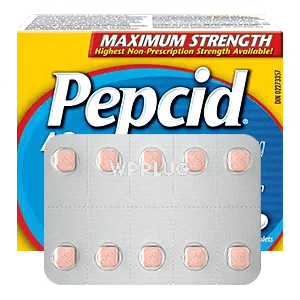
| Product dosage: 20mg | |||
|---|---|---|---|
| Package (num) | Per pill | Price | Buy |
| 56 | $1.26 | $70.30 (0%) | 🛒 Add to cart |
| 84 | $1.20 | $105.45 $100.43 (5%) | 🛒 Add to cart |
| 112 | $1.08 | $140.60 $120.51 (14%) | 🛒 Add to cart |
| 168 | $0.84 | $210.89 $140.60 (33%) | 🛒 Add to cart |
| 224 | $0.72 | $281.19 $160.68 (43%) | 🛒 Add to cart |
| 336 | $0.63
Best per pill | $421.79 $210.89 (50%) | 🛒 Add to cart |
| Product dosage: 40mg | |||
|---|---|---|---|
| Package (num) | Per pill | Price | Buy |
| 56 | $1.43 | $80.34 (0%) | 🛒 Add to cart |
| 84 | $1.32 | $120.51 $110.47 (8%) | 🛒 Add to cart |
| 112 | $1.17 | $160.68 $130.55 (19%) | 🛒 Add to cart |
| 168 | $0.90 | $241.02 $150.64 (38%) | 🛒 Add to cart |
| 224 | $0.81 | $321.36 $180.77 (44%) | 🛒 Add to cart |
| 336 | $0.73
Best per pill | $482.04 $246.04 (49%) | 🛒 Add to cart |
Synonyms | |||
Pepcid: Effective Relief for Heartburn and Acid Reflux
Pepcid (famotidine) is a histamine-2 (H2) blocker medication clinically proven to reduce stomach acid production. It provides rapid and long-lasting relief from frequent heartburn, acid indigestion, and gastroesophageal reflux disease (GERD) symptoms. By inhibiting acid secretion at the receptor level, it offers a targeted mechanism of action suitable for both episodic and chronic management. Available over-the-counter and by prescription in varying strengths, it remains a cornerstone in acid-related disorder therapeutics.
Features
- Active ingredient: Famotidine 10mg or 20mg (tablets); 20mg/5mL (oral suspension)
- Drug class: Histamine H2-receptor antagonist
- Onset of action: Within 1 hour
- Duration of effect: Up to 12 hours of acid control
- Formulations: Tablets, chewable tablets, oral suspension
- Prescription strengths available for severe cases (e.g., 40mg)
Benefits
- Provides rapid relief from heartburn, sour stomach, and acid indigestion
- Reduces the frequency and severity of GERD and erosive esophagitis symptoms
- Allows healing of acid-damaged esophageal and gastric tissue with prolonged use
- Minimizes nocturnal acid breakthrough when taken at bedtime
- Non-systemic mechanism avoids many drug interactions common with proton pump inhibitors (PPIs)
- Available without a prescription for convenient access to effective acid control
Common use
Pepcid is commonly used for the short-term treatment of active duodenal ulcers, active benign gastric ulcers, pathological hypersecretory conditions (such as Zollinger-Ellison syndrome), and gastroesophageal reflux disease (GERD). It is also widely utilized for the relief of heartburn, acid indigestion, and sour stomach. Many gastroenterologists recommend it as part of combination therapy for H. pylori eradication or as an adjunct to proton pump inhibitors for managing nocturnal acid breakthrough.
Dosage and direction
For OTC use (heartburn/acid indigestion): Adults and children 12 years and over should take 10mg with water as needed, not exceeding 20mg in 24 hours. Treatment should not continue for more than 14 days without consulting a healthcare provider.
For prescription strengths (under medical supervision):
- Active duodenal ulcer: 40mg once daily at bedtime for 4-8 weeks
- GERD: 20mg twice daily for up to 6 weeks
- Pathological hypersecretory conditions: 20mg every 6 hours, adjusted as needed
- Renal impairment: Dosage adjustment required (e.g., 20mg at bedtime or every other day for CrCl <10mL/min)
Tablets should be swallowed whole with water; oral suspension should be shaken well before use and measured with the provided dosing cup.
Precautions
Patients should consult a healthcare provider before use if they have trouble or pain when swallowing food, vomiting with blood, or bloody or black stools. Those with kidney problems, immune system disorders, or a history of porphyria should exercise caution. Long-term use may require monitoring of vitamin B12 levels as acid suppression can affect absorption. Elderly patients may be more sensitive to side effects and often require dosage adjustments.
Contraindications
Pepcid is contraindicated in patients with known hypersensitivity to famotidine or any component of the formulation. Cross-sensitivity with other H2-receptor antagonists may occur. Should not be used by patients with acute porphyria or severe renal impairment without proper dosage adjustment and monitoring.
Possible side effects
Common side effects (≥1% incidence) include headache, dizziness, constipation, and diarrhea. Less frequent adverse reactions (<1%) may include dry mouth, nausea, fatigue, and insomnia. Rare but serious side effects require immediate medical attention: fast or pounding heartbeat, easy bruising/bleeding, signs of infection (fever, persistent sore throat), mental/mood changes, or severe stomach pain.
Drug interaction
Famotidine may alter the absorption of drugs requiring acidic gastric environment (e.g., ketoconazole, itraconazole, atazanavir). May increase pH-dependent drugs’ bioavailability (e.g., sucralfate). Moderate interaction potential with warfarin (monitor INR), procainamide (increased levels), and certain antifungals. Unlike some H2 antagonists, famotidine has minimal interaction with cytochrome P450 system, making it preferable for patients on multiple medications.
Missed dose
If a dose is missed, take it as soon as remembered unless it is nearly time for the next dose. Do not double the dose to catch up. For once-daily dosing regimens, take the missed dose if remembered within 12 hours of the scheduled time. For multiple daily dosing, resume the regular schedule without compensation.
Overdose
Symptoms of overdose may include rapid heartbeat, nausea, vomiting, diarrhea, hypotension, and CNS effects including agitation and confusion. Management includes supportive care and gastric lavage if presented early. Hemodialysis removes approximately 65-70% of circulating famotidine and may be considered in severe cases. There is no specific antidote.
Storage
Store at room temperature (15-30°C or 59-86°F) away from light and moisture. Do not store in bathroom. Keep oral suspension tightly closed and discard after 30 days of opening. Keep all medications away from children and pets. Do not flush medications down toilet or pour into drain unless instructed.
Disclaimer
This information is for educational purposes only and does not constitute medical advice. Individual responses to medication may vary. Consult a healthcare professional before starting, stopping, or changing any medication regimen. Do not use after expiration date. Report any adverse effects to your physician or the FDA MedWatch program.
Reviews
Clinical studies demonstrate famotidine’s efficacy with 70-80% of GERD patients experiencing significant symptom relief within 1-2 weeks. Many gastroenterologists note its particular value for nocturnal acid suppression and as adjunct therapy. Patient reviews frequently highlight its rapid onset compared to antacids and better tolerance profile than proton pump inhibitors for intermittent use. Some users report diminished effectiveness with prolonged continuous use, though cycling strategies often maintain efficacy.