
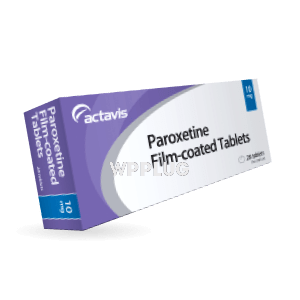
| Product dosage: 20mg | |||
|---|---|---|---|
| Package (num) | Per pill | Price | Buy |
| 30 | $1.48 | $44.40 (0%) | 🛒 Add to cart |
| 60 | $1.16 | $88.80 $69.63 (22%) | 🛒 Add to cart |
| 90 | $1.07 | $133.20 $95.86 (28%) | 🛒 Add to cart |
| 120 | $1.01 | $177.60 $121.09 (32%) | 🛒 Add to cart |
| 180 | $0.95 | $266.40 $170.54 (36%) | 🛒 Add to cart |
| 270 | $0.92 | $399.60 $248.24 (38%) | 🛒 Add to cart |
| 360 | $0.90
Best per pill | $532.80 $323.92 (39%) | 🛒 Add to cart |
Synonyms
| |||
Similar products
Paroxetine: Restore Balance with Effective SSRI Therapy
Paroxetine is a selective serotonin reuptake inhibitor (SSRI) widely prescribed for the management of major depressive disorder, anxiety disorders, and related conditions. As a potent and well-studied agent in its class, it functions by increasing serotonin levels in the brain, which helps improve mood, reduce anxiety, and restore emotional stability. Its efficacy, tolerability profile, and variety of formulations make it a cornerstone in psychiatric and primary care treatment protocols worldwide.
Features
- Active ingredient: Paroxetine hydrochloride
- Available in immediate-release tablets, controlled-release tablets, and oral suspension
- Standard strengths: 10 mg, 20 mg, 30 mg, 40 mg tablets; 12.5 mg, 25 mg, 37.5 mg controlled-release
- FDA-approved for major depressive disorder, panic disorder, social anxiety disorder, generalized anxiety disorder, obsessive-compulsive disorder, and post-traumatic stress disorder
- Half-life approximately 21 hours (immediate-release)
- Metabolized primarily by CYP2D6 enzyme
Benefits
- Effectively alleviates symptoms of depression and anxiety, supporting improved daily functioning
- Reduces frequency and intensity of panic attacks and obsessive-compulsive behaviors
- Helps restore sleep patterns, appetite, and energy levels in individuals with mood disorders
- Long-term use may prevent relapse or recurrence of depressive episodes
- Available in multiple formulations to accommodate individual tolerance and dosing needs
- Improves overall quality of life and social engagement
Common use
Paroxetine is indicated for the treatment of major depressive disorder (MDD) in adults, providing relief from persistent low mood, anhedonia, and associated somatic symptoms. It is also approved for panic disorder with or without agoraphobia, social anxiety disorder (social phobia), generalized anxiety disorder (GAD), obsessive-compulsive disorder (OCD), and post-traumatic stress disorder (PTSD). Off-label uses may include premenstrual dysphoric disorder (PMDD), vasomotor symptoms of menopause, and certain chronic pain conditions, though these should be carefully evaluated by a healthcare provider.
Dosage and direction
Dosage must be individualized based on diagnosis, patient response, and tolerability. For major depressive disorder and most anxiety disorders, the recommended starting dose is 20 mg once daily, preferably in the morning with or without food. Dose adjustments may be made in increments of 10 mg per day at intervals of at least one week, up to a maximum of 50 mg/day for immediate-release or 62.5 mg/day for controlled-release formulations. For panic disorder, a lower starting dose (e.g., 10 mg) may be used to minimize initial agitation or anxiety. Elderly patients, those with hepatic or renal impairment, or poor metabolizers may require lower doses and slower titration. Abrupt discontinuation should be avoided; taper gradually under medical supervision.
Precautions
Patients should be monitored closely for clinical worsening, suicidality, or unusual changes in behavior, especially during the initial months of therapy or after dose changes. Paroxetine may impair judgment, thinking, or motor skills; caution is advised when driving or operating machinery. Use with care in patients with a history of mania, seizures, or angle-closure glaucoma. Regular assessment of electrolyte levels (particularly sodium) is recommended due to risk of SIADH. Bone density monitoring may be considered in long-term users. Pregnancy and breastfeeding require careful risk-benefit evaluation.
Contraindications
Paroxetine is contraindicated in patients taking monoamine oxidase inhibitors (MAOIs) or within 14 days of discontinuing MAOI therapy due to risk of serotonin syndrome. It should not be used concomitantly with thioridazine or pimozide. Contraindicated in individuals with known hypersensitivity to paroxetine or any component of the formulation. Not recommended in patients with uncontrolled narrow-angle glaucoma or severe hepatic impairment.
Possible side effects
Common side effects (≥1%) include nausea, somnolence, asthenia, dizziness, insomnia, sweating, sexual dysfunction, constipation, diarrhea, dry mouth, and decreased appetite. Less frequently, weight gain, tremor, blurred vision, yawning, and palpitations may occur. Serious adverse effects include serotonin syndrome, hyponatremia, abnormal bleeding, angle-closure glaucoma, manic episodes, seizures, and discontinuation symptoms. SSRI use may be associated with a small increased risk of suicidal thoughts or behaviors in young adults.
Drug interaction
Paroxetine is a strong inhibitor of CYP2D6 and may increase plasma concentrations of drugs metabolized by this enzyme (e.g., tricyclic antidepressants, antipsychotics, beta-blockers, antiarrhythmics). Concomitant use with serotonergic drugs (e.g., other SSRIs, SNRIs, triptans, tramadol) increases risk of serotonin syndrome. NSAIDs, aspirin, or other anticoagulants may elevate bleeding risk. Use with caution alongside drugs that prolong QT interval. Avoid St. John’s wort due to additive serotonergic effects.
Missed dose
If a dose is missed, it should be taken as soon as remembered unless it is almost time for the next scheduled dose. In that case, skip the missed dose and resume the regular dosing schedule. Do not double the dose to make up for a missed one. Consistent daily dosing is important to maintain stable serum levels.
Overdose
Symptoms of overdose may include nausea, vomiting, tremor, agitation, dizziness, tachycardia, dilated pupils, and drowsiness. Severe overdose can lead to serotonin syndrome, seizures, coma, or ECG changes. There is no specific antidote; management involves supportive care, gastric lavage if presented early, activated charcoal, and monitoring of vital signs and ECG. Contact a poison control center or seek emergency medical attention immediately.
Storage
Store at room temperature (20–25°C or 68–77°F), in a tightly closed container, away from light, moisture, and heat. Keep out of reach of children and pets. Do not use beyond the expiration date printed on the packaging. Oral suspension should not be frozen; discard any unused portion after 60 days.
Disclaimer
This information is intended for educational purposes only and does not constitute medical advice. Always consult a qualified healthcare professional before starting, changing, or discontinuing any medication. Individual response to paroxetine may vary. Not all uses, precautions, or interactions are listed here.
Reviews
Clinical studies and meta-analyses consistently support the efficacy of paroxetine in treating depression and anxiety disorders, with response rates often exceeding 50–60% in compliant patients. Many users report significant improvement in mood, reduced anxiety, and better functional outcomes over 6–12 weeks of treatment. Some note initial side effects such as nausea or drowsiness, which often subside with continued use. Long-term users emphasize the importance of not discontinuing abruptly. Overall, paroxetine remains a widely trusted option within the SSRI class, particularly for patients with comorbid anxiety and depression.