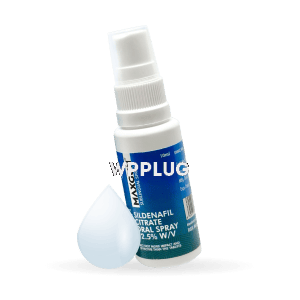
| Product dosage: 10 ml | |||
|---|---|---|---|
| Package (num) | Per sprayer | Price | Buy |
| 5 | $18.01 | $90.05 (0%) | 🛒 Add to cart |
| 7 | $16.01 | $126.07 $112.07 (11%) | 🛒 Add to cart |
| 10 | $14.51
Best per sprayer | $180.11 $145.08 (19%) | 🛒 Add to cart |
MaxGun Sublingual Spray: Rapid Nitroglycerin Relief for Anginal Episodes
MaxGun Sublingual Spray is a fast-acting, metered-dose nitroglycerin formulation designed for the acute relief of angina pectoris attacks. It is indicated for use in patients with a confirmed diagnosis of coronary artery disease, providing prompt vasodilation to alleviate cardiac ischemia. This sublingual delivery system ensures rapid systemic absorption, bypassing first-pass metabolism for a more predictable therapeutic response. Its portable, pressurized canister offers a reliable and convenient alternative to sublingual tablets, especially in situations requiring swift intervention.
Features
- Contains nitroglycerin (0.4 mg per metered dose)
- Sublingual administration for rapid onset of action (typically 1–3 minutes)
- Pressurized, metered-dose aerosol delivery system
- Portable, pocket-sized aluminum canister with protective dust cap
- Alcohol-free formulation
- Shelf-stable at recommended storage conditions
- Each canister delivers at least 200 consistent doses
- Tamper-evident packaging
Benefits
- Provides rapid relief from acute anginal pain by reducing cardiac preload and afterload
- Decreases myocardial oxygen demand through venous and arterial dilation
- Offers a more reliable and stable alternative to sublingual tablets, which can degrade with humidity or age
- Convenient and discreet for use in various settings, including during physical activity
- Consistent dosing with each spray, minimizing administration errors
- Can be used prophylactically before anticipated exertion in patients with stable angina
Common use
MaxGun Sublingual Spray is primarily used for the acute treatment of angina pectoris attacks in patients with known coronary artery disease. It is also employed prophylactically to prevent angina episodes that may be precipitated by predictable physical exertion or emotional stress. The spray is not intended for routine, scheduled use or for the treatment of acute coronary syndromes like myocardial infarction, unless specifically directed under medical supervision.
Dosage and direction
Administer one metered spray (0.4 mg) onto or under the tongue at the onset of an anginal attack. Do not inhale the spray. Close the mouth immediately after administration and avoid swallowing for approximately 30 seconds to facilitate sublingual absorption. If pain persists after 5 minutes, a second dose may be used. If no relief is achieved after three doses within 15 minutes, seek emergency medical attention immediately. For prophylactic use, administer one spray 5–10 minutes prior to activities known to provoke angina.
Precautions
Patients should be seated when administering the dose to minimize the risk of hypotension and syncope. Use with caution in patients with hypovolemia, hypotension, or increased intracranial pressure. Tolerance to nitroglycerin may develop with frequent, continuous use; a nitrate-free interval of 10–12 hours is recommended to prevent tolerance. Headache is a common side effect that often diminishes with continued use. Avoid concurrent use with phosphodiesterase-5 inhibitors (e.g., sildenafil, tadalafil) due to the risk of severe hypotension.
Contraindications
Hypersensitivity to nitroglycerin or any component of the formulation. Concomitant use with phosphodiesterase-5 inhibitors. Patients with severe anemia, increased intracranial pressure, or uncorrected hypovolemia. Not for use in the treatment of cardiogenic shock or marked hypotension (systolic BP <90 mmHg).
Possible side effects
- Headache (most common, often dose-related)
- Dizziness or lightheadedness
- Orthostatic hypotension
- Reflex tachycardia
- Flushing
- Nausea or vomiting
- Weakness
- Syncope (rare, usually with excessive dosing)
Drug interaction
Concomitant use with phosphodiesterase-5 inhibitors (e.g., sildenafil, tadalafil, vardenafil) is contraindicated due to risk of profound hypotension. Additive hypotensive effects may occur with other vasodilators, antihypertensives, calcium channel blockers, beta-blockers, or alcohol. Aspirin may increase nitroglycerin plasma concentrations. Ergot alkaloids may antagonize the vasodilatory effects of nitroglycerin.
Missed dose
Not applicable for as-needed use. For prophylactic dosing, administer as soon as remembered if close to the time of anticipated exertion. Do not double doses.
Overdose
Symptoms include severe hypotension, throbbing headache, dizziness, palpitations, visual disturbances, syncope, and methemoglobinemia (evidenced by cyanosis). Treatment involves placing the patient in a supine position with legs elevated. Administer IV fluids if hypotensive. Methylene blue may be required for methemoglobinemia. Hemodialysis is not effective for nitroglycerin removal.
Storage
Store at controlled room temperature (20–25°C or 68–77°F). Do not freeze. Keep canister away from open flame or excessive heat (>49°C or 120°F), as it may burst. Do not puncture or incinerate. Keep the protective dust cap on when not in use. Discard canister after the labeled number of doses or 3 years after opening, whichever comes first.
Disclaimer
This product is for use only under the supervision of a healthcare professional. It is not a substitute for comprehensive cardiac care. Patients should be educated on proper administration technique and recognition of worsening cardiac symptoms. Always follow the prescribing information and consult a physician for any changes in anginal pattern or frequency.
Reviews
“MaxGun Spray has been a reliable rescue medication for my patients with exertional angina. The metered dose eliminates the variability we sometimes see with sublingual tablets.” — Dr. A. Reynolds, Cardiologist
“As a nurse, I appreciate the consistency and ease of use. Patients find it more convenient than tablets, especially those with dry mouth or dexterity issues.” — Clinical Nurse Specialist, Cardiac Unit
“Having used both tablets and spray, the spray acts faster and doesn’t dissolve unpredictably. It gives me confidence when I’m away from home.” — Patient with stable angina, 68