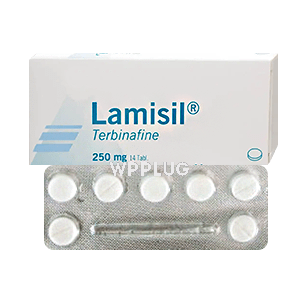
Lamisil: Clinically Proven Antifungal Treatment for Onychomycosis
Lamisil (terbinafine hydrochloride) is a leading oral and topical antifungal medication indicated for the treatment of dermatophyte infections. As a member of the allylamine class, it demonstrates potent fungicidal activity by inhibiting squalene epoxidase, a key enzyme in ergosterol biosynthesis. This mechanism disrupts fungal cell membrane integrity, resulting in rapid fungal cell death. With over three decades of clinical use and extensive research supporting its efficacy, Lamisil remains a first-line therapeutic choice for fungal nail infections (onychomycosis), tinea corporis, tinea cruris, and tinea pedis. Its systemic and topical formulations provide targeted treatment options tailored to infection severity and patient-specific factors.
Features
- Contains terbinafine hydrochloride as the active pharmaceutical ingredient
- Available in 250 mg oral tablets and 1% topical formulations (cream, spray, solution)
- Exhibits broad-spectrum activity against dermatophytes, including Trichophyton, Microsporum, and Epidermophyton species
- Demonstrates fungicidal rather than fungistatic activity
- Features excellent tissue penetration, achieving high concentrations in nails, skin, and hair
- Supported by numerous randomized controlled trials and meta-analyses
Benefits
- Achieves complete mycological cure in approximately 70-80% of onychomycosis cases
- Promotes healthy nail regrowth by eliminating fungal infection at the matrix
- Provides rapid symptomatic relief from itching, scaling, and inflammation
- Reduces risk of fungal transmission to other nails or household contacts
- Offers convenient once-daily dosing for oral formulation
- Minimizes recurrence rates when used as directed with proper foot hygiene
Common use
Lamisil is primarily prescribed for dermatophytoses, with onychomycosis representing its most common indication. Oral terbinafine demonstrates particular efficacy for moderate-to-severe nail infections involving the proximal nail plate or multiple digits. Topical formulations are typically employed for superficial skin infections including athlete’s foot (tinea pedis), jock itch (tinea cruris), and ringworm (tinea corporis). The medication may also be used off-label for certain cutaneous candidiasis infections and pityriasis versicolor, though other antifungals may be preferred for these indications based on practitioner judgment.
Dosage and direction
Oral tablets: Adults typically take 250 mg once daily. For fingernail onychomycosis: 6 weeks duration. For toenail onychomycosis: 12 weeks duration. Take with or without food, though consistent administration with food may improve gastrointestinal tolerance.
Topical formulations: Apply thinly to affected area and surrounding skin once or twice daily as directed. For athlete’s foot: apply between toes and on soles for at least 1 week after symptoms resolve (typically 1-4 weeks). For jock itch or ringworm: continue application for at least 1 week after clearing (typically 1-2 weeks).
Nail infections may require 3-6 months of oral therapy to achieve complete clearance due to slow nail growth. Regular monitoring through clinical assessment and periodic laboratory evaluation is recommended during extended treatment courses.
Precautions
- Complete blood counts should be monitored baseline and during treatment due to rare hematological effects
- Liver function tests recommended at baseline and periodically during therapy
- Use with caution in patients with pre-existing liver disease or alcohol abuse history
- May exacerbate psoriasis or lupus erythematosus
- Topical application may cause skin irritation; discontinue if severe inflammation occurs
- Oral formulation requires dose adjustment in renal impairment (creatinine clearance <50 mL/min)
- Not recommended during pregnancy unless potential benefit justifies potential risk
- Breastfeeding should be discontinued during oral therapy
Contraindications
- Hypersensitivity to terbinafine, allylamines, or any formulation components
- Chronic or active liver disease
- Severe renal impairment (creatinine clearance <30 mL/min)
- History of drug-induced blood dyscrasias
- Concurrent use with specific CYP2D6 substrates with narrow therapeutic indices
Possible side effect
Common (≥1/100): Headache, gastrointestinal disturbances (diarrhea, dyspepsia, nausea, abdominal pain), taste disturbances (usually reversible upon discontinuation), skin rash, pruritus.
Uncommon (≥1/1000): Elevations in liver enzymes, visual disturbances, dizziness, fatigue, joint/muscle pain.
Rare (<1/1000): Severe cutaneous adverse reactions (Stevens-Johnson syndrome, toxic epidermal necrolysis), hepatobiliary dysfunction (including liver failure), blood dyscrasias (neutropenia, agranulocytosis, thrombocytopenia), pancytopenia, depression, anxiety.
Topical formulations primarily cause local reactions including burning, itching, or irritation at application site.
Drug interaction
- Terbinafine inhibits CYP2D6: may increase concentrations of beta-blockers, antidepressants (SSRIs, TCAs), antiarrhythmics (flecainide, propafenone), and monoamine oxidase inhibitors
- Rifampicin accelerates terbinafine metabolism, reducing efficacy
- Cimetidine may increase terbinafine concentrations
- Potential interaction with other hepatotoxic medications (including acetaminophen in high doses)
- Reduced absorption with concomitant administration of aluminum hydroxide antacids
- May potentiate effects of warfarin; monitor INR closely
Missed dose
Take the missed dose as soon as remembered unless it is nearly time for the next scheduled dose. Do not double the dose to make up for a missed one. For topical formulations, apply when remembered and resume regular schedule. Consistent daily administration is important for optimal efficacy, particularly for oral therapy.
Overdose
Symptoms: Primarily gastrointestinal (nausea, vomiting, abdominal pain), dizziness, headache, and potentially more severe effects including hepatotoxicity.
Management: Supportive care with gastric lavage if presented early. Activated charcoal may be administered. No specific antidote exists. Monitor hepatic and hematological parameters closely. Hemodialysis is unlikely to be effective due to high protein binding.
Storage
Store at room temperature (15-30°C/59-86°F) in original container. Protect from light and moisture. Keep oral tablets in blister packaging until administration. Topical formulations should not be frozen. Keep all medications out of reach of children and pets.
Disclaimer
This information is provided for educational purposes only and does not constitute medical advice. Individual response to therapy may vary. Always consult with a qualified healthcare professional before starting, changing, or stopping any medication. Proper diagnosis by a medical practitioner is essential before initiating treatment. Full prescribing information should be reviewed before administration.
Reviews
Clinical studies consistently demonstrate Lamisil’s superiority over other antifungals for dermatophyte infections. A meta-analysis of 15 randomized trials (n=1,832) found oral terbinafine achieved significantly higher cure rates for onychomycosis compared to azole antifungals (74% vs. 48% mycological cure). Dermatologists frequently report satisfaction with its predictable efficacy and generally favorable safety profile. Patients typically note visible improvement within several weeks of initiation, with complete clearance often achieved within the prescribed treatment period. The most common patient-reported concerns involve taste disturbances and gastrointestinal symptoms, though these are generally transient and manageable.