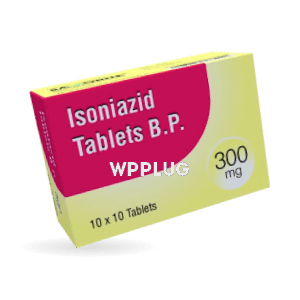
| Product dosage: 300mg | |||
|---|---|---|---|
| Package (num) | Per pill | Price | Buy |
| 90 | $0.50 | $45.18 (0%) | 🛒 Add to cart |
| 120 | $0.46 | $60.23 $55.21 (8%) | 🛒 Add to cart |
| 180 | $0.42 | $90.35 $75.29 (17%) | 🛒 Add to cart |
| 270 | $0.39 | $135.53 $106.41 (21%) | 🛒 Add to cart |
| 360 | $0.38
Best per pill | $180.70 $136.53 (24%) | 🛒 Add to cart |
Synonyms
| |||
Isoniazid: The Gold Standard in Tuberculosis Treatment
Isoniazid is a first-line antituberculosis medication that represents the cornerstone of modern TB therapy worldwide. As a bactericidal antibiotic specifically targeting Mycobacterium tuberculosis, it demonstrates exceptional efficacy in both active tuberculosis treatment and latent infection prevention. Its mechanism of action involves inhibition of mycolic acid synthesis, which is essential for bacterial cell wall integrity. This targeted approach makes isoniazid particularly effective against replicating organisms while maintaining a generally favorable safety profile when used according to established guidelines.
Features
- Bactericidal activity against Mycobacterium tuberculosis
- High oral bioavailability with rapid absorption
- Concentration-dependent killing kinetics
- Penetrates all body tissues and fluids including cerebrospinal fluid
- Available in tablet, syrup, and injectable formulations
- Generic availability ensures cost-effectiveness
- WHO Essential Medicine List inclusion
- Heat-stable formulation suitable for tropical climates
Benefits
- Achieves rapid sputum culture conversion in active tuberculosis
- Reduces transmission risk through effective bacterial eradication
- Prevents progression from latent to active TB infection
- Minimizes long-term pulmonary damage through early intervention
- Enables shorter treatment durations when used in combination therapy
- Provides cost-effective TB control in public health programs
Common use
Isoniazid is primarily indicated for the treatment of all forms of active tuberculosis caused by susceptible strains of Mycobacterium tuberculosis. It must always be administered in combination with other antituberculosis drugs to prevent development of drug resistance. Additionally, it is widely used as monotherapy for the treatment of latent tuberculosis infection in appropriate candidates. The medication plays a crucial role in contact prophylaxis and is particularly valuable in immunocompromised individuals, including HIV-positive patients, where the risk of TB reactivation is significantly elevated. Public health programs frequently employ isoniazid preventive therapy in high-burden settings.
Dosage and direction
Active tuberculosis: 5 mg/kg (usual adult dose 300 mg) daily or 15 mg/kg (maximum 900 mg) 2-3 times weekly as part of combination therapy. Latent tuberculosis: 300 mg daily for 6-9 months or 900 mg twice weekly for 9 months under directly observed therapy. Pediatric dosing: 10-15 mg/kg daily (maximum 300 mg) or 20-40 mg/kg twice weekly. Administration should occur on an empty stomach, preferably one hour before or two hours after meals, to optimize absorption. Dosage adjustments are necessary in patients with slow acetylator status and those with hepatic impairment.
Precautions
Baseline liver function tests are mandatory before initiation and should be monitored monthly during treatment. Patients should be educated to report any symptoms of hepatitis including fatigue, nausea, vomiting, dark urine, or jaundice immediately. Vitamin B6 (pyridoxine) supplementation at 25-50 mg daily is recommended to prevent peripheral neuropathy, particularly in malnourished patients, alcoholics, diabetics, and those with HIV. Regular visual acuity testing is advised as isoniazid may cause optic neuritis. Blood glucose monitoring is necessary in diabetic patients as hyperglycemia may occur.
Contraindications
Absolute contraindications include previous severe hypersensitivity reactions to isoniazid, acute liver disease of any etiology, or severe hepatic impairment. Previous isoniazid-associated liver injury constitutes a strong contraindication. The drug should not be administered during acute hepatitis episodes. Relative contraindications include chronic liver disease, alcohol dependence, and peripheral neuropathy. Caution is required in patients with renal impairment requiring dosage adjustment. Pregnancy is not an absolute contraindication but requires careful risk-benefit assessment.
Possible side effect
Common: Elevated liver enzymes (10-20% of patients), peripheral neuropathy (preventable with pyridoxine), gastrointestinal disturbances including nausea and epigastric discomfort. Less common: Rash, fever, arthralgia, hematologic abnormalities including agranulocytosis. Rare but serious: Clinical hepatitis occurs in approximately 0.1-0.3% of patients, severe hypersensitivity reactions, optic neuritis and atrophy, psychosis or seizures, pellagra-like syndrome. Most adverse effects are dose-related and reversible upon discontinuation.
Drug interaction
Isoniazid inhibits cytochrome P450 enzymes, particularly CYP2C19 and CYP3A4, leading to numerous interactions. Significantly increases concentrations of phenytoin, carbamazepine, and benzodiazepines. Potentiates effects of warfarin requiring INR monitoring. Concurrent use with rifampin increases hepatotoxicity risk. Reduces metabolism of theophylline, valproate, and disulfiram. Interaction with ketoconazole may reduce antifungal efficacy. Alcohol consumption increases hepatotoxicity risk. Food rich in tyramine may cause hypertensive crisis.
Missed dose
If a dose is missed, it should be taken as soon as remembered unless it is nearly time for the next dose. Doubling of doses should be avoided. For patients on daily therapy, consistency is more important than exact timing. Those on intermittent therapy (2-3 times weekly) should maintain the scheduled intervals. If multiple doses are missed, medical consultation is recommended to assess need for therapy reinitiation or extension. Documentation of missed doses is crucial for treatment adherence monitoring.
Overdose
Symptoms typically appear within 30 minutes to 3 hours and include nausea, vomiting, dizziness, slurred speech, blurred vision, and visual hallucinations. Severe overdose may cause respiratory distress, seizures, metabolic acidosis, and coma. Management includes gastric lavage if presented early, activated charcoal, and aggressive supportive care. Pyridoxine (vitamin B6) is the specific antidote and should be administered gram-for-gram with the amount of isoniazid ingested. Dialysis may be effective in severe cases. Hospitalization and intensive monitoring are mandatory.
Storage
Store at controlled room temperature (15-30°C) in tightly closed containers protected from light and moisture. Keep away from excessive heat and humidity. Do not freeze liquid formulations. Keep out of reach of children. Discard any unused medication after completion of therapy or expiration date. Do not transfer tablets to other containers without proper labeling. Stability is maintained for 24 months from manufacturing date when stored properly.
Disclaimer
This information is for educational purposes only and does not constitute medical advice. Isoniazid is a prescription medication that requires professional medical supervision. Treatment should be initiated and monitored by qualified healthcare providers familiar with tuberculosis management. Dosage and duration must be individualized based on bacterial susceptibility, patient factors, and treatment response. Never self-medicate or adjust dosage without medical consultation. Report any adverse effects to your healthcare provider immediately.
Reviews
Clinical studies consistently demonstrate isoniazid’s efficacy with success rates exceeding 95% in drug-susceptible tuberculosis when used appropriately in combination regimens. The WHO estimates that isoniazid preventive therapy reduces TB risk by 60-90% in eligible populations. Expert consensus maintains its position as fundamental to TB control despite emerging resistance patterns. Patient reviews frequently note the convenience of once-daily dosing but highlight the importance of managing gastrointestinal side effects. Medical professionals appreciate its cost-effectiveness and proven track record in public health programs, though monitoring requirements are emphasized.