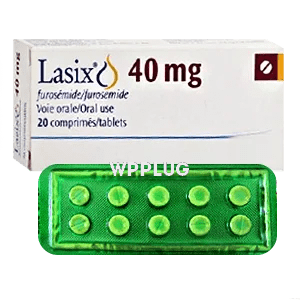
| Product dosage: 100mg | |||
|---|---|---|---|
| Package (num) | Per pill | Price | Buy |
| 60 | $0.77 | $46.32 (0%) | 🛒 Add to cart |
| 90 | $0.67 | $69.48 $60.42 (13%) | 🛒 Add to cart |
| 120 | $0.63 | $92.64 $75.52 (18%) | 🛒 Add to cart |
| 180 | $0.59 | $138.96 $105.73 (24%) | 🛒 Add to cart |
| 270 | $0.56 | $208.45 $151.05 (28%) | 🛒 Add to cart |
| 360 | $0.54
Best per pill | $277.93 $194.35 (30%) | 🛒 Add to cart |
| Product dosage: 40mg | |||
|---|---|---|---|
| Package (num) | Per pill | Price | Buy |
| 180 | $0.36 | $65.45 (0%) | 🛒 Add to cart |
| 270 | $0.35 | $98.18 $94.66 (4%) | 🛒 Add to cart |
| 360 | $0.34
Best per pill | $130.91 $121.85 (7%) | 🛒 Add to cart |
Synonyms | |||
Similar products
Furosemide: Potent Loop Diuretic for Effective Fluid Management
Furosemide is a high-ceiling loop diuretic indicated for the management of edema associated with congestive heart failure, cirrhosis of the liver, and renal disease, including the nephrotic syndrome. It acts on the thick ascending limb of the loop of Henle to inhibit the sodium-potassium-chloride cotransporter, resulting in profound diuresis and prompt reduction of extracellular fluid volume. Its rapid onset and predictable excretion profile make it a cornerstone therapy in both acute and chronic volume overload states, offering clinicians a powerful tool for tailored decongestive strategies.
Features
- Active ingredient: Furosemide
- Pharmacologic class: Loop diuretic
- Available formulations: Oral tablets (20 mg, 40 mg, 80 mg), oral solution (10 mg/mL, 40 mg/5 mL), injectable solution (10 mg/mL)
- Onset of action: Oral: 30–60 minutes; IV: within 5 minutes
- Peak effect: Oral: 1–2 hours; IV: 30 minutes
- Duration: Oral: 6–8 hours; IV: 2 hours
- Bioavailability: Approximately 50% (oral)
- Protein binding: >98%
- Metabolism: Hepatic (minimal)
- Excretion: Primarily renal (unchanged), remainder fecal
- Half-life: Normal renal function: 0.5–1.5 hours; anuria: up to 9.7 hours
Benefits
- Rapid and significant reduction of edema in congestive heart failure, hepatic cirrhosis, and renal impairment
- Effective management of hypertension, particularly in salt-sensitive or volume-dependent cases
- Prompt alleviation of pulmonary edema and dyspnea in acute decompensated heart failure
- Facilitates tailored diuresis with adjustable dosing based on clinical response and renal function
- Useful adjunct in hypercalcemia management due to calcium excretion enhancement
- Supports optimization of volume status in critical care and perioperative settings
Common use
Furosemide is predominantly prescribed for the treatment of edema due to congestive heart failure, liver cirrhosis, and renal disease, including nephrotic syndrome. It is also indicated for hypertension, either as monotherapy or in combination with other antihypertensive agents. In hospital settings, intravenous furosemide is frequently administered for acute pulmonary edema. Off-label uses include treatment of hypercalcemia and, in some cases, elevated intracranial pressure.
Dosage and direction
Edema in adults:
Initial oral dose: 20–80 mg as a single dose; may repeat in 6–8 hours. Dose may be increased by 20–40 mg no sooner than 6–8 hours after previous dose until desired diuretic effect is achieved. Maintenance dose: titrated to patient response; may be given once or twice daily (e.g., 40 mg twice daily). Maximum daily dose: 600 mg.
Hypertension in adults:
Initial dose: 40 mg twice daily; adjust according to response. Maintenance dose: typically 40–80 mg daily (in divided doses if necessary).
Acute pulmonary edema:
IV dose: 40 mg administered slowly over 1–2 minutes; if inadequate response within 1 hour, may increase to 80 mg.
Pediatric dosing:
Oral: 1–2 mg/kg/dose; may increase by 1–2 mg/kg no sooner than 6–8 hours. Maximum: 6 mg/kg/dose.
IV: 1 mg/kg/dose; may increase by 1 mg/kg no sooner than 2 hours. Maximum: 6 mg/kg/dose.
Note: Dosing must be individualized based on renal function, clinical response, and electrolyte balance. Administer with or without food; taking with food may reduce gastrointestinal upset.
Precautions
- Monitor blood pressure, renal function, and volume status regularly.
- Assess electrolytes (particularly sodium, potassium, chloride, calcium, and magnesium) at baseline and periodically during therapy.
- Use with caution in patients with sulfonamide allergy (cross-sensitivity possible).
- Risk of ototoxicity, which may be irreversible; higher with rapid IV administration, high doses, or concurrent ototoxic drugs.
- May precipitate or worsen gout.
- Can cause glucose intolerance; monitor diabetics closely.
- Avoid in hypovolemic or dehydrated patients.
- Use cautiously in cirrhotic patients due to risk of electrolyte imbalance precipitating hepatic encephalopathy.
Contraindications
- Anuria
- Hypersensitivity to furosemide or any sulfonamide-derived drugs
- Hepatic coma or severe electrolyte depletion
- Concurrent use of ethacrynic acid (increased ototoxicity risk)
Possible side effect
- Common: dehydration, hypokalemia, hyponatremia, hypochloremia, hypocalcemia, hypomagnesemia, dizziness, headache, orthostatic hypotension
- Less common: hyperglycemia, hyperuricemia, gout, rash, photosensitivity, nausea, diarrhea, constipation
- Rare but serious: ototoxicity (tinnitus, hearing loss), pancreatitis, blood dyscrasias (neutropenia, thrombocytopenia, agranulocytosis), Stevens-Johnson syndrome, toxic epidermal necrolysis, interstitial nephritis
- IV-specific: thrombophlebitis
Drug interaction
- Antihypertensives: Enhanced hypotensive effect.
- Digoxin: Hypokalemia may increase digoxin toxicity.
- Lithium: Reduced renal clearance; increased lithium levels and toxicity.
- NSAIDs: May reduce diuretic and antihypertensive efficacy.
- Aminoglycosides, vancomycin: Increased risk of ototoxicity and nephrotoxicity.
- Probenecid: Inhibits diuretic response.
- Sucralfate: Reduces furosemide absorption; separate administration by至少2 hours.
- Corticosteroids, amphotericin B: Enhanced hypokalemia.
- Warfarin: Potential displacement from protein binding sites; monitor INR.
Missed dose
If a dose is missed, take it as soon as remembered unless it is almost time for the next dose. Do not double the dose to catch up. Resume the regular dosing schedule. For once-daily dosing, if missed and remembered the next day, skip the missed dose.
Overdose
Symptoms include profound water loss, electrolyte depletion (especially hypokalemia), dehydration, hypotension, circulatory collapse, and possibly vascular thrombosis and embolism. Treatment is supportive and symptomatic: replace fluid and electrolytes, monitor vital signs and renal function. Hemodialysis does not accelerate elimination significantly.
Storage
Store at controlled room temperature (20–25°C or 68–77°F). Protect from light and moisture. Keep oral solution in original container; do not freeze. Keep out of reach of children. Discard unused portion of oral solution after 90 days of opening.
Disclaimer
This information is for educational purposes and does not replace professional medical advice, diagnosis, or treatment. Always consult a qualified healthcare provider for personalized recommendations. Do not initiate, adjust, or discontinue furosemide without medical supervision.
Reviews
Clinical consensus and meta-analyses support furosemide as an effective and rapidly acting diuretic for volume overload states. Its predictable pharmacokinetics and dose-responsive effect make it a first-line agent in heart failure and resistant edema. However, careful monitoring of electrolytes and renal function is imperative to mitigate adverse effects. IV formulation is particularly valued in acute care for its rapid onset. Long-term use requires individualized dosing and periodic reassessment.