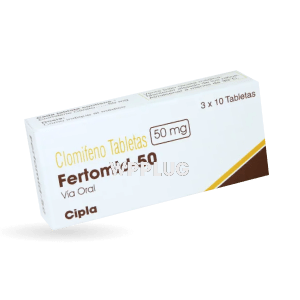
| Product dosage: 50mg | |||
|---|---|---|---|
| Package (num) | Per pill | Price | Buy |
| 30 | $1.78 | $53.51 (0%) | 🛒 Add to cart |
| 60 | $1.51 | $107.02 $90.87 (15%) | 🛒 Add to cart |
| 90 | $1.41 | $160.53 $127.21 (21%) | 🛒 Add to cart |
| 120 | $1.37 | $214.04 $164.57 (23%) | 🛒 Add to cart |
| 180 | $1.33 | $321.06 $239.28 (25%) | 🛒 Add to cart |
| 270 | $1.30 | $481.59 $351.35 (27%) | 🛒 Add to cart |
| 360 | $1.28
Best per pill | $642.11 $462.40 (28%) | 🛒 Add to cart |
Fertomid: Clinically Proven Ovulation Induction Therapy
Fertomid (clomiphene citrate) represents a first-line pharmacological intervention for anovulatory infertility, offering a targeted approach to ovarian stimulation. This selective estrogen receptor modulator (SERM) works by blocking estrogen receptors in the hypothalamus, thereby increasing gonadotropin-releasing hormone (GnRH) pulsatility. The subsequent rise in follicle-stimulating hormone (FSH) and luteinizing hormone (LH) secretion promotes follicular development and triggers ovulation. With decades of clinical validation, Fertomid remains a cornerstone treatment in reproductive endocrinology, providing a controlled, predictable protocol for achieving monofollicular development and timed ovulation in appropriately selected patients.
Features
- Contains 50mg clomiphene citrate per tablet
- Selective estrogen receptor modulator (SERM) class
- Oral administration with high bioavailability
- Standardized 5-day treatment protocol
- White, round, biconvex film-coated tablets
- Typically packaged in blister strips of 10 tablets
- Requires prescription and medical supervision
- Manufactured under GMP standards
Benefits
- Effectively induces ovulation in approximately 80% of appropriately selected anovulatory women
- Enables timed intercourse and fertility awareness through predictable ovulation patterns
- Non-invasive oral administration compared to injectable alternatives
- Cost-effective first-line intervention for ovulatory disorders
- Established safety profile with extensive clinical documentation
- Facilitates monofollicular development, reducing risk of higher-order multiple gestation
Common use
Fertomid is primarily indicated for the treatment of ovulatory dysfunction in women desiring pregnancy. The most common applications include management of polycystic ovary syndrome (PCOS)-related anovulation, unexplained infertility with ovulatory factors, and luteal phase deficiency. Specialists may also employ Fertomid for ovarian stimulation in conjunction with intrauterine insemination (IUI) protocols. Proper patient selection is crucial, with treatment typically reserved for women with demonstrated estrogen production (as evidenced by progestin-induced withdrawal bleeding) and normal partner semen analysis. Treatment should be initiated only after thorough evaluation excludes other causes of infertility, including tubal factors and male factor infertility.
Dosage and direction
The standard Fertomid protocol initiates with 50mg (one tablet) daily for five days, beginning on day 3, 4, or 5 of the menstrual cycle following spontaneous or progestin-induced withdrawal bleeding. Administration should occur at approximately the same time each day, with or without food. If ovulation occurs but pregnancy does not result, the same dosage may be repeated for up to three additional cycles. For patients who fail to ovulate at the 50mg dose, the dosage may be increased to 100mg daily for five days in subsequent cycles. The maximum recommended daily dose is 150mg. Ultrasound monitoring is advised when using higher doses or in patients with risk factors for ovarian hypersimulation. Treatment beyond six cycles is generally not recommended due to potential endometrial effects.
Precautions
Patients should undergo comprehensive gynecological examination before initiation to exclude ovarian cysts, endometrial pathology, or other contraindications. Liver function tests should be considered in patients with hepatic impairment. Visual symptoms (blurring, scotomas) necessitate immediate discontinuation and ophthalmological evaluation. Patients should be advised regarding the possibility of multiple gestation (approximately 8% risk, primarily twins) and ovarian hyperstimulation syndrome (OHSS). Regular monitoring through ultrasound follicular tracking and serum progesterone measurements is recommended to assess response and minimize risks. Fertomid may have anti-estrogenic effects on cervical mucus and endometrium, potentially requiring adjunctive estrogen therapy in some cases.
Contraindications
Fertomid is contraindicated in patients with: pregnancy; undiagnosed abnormal genital bleeding; ovarian cysts (not associated with polycystic ovarian syndrome); hepatic disease or dysfunction; uncontrolled thyroid or adrenal dysfunction; organic intracranial lesions such as pituitary tumors; hypersensitivity to clomiphene citrate or any component of the formulation. The medication should not be administered simultaneously with other fertility medications except under specialized supervision. Fertomid is not indicated in patients with primary ovarian failure or premature ovarian insufficiency.
Possible side effects
Common adverse reactions (>10% incidence) include vasomotor flashes (hot flushes), abdominal discomfort, breast tenderness, and visual disturbances (blurring, spots, or flashes). Less frequent effects (1-10%) comprise nausea/vomiting, headache, dizziness, insomnia, nervousness, depression, fatigue, and hair loss. Rare but serious complications include ovarian hyperstimulation syndrome (OHSS), which may present with abdominal pain, distension, nausea, vomiting, and weight gain. Ovarian torsion represents another rare but serious complication. Some patients may experience thickening of cervical mucus or endometrial thinning that could theoretically impair implantation.
Drug interaction
Fertomid may interact with several medication classes. Concomitant use with gonadotropins may increase the risk of ovarian hyperstimulation. Tamoxifen and other SERMs may have additive estrogenic/anti-estrogenic effects. Thyroid medications may require dosage adjustment due to altered hormone levels. Corticosteroids may affect ovarian response. Anticoagulants like warfarin may have altered metabolism. Dopamine antagonists such as metoclopramide may affect prolactin levels and ovarian function. Herbal supplements with estrogenic properties (soy, red clover, black cohosh) may interfere with Fertomid’s mechanism of action. Always disclose all medications and supplements to the prescribing physician.
Missed dose
If a dose is missed, the patient should take it as soon as remembered unless it is nearly time for the next scheduled dose. In that case, the missed dose should be skipped, and the regular dosing schedule resumed. Patients should never double the dose to make up for a missed tablet. Consistency in dosing time helps maintain stable drug levels. If multiple doses are missed, the prescribing physician should be consulted regarding whether to continue the cycle or restart treatment in a subsequent cycle. Documentation of missed doses is important for interpreting treatment response.
Overdose
Symptoms of acute overdose may include nausea, vomiting, vasomotor flushing, visual disturbances, and abdominal pain. There is no specific antidote for clomiphene citrate overdose. Management should be symptomatic and supportive, with particular attention to possible ovarian hyperstimulation. Gastric lavage may be considered if ingestion occurred recently. Patients should be monitored for electrolyte imbalances and ovarian size via ultrasound. Hospitalization may be required for severe cases. The extended half-life (5-7 days) means effects may persist for several weeks. Dialysis is not effective due to high protein binding.
Storage
Store Fertomid tablets at room temperature (15-30°C or 59-86°F) in their original packaging, protected from light and moisture. Keep the blister strips intact until immediately before use. Do not store in bathrooms or other humid areas. Keep out of reach of children and pets. Do not use tablets beyond the expiration date printed on the packaging. Proper disposal of unused medication is recommended through medication take-back programs or according to local regulations.
Disclaimer
This information is provided for educational purposes only and does not constitute medical advice. Fertomid is a prescription medication that should be used only under the supervision of a qualified healthcare provider specializing in reproductive medicine. Individual response to treatment may vary, and not all patients will achieve ovulation or pregnancy. The prescribing physician will determine the appropriate treatment protocol based on comprehensive medical evaluation. Patients should report any adverse effects promptly to their healthcare provider.
Reviews
Clinical studies demonstrate ovulation rates of approximately 70-80% in appropriately selected anovulatory women, with cumulative pregnancy rates reaching 50-60% over 3-6 treatment cycles. Research published in Fertility and Sterility indicates that 50mg clomiphene citrate achieves ovulation in 76.7% of PCOS patients, with a 36.7% pregnancy rate per ovulatory cycle. The New England Journal of Medicine reports twin gestation rates of 5-8% and triplet rates of 0.3-0.8% with clomiphene therapy. Patient satisfaction surveys indicate high acceptability of the oral administration route, though some report bothersome vasomotor symptoms. Long-term follow-up studies show no increased risk of ovarian cancer with limited duration use (<12 cycles).