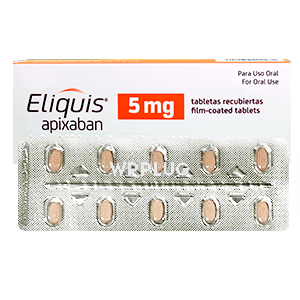
| Product dosage: 2.5mg | |||
|---|---|---|---|
| Package (num) | Per pill | Price | Buy |
| 10 | $6.04 | $60.38 (0%) | 🛒 Add to cart |
| 20 | $5.03 | $120.76 $100.63 (17%) | 🛒 Add to cart |
| 30 | $5.03 | $181.14 $150.95 (17%) | 🛒 Add to cart |
| 60 | $4.19
Best per pill | $362.28 $251.58 (31%) | 🛒 Add to cart |
| Product dosage: 5mg | |||
|---|---|---|---|
| Package (num) | Per pill | Price | Buy |
| 10 | $8.05 | $80.51 (0%) | 🛒 Add to cart |
| 20 | $6.04 | $161.01 $120.76 (25%) | 🛒 Add to cart |
| 30 | $5.70 | $241.52 $171.08 (29%) | 🛒 Add to cart |
| 60 | $5.37
Best per pill | $483.04 $322.03 (33%) | 🛒 Add to cart |
Synonyms | |||
Eliquis: Advanced Stroke Prevention in Atrial Fibrillation
Eliquis (apixaban) is a prescription anticoagulant medication specifically engineered to reduce the risk of stroke and systemic embolism in patients with non-valvular atrial fibrillation. It represents a significant advancement in oral anticoagulation therapy, offering a targeted mechanism of action that directly inhibits Factor Xa, a key clotting factor in the blood coagulation cascade. By providing effective thromboembolic risk reduction with a favorable safety profile, Eliquis has become a cornerstone therapy in cardiology and hematology practice for appropriate patient populations.
Features
- Active Pharmaceutical Ingredient: Apixaban
- Pharmacologic Class: Direct oral anticoagulant (DOAC); Factor Xa inhibitor
- Standard Dosage Forms: Film-coated tablets (2.5 mg and 5 mg strengths)
- Dosing Regimen: Twice-daily oral administration, with or without food
- Therapeutic Onset: Rapid absorption with peak plasma concentrations achieved within 3-4 hours
- Elimination Half-Life: Approximately 12 hours
- Renal Elimination: Approximately 27% of administered dose
- No Routine Coagulation Monitoring Required: Unlike warfarin, Eliquis does not necessitate frequent INR testing
Benefits
- Superior Stroke Risk Reduction: Demonstrated significantly lower rates of stroke and systemic embolism compared to warfarin in major clinical trials
- Reduced Major Bleeding Risk: Associated with significantly lower rates of intracranial hemorrhage and fatal bleeding compared to warfarin therapy
- Predictable Pharmacokinetics: Provides consistent anticoagulant effect without dietary restrictions or need for routine blood monitoring
- Convenient Dosing Protocol: Fixed twice-daily regimen enhances medication adherence and therapeutic consistency
- Rapid Onset and Offset: Quick therapeutic effect allows for prompt protection, while relatively short half-life facilitates management around procedures
- Comprehensive Protection: Effective for both stroke prevention in atrial fibrillation and treatment/prevention of venous thromboembolism
Common use
Eliquis is primarily indicated for reducing the risk of stroke and systemic embolism in patients with non-valvular atrial fibrillation. It is also approved for the prophylaxis of deep vein thrombosis (DVT), which may lead to pulmonary embolism (PE), in patients who have undergone hip or knee replacement surgery. Additionally, Eliquis is used for the treatment of DVT and PE, and for the reduction in risk of recurrent DVT and PE following initial therapy. The medication works by selectively blocking Factor Xa, thereby interrupting the intrinsic and extrinsic pathway of the blood coagulation cascade, ultimately preventing the formation of thrombin and fibrin clots.
Dosage and direction
For stroke reduction in non-valvular atrial fibrillation: The recommended dose is 5 mg taken orally twice daily. For patients with at least two of the following characteristics: age ≥80 years, body weight ≤60 kg, or serum creatinine ≥1.5 mg/dL, the recommended dose is 2.5 mg twice daily. For DVT/PE treatment: 10 mg twice daily for 7 days, followed by 5 mg twice daily. For reduction in risk of recurrent DVT/PE: 2.5 mg twice daily after at least 6 months of standard anticoagulant treatment. For postoperative thromboprophylaxis: 2.5 mg twice daily for 35 days (hip replacement) or 12 days (knee replacement). Tablets should be swallowed whole with water, with or without food. Do not crush, split, or chew tablets.
Precautions
Patients should be carefully assessed for bleeding risk before initiating therapy. Regular monitoring of signs and symptoms of bleeding is recommended throughout treatment. Use with caution in patients with severe renal impairment (creatinine clearance 15-29 mL/min); not recommended in patients with CrCl <15 mL/min or on dialysis. Caution advised in patients with hepatic impairment, particularly those with coagulopathy and clinical relevant bleeding risk. Spinal/epidural hematomas may occur in patients treated with Eliquis who are receiving neuraxial anesthesia or undergoing spinal puncture; monitor frequently for neurologic impairment. Consider benefits and risks before neuraxial intervention in patients anticoagulated or to be anticoagulated. Discontinuation increases stroke risk; consider bridging therapy only when necessary.
Contraindications
Active pathological bleeding. Severe hypersensitivity reaction to apixaban or any component of the formulation. Concomitant use with other anticoagulants except when switching therapy or when unfractionated heparin is given at doses necessary to maintain a patent central venous or arterial catheter. Not recommended in patients with triple-positive antiphospholipid syndrome due to increased risk of recurrent thrombotic events.
Possible side effect
Common (≥1%): Bruising, nausea, anemia, minor bleeding episodes.
Less common: Hematuria, epistaxis, gastrointestinal bleeding, hematoma formation, rectal bleeding, gingival bleeding.
Rare but serious: Intracranial hemorrhage, major gastrointestinal bleeding, spinal or epidural hematoma (particularly with neuraxial anesthesia), hypersensitivity reactions including anaphylaxis.
Post-marketing reports: Skin rash, thrombocytopenia, hepatic enzyme elevations, jaundice.
Drug interaction
Strong dual inhibitors of CYP3A4 and P-gp: Ketoconazole, itraconazole, ritonavir, clarithromycin - avoid concomitant use.
Strong dual inducers of CYP3A4 and P-gp: Rifampin, carbamazepine, phenytoin, St. John’s wort - avoid concomitant use.
Anticoagulants: Increased risk of bleeding with warfarin, other DOACs, heparin, low molecular weight heparins.
Anti-platelet agents: Aspirin, clopidogrel, prasugrel, ticagrelor may increase bleeding risk.
NSAIDs: Increased bleeding risk with chronic use of NSAIDs.
SSRIs/SNRIs: May increase bleeding risk.
Missed dose
If a dose of Eliquis is missed, the patient should take the dose as soon as possible on the same day and then resume the twice-daily regimen. Do not double the dose to make up for a missed dose. The next dose should be taken at the regularly scheduled time. If a dose is skipped entirely, continue with the next dose at the usual time.
Overdose
Overdose may lead to hemorrhagic complications. There is no specific antidote for apixaban overdose. In cases of overdose or bleeding complications, discontinue Eliquis immediately. Initiate appropriate supportive measures based on symptoms and clinical status. Activated charcoal may reduce absorption if administered within a few hours of ingestion. In life-threatening bleeding, consider procoagulant agents such as prothrombin complex concentrate (PCC), activated prothrombin complex concentrate (aPCC), or recombinant Factor VIIa, though their effectiveness has not been evaluated in clinical studies. Dialysis is not expected to enhance elimination due to high protein binding.
Storage
Store at 20°C to 25°C (68°F to 77°F); excursions permitted between 15°C to 30°C (59°F to 86°F). Keep in original container to protect from moisture and light. Keep tightly closed and do not remove desiccant. Keep out of reach of children and pets. Do not use after expiration date printed on packaging.
Disclaimer
This information is provided for educational purposes only and does not constitute medical advice. Eliquis is a prescription medication that should only be used under the supervision of a qualified healthcare professional. Individual patient circumstances may vary, and treatment decisions should be made in consultation with a physician who can assess the specific risks and benefits for each patient. The prescribing information provided here may not include all possible uses, directions, precautions, or interactions. Always refer to the official prescribing information and consult with a healthcare provider for complete information about this medication.
Reviews
Clinical trials demonstrate Eliquis’ superior efficacy and safety profile compared to warfarin. In the ARISTOTLE trial involving 18,201 patients with atrial fibrillation, Eliquis reduced the risk of stroke/systemic embolism by 21% and major bleeding by 31% compared to warfarin. The AVERROES trial showed Eliquis significantly reduced stroke risk compared to aspirin in patients unsuitable for warfarin therapy. Real-world evidence studies consistently support the trial findings, showing lower rates of stroke, major bleeding, and mortality compared to warfarin and other DOACs. Patient satisfaction surveys indicate high adherence rates due to the fixed dosing regimen and lack of dietary restrictions or routine monitoring requirements.