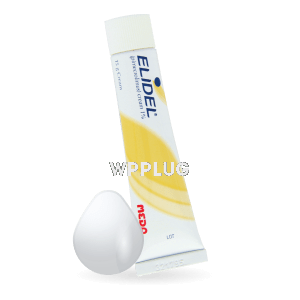
| Product dosage: 10mg | |||
|---|---|---|---|
| Package (num) | Per tube | Price | Buy |
| 1 | $50.17 | $50.17 (0%) | 🛒 Add to cart |
| 2 | $45.15 | $100.34 $90.31 (10%) | 🛒 Add to cart |
| 3 | $40.14 | $150.51 $120.41 (20%) | 🛒 Add to cart |
| 4 | $37.63 | $200.69 $150.51 (25%) | 🛒 Add to cart |
| 5 | $34.12 | $250.86 $170.58 (32%) | 🛒 Add to cart |
| 6 | $30.10 | $301.03 $180.62 (40%) | 🛒 Add to cart |
| 7 | $27.24 | $351.20 $190.65 (46%) | 🛒 Add to cart |
| 8 | $25.09 | $401.37 $200.69 (50%) | 🛒 Add to cart |
| 9 | $23.41 | $451.54 $210.72 (53%) | 🛒 Add to cart |
| 10 | $22.08
Best per tube | $501.71 $220.75 (56%) | 🛒 Add to cart |
Synonyms | |||
Elidel: Advanced Non-Steroidal Atopic Dermatitis Treatment
Elidel (pimecrolimus) is a topical calcineurin inhibitor (TCI) indicated for the short-term and intermittent long-term treatment of mild to moderate atopic dermatitis (eczema) in non-immunocompromised patients aged 2 years and older, for whom conventional therapies are inadvisable, ineffective, or poorly tolerated. It functions as a selective cytokine inhibitor, targeting the underlying inflammatory pathways without the risks associated with prolonged corticosteroid use. This prescription medication is applied at the first signs of symptoms to prevent flare-ups and is suitable for use on all skin areas, including the face and neck.
Features
- Contains 1% pimecrolimus as the active pharmaceutical ingredient.
- Available in a 30g, 60g, or 100g tube of white, opaque cream.
- Formulated for topical application only; not for ophthalmic, oral, or intravaginal use.
- Functions as a selective inhibitor of inflammatory cytokine release from T-cells and mast cells.
- Prescription-only medication requiring diagnosis and supervision by a healthcare professional.
Benefits
- Provides effective control of eczema symptoms, including redness, itching, and scaling, by targeting the source of inflammation.
- Avoids the skin-thinning (atrophy), striae, and potential for systemic absorption associated with long-term topical corticosteroid use.
- Suitable for sensitive skin areas, such as the face, eyelids, and skin folds, where steroids are often contraindicated.
- Can be used proactively at the earliest signs of itching and redness to prevent full-blown eczema flares.
- Offers a non-steroidal option for patients who require long-term, intermittent management of their condition.
Common use
Elidel is primarily prescribed for the management of mild to moderate atopic dermatitis. It is used in patients who have not responded well to, or cannot tolerate, conventional topical therapies. Its common application involves applying a thin layer to affected areas at the first sign of itching or erythema to prevent the progression of a flare-up. It is approved for use in adults, adolescents, and pediatric patients down to 2 years of age.
Dosage and direction
A thin layer of Elidel cream should be applied to the affected skin areas twice daily. The cream should be rubbed in gently and completely. Application should begin at the first signs or symptoms of atopic dermatitis (e.g., itching, redness) and continue until signs and symptoms clear. Hand washing is recommended after application if the hands are not an area being treated. It is for external use only. Use the smallest amount needed to control symptoms. Long-term continuous use should be avoided, and treatment should be discontinued after the signs and symptoms of eczema have resolved.
Precautions
- Elidel should not be used in patients with Netherton’s syndrome or other skin conditions where the skin barrier is severely compromised, due to the potential for increased systemic absorption.
- Exposure to natural or artificial sunlight (tanning beds, UVA/B treatment) should be minimized during treatment. Patients should be advised to wear protective clothing and use a broad-spectrum sunscreen on treated areas if sun exposure cannot be avoided.
- The use of Elidel may be associated with an increased risk of viral skin infections (e.g., eczema herpeticum, herpes simplex, molluscum contagiosum). Patients should be monitored for these infections.
- Application to active cutaneous infections should be avoided. Any infection present at the treatment site should be cleared prior to therapy.
- The effect of Elidel on the developing immune system in children under 2 years of age has not been fully established; it is not indicated for this age group.
Contraindications
Elidel is contraindicated in patients with a known hypersensitivity to pimecrolimus or any other component of the cream. It is also contraindicated in individuals with congenital or acquired immunodeficiencies, or those undergoing immunosuppressive therapy, due to theoretical concerns about potential risks.
Possible side effect
The most common side effects are application site reactions, which are usually mild and transient. These include:
- Burning sensation
- Irritation or itching at the application site
- Feeling of warmth
- Headache
- Less commonly, skin infections (folliculitis), acne, rosacea, and increased sensitivity to hot or cold temperatures may occur.
- Rare cases of lymphadenopathy have been reported; a causal relationship has not been established. Patients should be advised of the potential, though low, risk of malignancies such as skin cancer and lymphoma as discussed in the boxed warning.
Drug interaction
Formal topical drug interaction studies have not been conducted with Elidel. Concomitant use with other topical preparations on the same skin site is not recommended, as this may increase systemic absorption or cause local interactions. In particular, the use of topical corticosteroids on the same site should be avoided unless directed by a physician. No clinically significant interactions with systemically administered drugs are known.
Missed dose
If a dose is missed, it should be applied as soon as it is remembered. However, if it is almost time for the next scheduled application, the missed dose should be skipped and the regular dosing schedule resumed. Do not apply a double dose to make up for a missed one.
Overdose
Acute overdose from topical application is unlikely due to minimal systemic absorption. However, excessive application could potentially lead to increased systemic exposure, which might enhance the risk of the drug’s systemic side effects. There is no specific antidote for pimecrolimus overdose. Treatment should be supportive and symptomatic. In case of accidental ingestion, medical attention should be sought immediately.
Storage
Store Elidel cream at room temperature, between 15°C and 30°C (59°F and 86°F). Do not freeze. Keep the tube tightly closed and out of reach of children. Do not use the cream after the expiration date printed on the tube and carton.
Disclaimer
This information is for educational purposes only and is not a substitute for professional medical advice, diagnosis, or treatment. Always seek the advice of your physician or other qualified health provider with any questions you may have regarding a medical condition or medication. Never disregard professional medical advice or delay in seeking it because of something you have read here. The full prescribing information, including boxed warnings, should be reviewed before initiating treatment.
Reviews
- “As a dermatologist, Elidel is a cornerstone in my armamentarium for managing facial and neck eczema in patients concerned about steroid side effects. Its targeted mechanism provides effective relief without atrophy.” – Dr. A. Sharma, MD, Dermatology.
- “After struggling with topical steroids on my eyelids for years, my doctor prescribed Elidel. The burning sensation was intense for the first few days, but it subsided, and it’s the only thing that controls my flares without thinning my skin.” – Patient, 42.
- “Prescribing Elidel requires a careful risk-benefit discussion with parents. For children with moderate eczema on sensitive areas who have failed other therapies, it can be a game-changer in improving quality of life when used appropriately and intermittently.” – Pediatric Allergist.
- “Clinical trial data consistently shows Elidel’s efficacy in reducing the EASI (Eczema Area and Severity Index) score and pruritus. Its value lies in its role as a proactive maintenance therapy, preventing flares rather than just treating them.” – Clinical Research Scientist.
- “The initial cost was a concern, but my insurance covered it. It works quickly to stop the itch-scratch cycle for my son. We only use it at the very first sign of a flare, and a tube lasts a long time.” – Parent of a patient, 7 y/o.