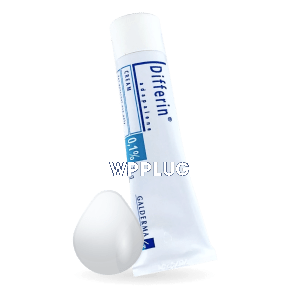
| Product dosage: 0.1% 15g | |||
|---|---|---|---|
| Package (num) | Per tube | Price | Buy |
| 2 | $24.12 | $48.23 (0%) | 🛒 Add to cart |
| 3 | $22.11 | $72.35 $66.32 (8%) | 🛒 Add to cart |
| 4 | $21.10 | $96.47 $84.41 (13%) | 🛒 Add to cart |
| 5 | $20.10 | $120.59 $100.49 (17%) | 🛒 Add to cart |
| 6 | $19.09 | $144.70 $114.56 (21%) | 🛒 Add to cart |
| 7 | $18.09 | $168.82 $126.61 (25%) | 🛒 Add to cart |
| 8 | $17.59 | $192.94 $140.68 (27%) | 🛒 Add to cart |
| 9 | $17.08 | $217.05 $153.75 (29%) | 🛒 Add to cart |
| 10 | $15.07
Best per tube | $241.17 $150.73 (38%) | 🛒 Add to cart |
Synonyms | |||
Differin: The Clinically Proven Acne Treatment Solution
Differin (adapalene) Gel, 0.1% and 0.3%, represents a significant advancement in topical retinoid therapy for acne vulgaris. As the first prescription-strength retinoid available over-the-counter in its 0.1% formulation, it offers patients and dermatologists a well-tolerated, evidence-based treatment option with a favorable efficacy and safety profile. This third-generation retinoid specifically targets multiple pathogenic factors in acne development through selective retinoid receptor activity, making it a cornerstone in both monotherapy and combination treatment regimens for inflammatory and non-inflammatory acne lesions.
Features
- Contains adapalene 0.1% or 0.3% as the active pharmaceutical ingredient
- Third-generation naphthoic acid derivative with retinoid activity
- Available in gel vehicle for optimal cutaneous delivery
- Selective binding affinity for retinoic acid receptors (RAR-β and RAR-γ)
- Demonstrated comedolytic, anti-inflammatory, and keratolytic properties
- Photostable formulation maintains efficacy when exposed to UV radiation
- Oil-free, non-comedogenic base suitable for acne-prone skin
- Preservative-free formulation in single-use packaging options
Benefits
- Significantly reduces both inflammatory papules and pustules as well as non-inflammatory comedones through normalization of follicular keratinization
- Demonstrates potent anti-inflammatory effects by modulating cellular differentiation and inhibiting leukocyte migration and cytokine production
- Provides sustained improvement in acne severity scores with continuous use over 12-week treatment periods
- Offers favorable tolerability profile with reduced incidence of erythema, dryness, and irritation compared to traditional topical retinoids
- Prevents microcomedone formation, addressing the primary precursor lesion in acne pathogenesis
- Compatible with combination therapy including benzoyl peroxide and topical/oral antibiotics
Common use
Differin is indicated for the topical treatment of acne vulgaris in patients 12 years of age and older. The 0.1% strength is available over-the-counter, while the 0.3% strength remains prescription-only. Clinical studies demonstrate its efficacy across various acne severities, though it is particularly effective for mild to moderate inflammatory acne with mixed comedonal and papulopustular lesions. Many dermatologists incorporate Differin into maintenance therapy following initial treatment with more aggressive regimens, as it helps prevent relapse by maintaining follicular patency. The medication is also used off-label for other dermatological conditions including keratosis pilaris, photoaging, and certain disorders of keratinization.
Dosage and direction
Apply a thin film of Differin Gel to affected areas once daily, preferably in the evening after gently cleansing the skin with a mild non-medicated cleanser. The face should be completely dry before application, as applying to damp skin may increase irritation. Use approximately a pea-sized amount for the entire face, spreading evenly while avoiding the eyes, lips, and mucous membranes. For the 0.3% formulation, some clinicians recommend initiating therapy with every-other-day application for the first 2-4 weeks to enhance tolerability before advancing to daily use. Treatment response typically becomes apparent after 4-8 weeks of continuous therapy, with maximum benefit observed at 12 weeks. Continue use for maintenance of therapeutic effect.
Precautions
Differin may cause irritation, including erythema, scaling, dryness, pruritus, and burning sensation, especially during the initial treatment period. These effects typically diminish with continued use. Patients should avoid unnecessary sun exposure and use protective clothing and broad-spectrum sunscreen (SPF 30 or higher) during treatment, as retinoids may increase photosensitivity. Avoid application to eczematous, sunburned, or otherwise compromised skin. Contact with the eyes, angles of the nose, and mucous membranes should be avoided. Concomitant use of potentially irritating products (such as those containing alcohol, astringents, spices, or lime) should be approached with caution. Weather extremes, especially wind and cold, may exacerbate skin irritation.
Contraindications
Differin is contraindicated in patients with a history of hypersensitivity to any of its components, including adapalene or other retinoids. It should not be used by individuals with personal or family history of skin cancer, though no carcinogenic risk has been demonstrated with topical adapalene in animal studies. The safety of Differin during pregnancy has not been established, and it is classified as Pregnancy Category C; it should be used during pregnancy only if the potential benefit justifies the potential risk to the fetus. Nursing mothers should exercise caution, as it is unknown whether adapalene is excreted in human milk.
Possible side effects
The most common adverse reactions (occurring in 10-30% of patients) are cutaneous irritation reactions including erythema, scaling, dryness, pruritus, and burning/stinging. These are generally mild to moderate in severity and typically diminish with continued use. Less frequently (1-10% of patients), skin discomfort, sunburn, and acne flare may occur. Rare cases of contact allergy, skin discoloration, and eyelid edema have been reported. Unlike some other retinoids, adapalene demonstrates minimal systemic absorption with topical application, making systemic adverse effects exceedingly rare. No laboratory abnormalities have been consistently associated with Differin use.
Drug interaction
Concomitant use of other potentially irritating topical products (medicated or abrasive soaps and cleansers, soaps and cosmetics that have a strong drying effect, and products with high concentrations of alcohol, astringents, spices, or lime) may increase the risk of skin irritation. Caution should be exercised when using other topical acne medications, particularly those with drying effects such as benzoyl peroxide, salicylic acid, or sulfur-containing preparations. Although no specific interactions have been documented, using multiple retinoid-containing products simultaneously is not recommended due to potential additive irritation. No clinically significant drug interactions with systemic medications have been reported.
Missed dose
If a dose is missed, apply it as soon as remembered unless it is almost time for the next application. Do not apply twice the amount to make up for a missed dose. The therapeutic effect of Differin depends on regular, continuous use rather than immediate correction of missed applications. Consistency in application is important for optimal efficacy, but occasional missed doses are unlikely to significantly impact long-term treatment outcomes. If multiple doses are missed, simply resume the regular dosing schedule without attempting to compensate for missed applications.
Overdose
Topical overdose may lead to severe erythema, scaling, and skin discomfort. If excessive application occurs, gently cleanse the area to remove excess product. Systemic overdose is unlikely due to minimal percutaneous absorption, though oral ingestion may require medical attention. If accidentally ingested, seek medical help or contact a Poison Control Center immediately. Treatment of oral overdose should be symptomatic and supportive. There is no specific antidote for adapalene overdose. In cases of topical overdose, temporary discontinuation until skin integrity is restored is recommended, followed by reinitiation at reduced frequency.
Storage
Store Differin Gel at controlled room temperature, 20°C to 25°C (68°F to 77°F), with excursions permitted between 15°C and 30°C (59°F and 86°F). Protect from freezing. Keep the tube tightly closed when not in use. Do not store in bathroom cabinets where humidity and temperature fluctuations may occur. Keep out of reach of children and pets. Discard any product that has changed color, consistency, or odor. The product has an expiration date printed on the packaging—do not use beyond this date.
Disclaimer
This information is provided for educational purposes only and does not constitute medical advice. Individual results may vary. Consult a healthcare professional, preferably a dermatologist, before starting any new medication, especially if you have pre-existing skin conditions, are pregnant, nursing, or taking other medications. The complete prescribing information should be reviewed before use. Only a qualified healthcare provider can determine if Differin is appropriate for your specific condition.
Reviews
Clinical studies involving over 5,000 patients demonstrate that Differin 0.1% gel produces significantly greater reductions in both inflammatory and non-inflammatory lesions compared to vehicle, with 52-60% of patients achieving clinical success (defined as ≥50% global improvement) after 12 weeks of treatment. The 0.3% formulation shows enhanced efficacy, particularly for more severe acne, with up to 70% of patients achieving treatment success. Patient-reported outcomes indicate high satisfaction with tolerability and cosmetic acceptability. Dermatologists consistently rate Differin as a first-line treatment option for mild to moderate acne, with many noting its particular value in maintenance therapy and combination regimens. Real-world evidence supports the clinical trial data, confirming its effectiveness across diverse patient populations and skin types.