| Product dosage: 30mg | |||
|---|---|---|---|
| Package (num) | Per pill | Price | Buy |
| 10 | $4.00 | $40.02 (0%) | 🛒 Add to cart |
| 20 | $3.00 | $80.05 $60.04 (25%) | 🛒 Add to cart |
| 30 | $2.67 | $120.07 $80.05 (33%) | 🛒 Add to cart |
| 60 | $1.67 | $240.15 $100.06 (58%) | 🛒 Add to cart |
| 90 | $1.45 | $360.22 $130.08 (64%) | 🛒 Add to cart |
| 120 | $1.33 | $480.29 $160.10 (67%) | 🛒 Add to cart |
| 180 | $1.22 | $720.44 $220.13 (69%) | 🛒 Add to cart |
| 270 | $1.07 | $1080.65 $290.18 (73%) | 🛒 Add to cart |
| 360 | $0.95
Best per pill | $1440.87 $340.21 (76%) | 🛒 Add to cart |
| Product dosage: 60mg | |||
|---|---|---|---|
| Package (num) | Per pill | Price | Buy |
| 10 | $4.50 | $45.03 (0%) | 🛒 Add to cart |
| 20 | $3.75 | $90.05 $75.05 (17%) | 🛒 Add to cart |
| 30 | $3.00 | $135.08 $90.05 (33%) | 🛒 Add to cart |
| 60 | $2.00 | $270.16 $120.07 (56%) | 🛒 Add to cart |
| 90 | $1.67 | $405.25 $150.09 (63%) | 🛒 Add to cart |
| 120 | $1.58 | $540.33 $190.12 (65%) | 🛒 Add to cart |
| 180 | $1.45 | $810.49 $260.16 (68%) | 🛒 Add to cart |
| 270 | $1.30 | $1215.74 $350.21 (71%) | 🛒 Add to cart |
| 360 | $1.20
Best per pill | $1620.98 $430.26 (73%) | 🛒 Add to cart |
| Product dosage: 90mg | |||
|---|---|---|---|
| Package (num) | Per pill | Price | Buy |
| 10 | $5.00 | $50.03 (0%) | 🛒 Add to cart |
| 20 | $4.50 | $100.06 $90.05 (10%) | 🛒 Add to cart |
| 30 | $4.34 | $150.09 $130.08 (13%) | 🛒 Add to cart |
| 60 | $3.67 | $300.18 $220.13 (27%) | 🛒 Add to cart |
| 90 | $3.34 | $450.27 $300.18 (33%) | 🛒 Add to cart |
| 120 | $3.09 | $600.36 $370.22 (38%) | 🛒 Add to cart |
| 180 | $2.78 | $900.54 $500.30 (44%) | 🛒 Add to cart |
| 270 | $2.04 | $1350.82 $550.33 (59%) | 🛒 Add to cart |
| 360 | $1.67
Best per pill | $1801.09 $600.36 (67%) | 🛒 Add to cart |
Synonyms | |||
Similar products







Dapoxetine for Premature Ejaculation Control and Improved Sexual Confidence
Dapoxetine is a short-acting selective serotonin reuptake inhibitor (SSRI) specifically developed for the on-demand treatment of premature ejaculation (PE) in adult men. It represents a significant advancement in sexual medicine, offering a pharmacologically targeted approach to a common and often distressing condition. By modulating serotonin neurotransmission in the central nervous system, dapoxetine helps to increase intravaginal ejaculatory latency time (IELT), thereby improving control over ejaculation and enhancing sexual satisfaction for both partners. Its rapid absorption and elimination profile make it uniquely suited for use as needed, prior to anticipated sexual activity, distinguishing it from daily-dosed SSRIs used off-label for this indication. This product card provides a comprehensive, expert-level overview of its medical characteristics.
Features
- Active Ingredient: Dapoxetine hydrochloride
- Pharmacological Class: Selective Serotonin Reuptake Inhibitor (SSRI)
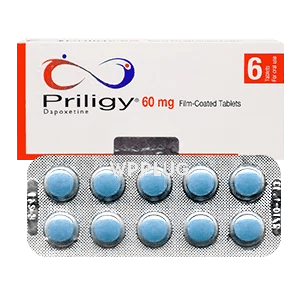
- Dosage Forms: Film-coated tablets (30 mg, 60 mg)
- Time to Peak Plasma Concentration (Tmax): Approximately 1-2 hours
- Elimination Half-Life: ~1.5-1.6 hours
- Mechanism of Action: Potent inhibition of serotonin (5-HT) reuptake, increasing synaptic 5-HT concentration and enhancing 5-HT neurotransmission at the postsynaptic membrane
- Prescription Status: Prescription-only medication in most jurisdictions
- Bioavailability: Approximately 42% (oral administration)
- Protein Binding: ~99% (primarily to albumin and α1-acid glycoprotein)
- Metabolism: Extensive hepatic metabolism via multiple CYP enzymes: CYP3A4, CYP2D6, CYP2C19, CYP2C9, and CYP2B6
- Excretion: Primarily renal (approximately 42% of dose) with minor fecal elimination
Benefits
- Clinically Demonstrated Efficacy: Significantly increases intravaginal ejaculatory latency time (IELT) compared to placebo in multiple randomized controlled trials.
- Improved Ejaculatory Control: Provides men with a greater sense of control over the timing of ejaculation, reducing distress and anxiety associated with premature ejaculation.
- Enhanced Sexual Satisfaction: Demonstrated improvements in patient-reported outcomes, including personal distress, interpersonal difficulty, and overall sexual satisfaction for both partners.
- On-Demand Dosing Flexibility: Unlike daily SSRIs used off-label, it is taken only when needed (1-3 hours before anticipated sexual activity), minimizing continuous drug exposure.
- Rapid Onset and Offset: Pharmacokinetic profile allows for effects within hours of administration and rapid clearance, reducing the burden of persistent pharmacological effects.
- Well-Characterized Safety Profile: Extensive clinical trial data and post-marketing surveillance provide a clear understanding of its risk-benefit ratio in the indicated population.
Common use
Dapoxetine is indicated for the treatment of premature ejaculation (PE) in adult men aged 18-64 years. The diagnosis of PE is typically made clinically and is characterized by:
- A persistent or recurrent pattern of ejaculation occurring within approximately one minute of vaginal penetration (lifelong PE) or a clinically significant and bothersome reduction in latency time, often to about three minutes or less (acquired PE).
- The inability to delay ejaculation on all or nearly all vaginal penetrations.
- Negative personal consequences, such as distress, bother, frustration, and/or the avoidance of sexual intimacy.
It is not intended for use in men with other sexual dysfunctions (e.g., erectile dysfunction) unless the PE is the primary concern and is not secondary to the other dysfunction. It is used on an as-needed basis and is not a continuous daily therapy.
Dosage and direction
The recommended starting dose is 30 mg, taken orally as a single dose approximately 1 to 3 hours prior to anticipated sexual activity. The tablet should be swallowed whole with at least a full glass of water. It can be taken with or without food; however, a high-fat meal may increase the extent of absorption and potentially increase the risk of adverse effects.
- Dose Adjustment: Based on efficacy and tolerability, the dose may be increased to the maximum recommended dose of 60 mg.
- Dosing Frequency: It should not be taken more than once every 24 hours.
- Dosage in Special Populations:
- Renal Impairment: Use with caution in patients with mild to moderate renal impairment. Not recommended for patients with severe renal impairment (CrCl <30 mL/min).
- Hepatic Impairment: Should not be used in patients with significant hepatic impairment (Child-Pugh Class B and C).
- CYP2D6 Poor Metabolizers: In patients who are known to be poor metabolizers via the CYP2D6 pathway, the maximum recommended dose is 30 mg. Consideration should be given to testing for CYP2D6 status if there is a suspicion or family history.
Precautions
- Syncope and Pre-Syncope: Dapoxetine has been associated with syncope (fainting) and pre-syncope (dizziness, lightheadedness). Patients should be advised to avoid situations where injury could occur should syncope happen. A history of syncope or predisposing conditions warrants caution.
- Orthostatic Hypotension: May cause drops in blood pressure upon standing. Patients should be cautioned to rise slowly from a sitting or lying position.
- Mania/Hypomania: Use with caution in patients with a history of mania or hypomania.
- Underlying Psychiatric Conditions: As with other SSRIs, caution is advised in patients with a history of major depressive disorder or other psychiatric conditions. It is not a treatment for depression.
- Seizures: Use is not recommended in patients with a history of seizures.
- Bleeding Risk: SSRIs can increase the risk of bleeding. Use with caution in patients with active bleeding tendencies or those on concomitant anticoagulant or antiplatelet therapy.
- Priapism: Although rare, patients should be advised to seek immediate medical attention for an erection lasting more than 4 hours.
- Alcohol: Concomitant use with alcohol may increase the risk of adverse reactions such as dizziness, lightheadedness, and syncope. Patients should be advised to avoid or limit alcohol consumption.
Contraindications
- Hypersensitivity to dapoxetine or any of the excipients in the formulation.
- Concomitant administration with monoamine oxidase inhibitors (MAOIs) or within 14 days of discontinuing treatment with an MAOI. There must be a minimum 7-day washout period after stopping dapoxetine before starting an MAOI.
- Concomitant administration with thioridazine or within 14 days of discontinuing treatment with thioridazine.
- Concomitant administration with other SSRIs, serotonin-norepinephrine reuptake inhibitors (SNRIs), tricyclic antidepressants (TCAs), tramadol, linezolid, lithium, tryptophan, or other serotonergic drugs due to the increased risk of serotonin syndrome.
- Patients with a history of mania or severe depression.
- Patients with significant hepatic impairment.
- Patients with established heart disease including heart failure (NYHA Class II-IV), conduction abnormalities (e.g., sick sinus syndrome, Wolff-Parkinson-White syndrome), significant bradycardia, or significant ischemic heart disease.
Possible side effect
The most commonly reported adverse reactions are dose-related and are typically mild to moderate in intensity. They often occur within a few hours of dosing and are transient.
- Very Common (≥1/10): Headache, dizziness, nausea.
- Common (≥1/100 to <1/10): Diarrhea, insomnia, fatigue, somnolence, vomiting, abdominal pain, dry mouth, hyperhidrosis (increased sweating), anxiety, tremors, blurred vision, tachycardia, palpitations, orthostatic dizziness.
- Uncommon (≥1/1,000 to <1/100): Syncope (fainting), confusion, decreased libido, anorgasmia, erectile dysfunction, agitation, euphoric mood, tension, mydriasis (pupil dilation), tinnitus, hypertension, flushing.
- Rare (<1/1,000): Serotonin syndrome, angle-closure glaucoma, priapism.
Drug interaction
Dapoxetine is metabolized by multiple CYP enzymes and is a moderate inhibitor of CYP2D6, leading to a potential for numerous interactions.
- Potent CYP3A4 Inhibitors (e.g., ketoconazole, itraconazole, ritonavir, clarithromycin): Concomitant use is contraindicated. These drugs can significantly increase dapoxetine exposure.
- Moderate CYP3A4 Inhibitors (e.g., erythromycin, fluconazole, diltiazem): Concomitant use is not recommended. If unavoidable, the maximum dose should be limited to 30 mg.
- CYP3A4 Inducers (e.g., rifampicin, phenytoin, carbamazepine, St. John’s Wort): May decrease dapoxetine plasma levels, potentially reducing efficacy.
- CYP2D6 Substrates: Dapoxetine may increase plasma concentrations of drugs that are primarily metabolized by CYP2D6 (e.g., metoprolol, flecainide, propafenone, desipramine). Dose adjustment of these concomitant medications may be required.
- Serotonergic Drugs: Contraindicated with other SSRIs, SNRIs, triptans, tramadol, lithium, tryptophan, and MAOIs due to the risk of serotonin syndrome.
- Alpha-1 Adrenergic Receptor Antagonists (e.g., tamsulosin): May potentiate orthostatic hypotension and syncope. Concomitant use is not recommended.
- Alcohol: Can potentiate neurocognitive effects such as dizziness and syncope. Avoidance or strict limitation is advised.
- PDE5 Inhibitors (e.g., sildenafil, tadalafil): Concomitant use may increase the risk of orthostatic hypotension, syncope, and dizziness. This combination should be used with caution, and patients should be stable on PDE5 inhibitor therapy before adding dapoxetine.
Missed dose
Dapoxetine is taken on an as-needed basis; therefore, the concept of a “missed dose” does not apply in the traditional sense. It is taken only when sexual activity is planned. If a dose is not taken prior to activity, it should simply be omitted. The patient should not take a dose after sexual activity has begun or to “make up” for a missed pre-activity dose. The dosing schedule should resume with the next planned sexual activity.
Overdose
Experience with dapoxetine overdose is limited. Given its pharmacological profile, symptoms of overdose are expected to be an extension of its adverse event profile, primarily related to its serotonergic effects and potential cardiovascular effects.
- Expected Symptoms: Dizziness, lightheadedness, nausea, vomiting, somnolence, serotonin syndrome (agitation, confusion, diaphoresis, hyperthermia, hyperreflexia, incoordination), syncope, tachycardia, and potentially seizures.
- Management: There is no specific antidote. Management should consist of general supportive measures, including monitoring of vital signs and cardiac rhythm. Gastric lavage or administration of activated charcoal may be considered if presented early after ingestion. Treatment of specific symptoms (e.g., benzodiazepines for agitation or seizures) is recommended. Due to high protein binding, dialysis is unlikely to be effective.
Storage
- Store at or below 30°C (86°F).
- Keep the blister strips in the outer carton to protect from light and moisture.
- Keep out of the sight and reach of children.
- Do not use after the expiration date printed on the packaging.
Disclaimer
This information is intended for educational and informational purposes only for qualified healthcare professionals and does not constitute medical advice. It is not a substitute for professional medical judgment, diagnosis, or treatment. The prescribing physician must be aware of the full SmPC (Summary of Product Characteristics) for their region before prescribing. Always select the appropriate therapy based on the individual patient’s medical history, contraindications, and a thorough risk-benefit assessment. The patient should be fully informed of the benefits and risks and should use the medication strictly as prescribed.
Reviews
Clinical efficacy and patient satisfaction data are derived from large-scale, randomized, double-blind, placebo-controlled Phase III trials.
- Study 1 (n=2614): Demonstrated a mean IELT increase from a baseline of 0.9 minutes to 3.8 minutes in the 60 mg group, compared to 1.9 minutes in the placebo group (p<0.001). Significant improvements were also noted in patient-reported outcomes of control and satisfaction.
- Study 2 (n=608): Showed that 60 mg dapoxetine increased IELT approximately 3-4 fold from baseline. Over 70% of patients and their partners reported “much” or “very much” improved control over ejaculation and sexual satisfaction after 12 weeks of treatment.
- Long-Term Safety Study (n=3499): Confirmed that the safety and tolerability profile remained consistent over a 24-month treatment period, with a low discontinuation rate due to adverse events.
- Real-World Evidence: Post-marketing studies and registries have generally supported the findings of clinical trials, confirming its role as an effective and generally well-tolerated on-demand treatment option for men with premature ejaculation.