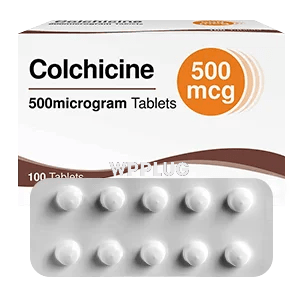
| Product dosage: 0.5mg | |||
|---|---|---|---|
| Package (num) | Per pill | Price | Buy |
| 60 | $0.95 | $57.16 (0%) | 🛒 Add to cart |
| 90 | $0.79 | $85.74 $71.20 (17%) | 🛒 Add to cart |
| 120 | $0.70 | $114.32 $84.24 (26%) | 🛒 Add to cart |
| 180 | $0.62 | $171.48 $112.32 (35%) | 🛒 Add to cart |
| 270 | $0.56 | $257.23 $152.43 (41%) | 🛒 Add to cart |
| 360 | $0.54
Best per pill | $342.97 $193.55 (44%) | 🛒 Add to cart |
Synonyms | |||
Colchicine: Targeted Relief for Gout and Familial Mediterranean Fever
Colchicine is a time-tested alkaloid medication derived from the autumn crocus (Colchicum autumnale). It represents a cornerstone of therapy for acute gout flares and Familial Mediterranean Fever (FMF), offering a mechanism of action distinct from NSAIDs and corticosteroids. Its primary value lies in its specific anti-inflammatory effects, which target neutrophil migration and inflammasome activity, providing rapid symptomatic relief and prophylactic benefits for certain autoinflammatory conditions. This profile details the essential medical information for healthcare professionals considering its prescription.
Features
- Active Ingredient: Colchicine.
- Pharmacologic Class: Anti-gout agent; microtubule polymerization inhibitor.
- Available Forms: Oral tablets (typically 0.6 mg).
- Mechanism of Action: Binds to tubulin, inhibiting microtubule assembly. This disrupts cellular functions, particularly:
- Mitosis.
- Neutrophil motility, adhesion, and degranulation.
- The NLRP3 inflammasome, thereby reducing interleukin-1β (IL-1β) activation.
- Bioavailability: Approximately 45%; significant first-pass metabolism.
- Half-life: ~27-31 hours in healthy adults; prolonged in patients with hepatic or renal impairment.
- Metabolism: Primarily hepatic, via cytochrome P450 3A4 (CYP3A4).
- Excretion: Primarily fecal (via biliary excretion and direct intestinal secretion); urinary excretion accounts for 10-20% of unchanged drug.
Benefits
- Provides rapid and effective pain relief from the intense inflammation of acute gouty arthritis.
- Serves as a prophylactic agent to reduce the frequency and severity of recurrent gout flares, especially during the initiation of urate-lowering therapy.
- Is the first-line treatment for reducing inflammation and preventing attacks in patients diagnosed with Familial Mediterranean Fever (FMF).
- Demonstrates efficacy in the management of other periodic fever syndromes and conditions like pericarditis.
- Offers a non-NSAID, non-steroidal option for anti-inflammatory therapy, which is beneficial for patients with contraindications to those drug classes.
- Its targeted mechanism provides a specific anti-inflammatory effect without the broad immunosuppression seen with corticosteroids.
Common use
Colchicine is FDA-approved for the treatment of acute gout flares and for the prophylaxis of gout flares. It is also approved for the treatment of Familial Mediterranean Fever (FMF). Off-label, it is widely used in the management of recurrent pericarditis, Behçet’s disease, and other autoinflammatory disorders. Its use is strictly contingent upon a confirmed diagnosis and a careful assessment of the patient’s comorbidities and concomitant medications.
Dosage and direction
Dosing is highly indication-specific and must be individualized. For acute gout flare, the recommended regimen is 1.2 mg (two 0.6 mg tablets) at the first sign of a flare, followed by 0.6 mg one hour later. A maximum dose of 1.8 mg over a one-hour period is recommended. This course should not be repeated for at least three days. For prophylaxis of gout flares, the typical dose is 0.6 mg once or twice daily. For FMF, the daily dose can range from 1.2 mg to 2.4 mg, often given in divided doses. The maximum dose is titrated based on efficacy and tolerability. Dosing must be reduced in patients with hepatic or renal impairment. The drug should be taken with a full glass of water, with or without food, but consistency is advised.
Precautions
Colchicine has a narrow therapeutic index. Use with extreme caution in patients with renal impairment (adjust dose or avoid if severe), hepatic impairment, and in elderly or debilitated patients, as they are at increased risk of toxicity. It can cause myelosuppression (neutropenia, thrombocytopenia, aplastic anemia) and peripheral neuropathy; these effects are often irreversible. Monitor CBC and neuromuscular function periodically during long-term therapy. Patients should be advised to report unusual bleeding, bruising, infection, fatigue, muscle weakness, or numbness/tingling immediately.
Contraindications
Colchicine is contraindicated in patients with severe renal impairment (e.g., CKD Stage 4 or 5, dialysis) or severe hepatic impairment who are concurrently taking a strong CYP3A4 or P-glycoprotein (P-gp) inhibitor. It is also contraindicated in patients with known hypersensitivity to colchicine or any component of the formulation. Concomitant use with drugs that strongly inhibit both CYP3A4 and P-gp is absolutely contraindicated due to the high risk of fatal colchicine toxicity.
Possible side effect
Gastrointestinal effects are the most common and often the earliest signs of toxicity, including nausea, vomiting, diarrhea, and abdominal pain. Other potential adverse effects include:
- Hematologic: Myelosuppression (leukopenia, granulocytopenia, thrombocytopenia, aplastic anemia).
- Neuromuscular: Myopathy (rhabdomyolysis), peripheral neuropathy, ascending paralysis.
- Dermatologic: Alopecia, rash.
- Other: Hepatotoxicity, renal failure.
Drug interaction
Colchicine is subject to numerous significant and potentially fatal drug interactions, primarily mediated through CYP3A4 and P-glycoprotein (P-gp) inhibition.
- Strong CYP3A4/P-gp Inhibitors (Contraindicated): Clarithromycin, ketoconazole, itraconazole, ritonavir, cyclosporine. Concomitant use can lead to life-threatening or fatal colchicine toxicity.
- Moderate/Weak CYP3A4/P-gp Inhibitors (Require Dose Reduction/Monitoring): Verapamil, diltiazem, erythromycin, grapefruit juice.
- Other: Statins and fibrates can increase the risk of colchicine-induced myopathy and rhabdomyolysis. CNS depressants may have additive effects.
Missed dose
If a dose is missed, it should be taken as soon as it is remembered. However, if it is almost time for the next scheduled dose, the missed dose should be skipped. The patient should not double the dose to make up for the missed one. Maintaining a consistent schedule is important for prophylactic efficacy.
Overdose
Colchicine overdose is a medical emergency with a high mortality rate. Symptoms manifest in three overlapping phases:
- 10-24 hours: Profuse gastrointestinal distress (nausea, vomiting, diarrhea, abdominal pain), which can lead to fluid depletion and electrolyte imbalances.
- 24 hours to 7 days: Multi-organ failure, including myelosuppression (pancytopenia), metabolic acidosis, arrhythmias, rhabdomyolysis, acute renal failure, hepatic injury, and ascending paralysis resembling Guillain-Barré syndrome.
- >7 days: A rebound leukocytosis and alopecia may occur in survivors. There is no specific antidote. Management is aggressive supportive care, including gastric lavage (if presented early), fluid and electrolyte replacement, vasopressors, and treatment of complications. Granulocyte colony-stimulating factor (G-CSF) may be used for severe neutropenia.
Storage
Store colchicine tablets at room temperature (20°C to 25°C or 68°F to 77°F), in a tight, light-resistant container. Keep out of reach of children and pets. Do not use after the expiration date printed on the bottle. Properly discard any unused medication.
Disclaimer
This information is intended for educational purposes for healthcare professionals and is not a substitute for professional medical advice, diagnosis, or treatment. The prescribing physician is responsible for determining the appropriate dosage and therapy for an individual patient based on their specific clinical circumstances, including a thorough review of their medical history, current medications, and renal/hepatic function. Always consult official prescribing information and clinical guidelines before administering any medication.
Reviews
“Colchicine remains an irreplaceable tool in our arsenal for acute gout. When dosed correctly and early in a flare, its efficacy is remarkable. The key is strict adherence to the low-dose regimen and vigilant monitoring for drug interactions, which are its primary pitfall.” – Rheumatologist, 15 years experience
“For our FMF patients, colchicine is a life-changing prophylactic therapy. It prevents the debilitating attacks and the long-term complication of amyloidosis. Managing GI side effects is a common challenge, but dose titration or splitting usually resolves it.” – Clinical Immunologist
“The narrow therapeutic window demands respect. I’ve seen cases of toxicity from inappropriate dosing in renal impairment or from unrecognized interactions with common antibiotics. It underscores the necessity of thorough medication reconciliation.” – Clinical Pharmacist, Nephrology