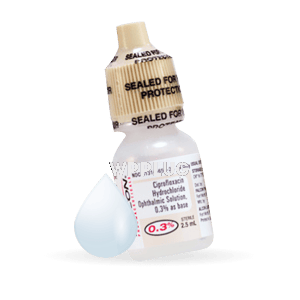
| Product dosage: 5 ml | |||
|---|---|---|---|
| Package (num) | Per flacon | Price | Buy |
| 2 | $31.62 | $63.25 (0%) | 🛒 Add to cart |
| 3 | $27.11 | $94.87 $81.32 (14%) | 🛒 Add to cart |
| 4 | $22.09 | $126.50 $88.35 (30%) | 🛒 Add to cart |
| 5 | $19.08
Best per flacon | $158.12 $95.38 (40%) | 🛒 Add to cart |
Synonyms | |||
CiproDex Ophthalmic Solution: Comprehensive Dual-Action Eye Infection Treatment
CiproDex Ophthalmic Solution is a prescription sterile ophthalmic suspension combining ciprofloxacin, a potent fluoroquinolone antibiotic, with dexamethasone, a powerful corticosteroid. This formulation is specifically engineered to treat bacterial eye infections while simultaneously controlling the associated inflammatory response. It represents a first-line therapeutic option for ophthalmologists managing conditions where both infection and inflammation require concurrent management. The product offers broad-spectrum antibacterial coverage and significant anti-inflammatory efficacy in a single convenient formulation.
Features
- Contains 0.3% ciprofloxacin hydrochloride (equivalent to 0.24% ciprofloxacin base)
- Contains 0.1% dexamethasone
- Available as a 5 mL or 10 mL sterile ophthalmic suspension in a plastic dropper bottle
- Preservative: benzalkonium chloride 0.006%
- pH approximately 5.0-5.4
- Osmolality approximately 290-330 mOsm/kg
- White, homogeneous suspension requiring shaking before administration
- Storage at controlled room temperature 15°-30°C (59°-86°F)
Benefits
- Provides simultaneous antibacterial and anti-inflammatory action in a single medication
- Offers broad-spectrum coverage against gram-positive and gram-negative ocular pathogens
- Reduces inflammation, pain, and discomfort associated with bacterial eye infections
- Minimizes risk of corneal scarring and visual impairment through effective inflammation control
- Convenient twice-daily dosing regimen enhances patient compliance
- Rapid clinical improvement typically observed within 24-48 hours of initiation
Common use
CiproDex Ophthalmic Solution is indicated for the treatment of superficial ocular infections involving the conjunctiva and/or cornea caused by susceptible strains of microorganisms. Primary indications include bacterial conjunctivitis, blepharoconjunctivitis, and corneal ulcers of bacterial origin. It is particularly valuable in cases where significant inflammatory components are present, such as in severe bacterial conjunctivitis with marked chemosis and lid edema. The medication is also used perioperatively in ocular surgery to prevent infection and control postoperative inflammation.
Dosage and direction
The recommended dosage for CiproDex Ophthalmic Solution is one to two drops instilled into the conjunctival sac of the affected eye(s) every 12 hours. For bacterial conjunctivitis, treatment typically continues for 7 days. For corneal ulcers, therapy may extend for up to 14-21 days based on clinical response. Patients should be instructed to shake the bottle well before each use. Contact lenses should be removed prior to administration and may be reinserted 15 minutes after instillation. To prevent contamination, patients should avoid touching the dropper tip to any surface, including the eye itself.
Precautions
Patients should be advised that the suspension may cause temporary blurring of vision immediately following installation; they should not drive or operate machinery until vision clears. The benzalkonium chloride preservative may be absorbed by soft contact lenses and could cause eye irritation. Use beyond 21 days may increase the risk of ocular hypertension, glaucoma, cataract formation, and secondary ocular infections. Fungal infections of the cornea may develop with prolonged steroid use. Patients should be monitored for intraocular pressure elevation, especially with extended therapy. Not for injection or oral use.
Contraindications
CiproDex is contraindicated in patients with known hypersensitivity to ciprofloxacin, other quinolones, dexamethasone, or any component of the formulation. It is contraindicated in most viral diseases of the cornea and conjunctiva, including epithelial herpes simplex keratitis (dendritic keratitis), vaccinia, varicella, and other viral diseases. Contraindicated in mycobacterial eye infections and fungal diseases of ocular structures. Should not be used following uncomplicated removal of a corneal foreign body where no infection exists.
Possible side effect
Common adverse reactions (occurring in 1-5% of patients) include conjunctival hyperemia, blurred vision, eye discomfort, foreign body sensation, eye pain, eye itching, and corneal deposits. Less frequent side effects include eyelid edema, tearing, eye dryness, corneal staining, keratitis, photophobia, conjunctival edema, headache, and increased intraocular pressure. Rare but serious adverse effects include corneal perforation, crystalline deposits, anaphylactic reactions, and superinfection with prolonged use. Allergic reactions including rash, pruritus, and facial edema may occur.
Drug interaction
Concurrent use with other ophthalmic medications should be separated by at least 5 minutes to prevent dilution and potential interactions. Systemic administration of corticosteroids may potentiate the effects of topical dexamethasone. The benzalkonium chloride preservative may inactivate sodium sulfacetamide preparations. No formal drug interaction studies have been conducted with CiproDex Ophthalmic Solution. Patients using other eye medications, especially those containing steroids or non-steroidal anti-inflammatory drugs, should be closely monitored for additive effects.
Missed dose
If a dose is missed, it should be administered as soon as possible. However, if it is almost time for the next scheduled dose, the missed dose should be skipped and the regular dosing schedule resumed. Patients should not double the dose to make up for a missed administration. Consistent dosing is important for optimal therapeutic effect, particularly in the treatment of corneal ulcers where maintaining adequate antibiotic levels is critical.
Overdose
Topical overdose of CiproDex Ophthalmic Solution is unlikely to produce serious systemic effects due to limited absorption. However, excessive application may result in increased local adverse effects such as conjunctival hyperemia, irritation, or superficial punctate keratitis. If accidentally ingested, systemic effects might include gastrointestinal upset, dizziness, or headache. Treatment should be symptomatic and supportive. The oral LD50 of ciprofloxacin in mice is 5,000 mg/kg. Patients should rinse the eye with warm water if excessive solution has been applied.
Storage
Store at controlled room temperature 15°-30°C (59°-86°F). Protect from freezing and excessive heat. Keep the bottle tightly closed when not in use. The solution should be discarded 28 days after opening the bottle, even if some medication remains. Do not use if the solution changes color or becomes cloudy. Keep out of reach of children. Do not use if the seal over the bottle opening is broken or missing.
Disclaimer
This information is provided for educational purposes only and does not replace professional medical advice. CiproDex Ophthalmic Solution is available by prescription only and should be used under the supervision of a qualified healthcare provider. The prescribing physician should be consulted for diagnosis and appropriate treatment recommendations. Individual results may vary, and not all patients will experience the same therapeutic outcomes.
Reviews
Clinical studies demonstrate CiproDex Ophthalmic Solution achieves clinical cure rates of 85-92% in bacterial conjunctivitis, with significantly faster resolution of signs and symptoms compared to antibiotic-only formulations. Ophthalmologists report excellent efficacy in managing moderate to severe ocular infections with inflammatory components. Patients appreciate the convenience of combined therapy and reduced dosing frequency. Some practitioners note occasional concerns about corneal deposits with prolonged use, but overall consider the risk-benefit profile favorable for appropriate indications.