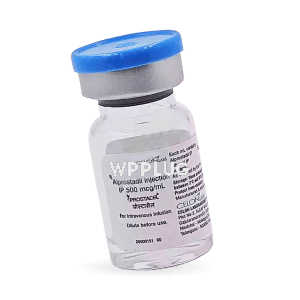
| Product dosage: 500mcg | |||
|---|---|---|---|
| Package (num) | Per injection | Price | Buy |
| 1 | $300.14
Best per injection | $300.14 (0%) | 🛒 Add to cart |
Alprostadil: Restoring Erectile Function Medically
Alprostadil is a synthetic prostaglandin E1 (PGE1) analog used primarily in the management of erectile dysfunction (ED) and for maintaining patency of the ductus arteriosus in neonates with certain congenital heart defects. As a vasodilator, it works by relaxing smooth muscle tissue and dilating blood vessels, facilitating increased blood flow. Its clinical applications are well-established, with formulations including intracavernosal injection, intraurethral suppository, and topical cream, allowing for tailored therapeutic approaches based on patient-specific factors and preferences. This agent represents a cornerstone in both urological and cardiological practice, offering a reliable mechanism of action backed by decades of research and clinical use.
Features
- Synthetic prostaglandin E1 analog with potent vasodilatory properties
- Available in multiple formulations: intracavernosal injection, intraurethral pellet, and topical cream
- Onset of action typically within 5–20 minutes depending on administration route
- Duration of effect ranges from 30–60 minutes
- Does not depend on neuronal stimulation for efficacy
- Can be used in patients with neurological, vascular, or psychogenic erectile dysfunction
- Shelf-stable at recommended storage conditions
- Pre-filled syringes available for accurate dosing in injectable form
Benefits
- Provides reliable erectile response independent of sexual stimulation
- Effective in patients who have failed oral phosphodiesterase-5 inhibitors
- Offers rapid onset of action suitable for planned sexual activity
- Allows for dose titration to achieve optimal efficacy with minimal side effects
- Can be used in various patient populations, including those with diabetes, hypertension, or spinal cord injury
- May help preserve penile tissue health through regular blood flow
Common use
Alprostadil is primarily indicated for the diagnosis and treatment of erectile dysfunction in adult males. The intracavernosal formulation is also used as part of a diagnostic evaluation to assess venous leakage and arterial insufficiency. In neonatal care, it is employed to maintain patency of the ductus arteriosus in infants with congenital heart defects who require temporary maintenance of blood flow until surgical correction can be performed. Off-label uses include treatment of peripheral vascular disease and Raynaud’s phenomenon, though evidence for these applications is more limited.
Dosage and direction
Intracavernosal injection: Initial dose typically 2.5–5 mcg, titrated upward in 2.5–5 mcg increments to achieve erection lasting no longer than 1 hour. Maximum recommended dose is 60 mcg. Administration should be into the lateral aspect of the penis, alternating sides.
Intraurethral suppository: Initial dose 125–250 mcg, placed into the urethra using applicator. Dose may be titrated up to 500 mcg or down to 125 mcg based on response.
Topical cream: Applied in measured doses to the glans penis; specific dosing varies by formulation.
All administrations require proper training in technique to minimize complications. Dosing frequency should not exceed once daily for erectile dysfunction indications.
Precautions
Patients should be instructed on proper injection technique to avoid hematoma formation or corporal fibrosis. Regular examination of the penis is recommended to detect signs of fibrosis or Peyronie’s disease. Use with caution in patients with anatomical penile deformities, bleeding disorders, or those taking anticoagulants. Priapism (erection lasting more than 4 hours) requires immediate medical attention to prevent permanent tissue damage. Patients should be counseled that alprostadil does not protect against sexually transmitted infections.
Contraindications
Known hypersensitivity to alprostadil or any component of the formulation. Men with conditions that predispose to priapism (sickle cell anemia, multiple myeloma, leukemia). Anatomical deformation of the penis (angulation, cavernosal fibrosis, Peyronie’s disease). Not for use in women or children except for specific neonatal cardiac indications. Contraindicated in patients with penile implants.
Possible side effects
- Penile pain (up to 37% of patients)
- Prolonged erection (0.4–4% of patients)
- Penile fibrosis (2–15% with chronic use)
- Hematoma or bleeding at injection site
- Urethral burning (intraurethral formulation)
- Dizziness or hypotension
- Local skin reactions with topical formulation
- Priapism (medical emergency if >4 hours)
Drug interaction
Anticoagulants (warfarin, heparin) may increase bleeding risk at injection sites. Concurrent use with other erectile agents may potentiate effects and increase priapism risk. Antihypertensive medications may have additive hypotensive effects. No significant interactions with cytochrome P450 enzymes noted.
Missed dose
Alprostadil is used on an as-needed basis for erectile dysfunction. No specific missed dose protocol exists. Patients should not double the dose or take additional medication if a dose is missed. For neonatal ductus arteriosus maintenance, follow specific protocol provided by neonatal intensivist.
Overdose
Symptoms may include prolonged painful erection, severe hypotension, dizziness, or syncope. Priapism lasting more than 4 hours requires immediate urological consultation and possible intervention with corporal aspiration or phenylephrine injection. Supportive care for hypotension including Trendelenburg positioning and IV fluids if needed. There is no specific antidote.
Storage
Store at controlled room temperature (20–25°C/68–77°F). Protect from light. Do not freeze. Keep in original container. Discard any solution that appears discolored or contains particles. Pre-filled syringes are for single use only—discard any unused portion.
Disclaimer
This information is for educational purposes only and does not constitute medical advice. Alprostadil should be used only under the supervision of a qualified healthcare provider. Individual response may vary. Patients should discuss their complete medical history and current medications with their physician before beginning treatment. Proper training in administration technique is essential to minimize risks.
Reviews
Clinical studies demonstrate efficacy rates of 70–80% in achieving erection sufficient for intercourse across various formulations. Patient satisfaction surveys indicate high rates of improvement in sexual function and quality of life measures. Long-term studies show maintained efficacy with proper dose titration and monitoring. The intracavernosal formulation generally shows higher efficacy rates compared to intraurethral administration. Topical formulations show variable absorption and efficacy between individuals. Neonatal use shows successful maintenance of ductus arteriosus patency in >80% of cases when administered appropriately.