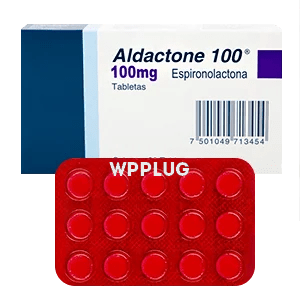
| Product dosage: 100mg | |||
|---|---|---|---|
| Package (num) | Per pill | Price | Buy |
| 60 | $1.10 | $66.29 (0%) | 🛒 Add to cart |
| 90 | $1.04 | $99.43 $93.41 (6%) | 🛒 Add to cart |
| 120 | $1.01 | $132.58 $121.53 (8%) | 🛒 Add to cart |
| 180 | $0.99 | $198.87 $177.77 (11%) | 🛒 Add to cart |
| 270 | $0.96 | $298.30 $260.13 (13%) | 🛒 Add to cart |
| 360 | $0.96
Best per pill | $397.73 $346.51 (13%) | 🛒 Add to cart |
Aldactone: Effective Potassium-Sparing Diuretic for Hypertension and Edema
Aldactone (spironolactone) is a prescription medication classified as a potassium-sparing diuretic and aldosterone antagonist. It is primarily indicated for the treatment of hypertension, edema associated with congestive heart failure, cirrhosis of the liver, and nephrotic syndrome, as well as for diagnosing and treating primary hyperaldosteronism. Its mechanism of action involves competitive binding to aldosterone receptors in the distal renal tubules, promoting sodium and water excretion while conserving potassium. This makes it a valuable therapeutic option in managing fluid retention and blood pressure with a reduced risk of hypokalemia compared to other diuretics.
Features
- Active ingredient: spironolactone
- Available in 25 mg, 50 mg, and 100 mg oral tablets
- Potassium-sparing diuretic and aldosterone antagonist
- Bioavailability of approximately 90% following oral administration
- Peak plasma concentrations reached within 2–4 hours
- Metabolized extensively in the liver to active metabolites
- Mean elimination half-life of 1.4 hours for parent drug; active metabolites have longer half-lives
Benefits
- Effectively reduces blood pressure in hypertensive patients with a unique mechanism of action
- Manages edema while minimizing potassium depletion, reducing the need for potassium supplementation
- Demonstrates antifibrotic and cardioprotective effects in heart failure management
- May improve outcomes in patients with resistant hypertension when combined with other antihypertensives
- Useful in the management of hormonal acne and hirsutism in women due to antiandrogenic properties
- Provides diagnostic and therapeutic utility in primary hyperaldosteronism
Common use
Aldactone is commonly prescribed for the management of essential hypertension, particularly in cases where thiazide diuretics alone are insufficient or where hypokalemia is a concern. It is extensively used in treating edema associated with congestive heart failure, hepatic cirrhosis with ascites, and nephrotic syndrome. In cardiology practice, it is employed as part of guideline-directed medical therapy for heart failure with reduced ejection fraction. Additionally, it serves an important role in the diagnosis and treatment of primary hyperaldosteronism. Off-label uses include management of hormonal acne in women, hirsutism, and as adjunctive therapy in some cases of hypokalemia.
Dosage and direction
For hypertension: Initial dose is typically 50–100 mg daily in single or divided doses, which may be adjusted at two-week intervals. Maintenance doses range from 25–200 mg daily. For edema in adults: Initial dose of 100 mg daily in single or divided doses, with maintenance doses ranging from 25–200 mg daily. For heart failure: Recommended dose is 25 mg once daily, which may be increased to 50 mg once daily if needed. For primary hyperaldosteronism: Doses of 100–400 mg daily in preparation for surgery, or for long-term maintenance therapy when surgery is not appropriate. Tablets should be taken with meals to enhance absorption and minimize gastrointestinal upset. Dosage adjustments are necessary in renal impairment.
Precautions
Patients should be monitored regularly for electrolyte imbalances, particularly potassium and sodium levels. Renal function should be assessed before and during treatment. Use with caution in patients with renal impairment, hepatic disease, or diabetes. May cause hyperkalemia, especially in patients with renal impairment, those taking other potassium-sparing drugs, or consuming potassium-rich foods. Caution is advised in elderly patients who may be more susceptible to dehydration and electrolyte disturbances. Patients should avoid potassium supplements and salt substitutes containing potassium unless specifically directed by their physician. May cause drowsiness or dizziness; patients should be cautioned about operating machinery or driving until they know how the medication affects them.
Contraindications
Aldactone is contraindicated in patients with anuria, acute renal insufficiency, significant impairment of renal function, or hyperkalemia. It should not be used in patients with Addison’s disease or known hypersensitivity to spironolactone or any component of the formulation. Concomitant use with eplerenone is contraindicated. Should not be administered to patients who are unable to urinate. Contraindicated in pregnancy due to potential antiandrogenic effects on the developing male fetus.
Possible side effect
Common side effects include dizziness, headache, gastrointestinal disturbances (nausea, vomiting, diarrhea, cramping), drowsiness, and rash. Endocrine effects may include gynecomastia, breast pain, menstrual irregularities, and impotence. Electrolyte abnormalities may present as hyperkalemia, hyponatremia, or hypomagnesemia. Less frequently, patients may experience photosensitivity, fever, ataxia, confusion, or leukopenia. Serious but rare adverse effects include Stevens-Johnson syndrome, toxic epidermal necrolysis, agranulocytosis, and hepatotoxicity. Most side effects are dose-dependent and may diminish with continued therapy or dosage adjustment.
Drug interaction
Aldactone interacts significantly with ACE inhibitors, ARBs, and other potassium-sparing diuretics, increasing the risk of hyperkalemia. NSAIDs may reduce its diuretic and antihypertensive effects and increase nephrotoxicity risk. It may potentiate the effects of other antihypertensive medications. Concurrent use with digoxin may alter digoxin clearance. Lithium toxicity may occur due to reduced renal clearance. Enhanced effects of neuromuscular blocking agents may occur. Corticosteroids may enhance potassium excretion. Alcohol, barbiturates, or narcotics may potentiate orthostatic hypotension.
Missed dose
If a dose is missed, it should be taken as soon as remembered unless it is almost time for the next scheduled dose. In that case, the missed dose should be skipped, and the regular dosing schedule resumed. Patients should not double the dose to make up for a missed one. Consistent daily administration is important for maintaining therapeutic effect, particularly in hypertension management. If multiple doses are missed, patients should contact their healthcare provider for guidance.
Overdose
Symptoms of overdose may include drowsiness, confusion, dizziness, nausea, vomiting, diarrhea, electrolyte imbalances (particularly hyperkalemia), dehydration, and hypotension. Hyperkalemia may manifest as muscle weakness, paralysis, cardiac conduction disturbances, and potentially fatal arrhythmias. Management involves gastric lavage if ingestion was recent, supportive care, and correction of electrolyte abnormalities. Severe hyperkalemia requires immediate medical attention with calcium gluconate, glucose and insulin infusion, sodium bicarbonate, or potassium-binding resins. Hemodialysis may be effective in removing aldactone and correcting electrolyte imbalances.
Storage
Store at controlled room temperature between 20°C to 25°C (68°F to 77°F), with excursions permitted between 15°C to 30°C (59°F to 86°F). Keep container tightly closed and protect from light and moisture. Keep out of reach of children and pets. Do not use after the expiration date printed on the packaging. Do not store in bathroom cabinets where moisture and temperature fluctuations may affect stability. Properly discard any unused medication after treatment completion.
Disclaimer
This information is provided for educational purposes only and does not constitute medical advice. Aldactone is a prescription medication that should only be used under the supervision of a qualified healthcare professional. Individual response to medication may vary, and proper medical supervision is essential throughout treatment. Patients should not adjust dosage or discontinue medication without consulting their physician. The information provided here is not exhaustive, and healthcare providers should reference the complete prescribing information before initiating therapy.
Reviews
Clinical studies and patient reports consistently demonstrate Aldactone’s effectiveness in managing hypertension and edema, with particular appreciation for its potassium-sparing properties. Many patients report improved symptom control in heart failure and reduced need for potassium supplementation. Some female patients note improvement in hormonal acne and hirsutism as beneficial off-label effects. Criticisms primarily focus on side effects, particularly endocrine effects in male patients, and the need for frequent monitoring. Overall, it is regarded as a valuable therapeutic option when used appropriately with proper monitoring.